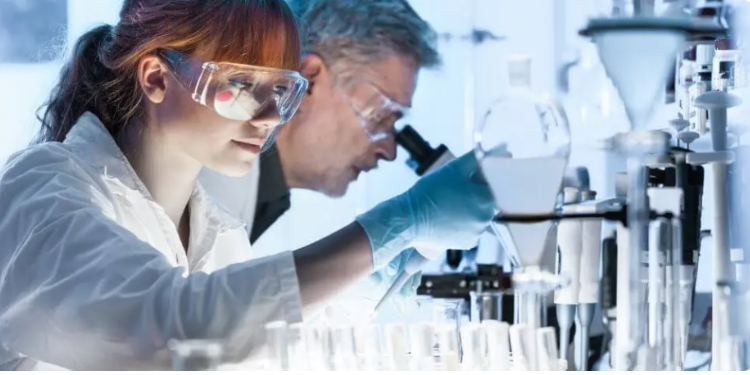
Biotechnology research has evolved rapidly over the past decade, driven by advances in genomics, molecular biology, bioinformatics, and pharmaceutical development.
While traditional laboratory environments remain central to scientific discovery, modern research increasingly extends beyond the walls of a single facility.
Scientists now conduct studies in remote field locations, clinical environments, manufacturing sites, and collaborative research centers around the world.
To support these diverse and demanding settings, rugged portable workstations have become an important component of modern biotechnology infrastructure.
Designed to withstand challenging conditions while delivering reliable computing performance, rugged portable monitors workstations help researchers access critical data, analyze results, and maintain productivity wherever their work takes them.
As biotechnology becomes more data-driven and collaborative, the value of mobile and durable computing solutions continues to grow.
The Changing Nature of Biotechnology Research
Historically, most biotechnology research was conducted within highly controlled laboratory settings. Today, however, many scientific projects involve collecting data from multiple locations, integrating information from different sources, and collaborating across organizations and geographic regions.
Researchers may need to perform environmental sampling, monitor clinical trials, inspect pharmaceutical manufacturing processes, or conduct agricultural biotechnology studies in the field. These activities require access to computing resources that can operate reliably outside traditional office or laboratory environments.
Rugged portable workstations address this need by providing powerful computing capabilities in durable systems designed for mobility. Whether researchers are working in a laboratory, production facility, research campus, or remote field location, these systems help ensure uninterrupted access to essential tools and information.
Supporting Data-Driven Research
Modern biotechnology generates enormous volumes of data. Technologies such as genomic sequencing, proteomics, microscopy, and high-throughput screening produce datasets that require extensive analysis and storage.
Researchers often need immediate access to this information to make informed decisions, validate findings, and adjust experimental procedures. Rugged portable workstations allow scientists to process and review data without waiting to return to a central facility.
This capability is particularly valuable when conducting field studies or collecting samples in time-sensitive situations. Instead of transporting raw data back to a laboratory for analysis, researchers can begin evaluating results immediately, improving efficiency and accelerating project timelines.
Reliability in Demanding Environments
Biotechnology research frequently occurs in environments that may not be ideal for standard consumer-grade computing equipment. Research facilities can expose equipment to dust, vibration, temperature fluctuations, and constant transportation.
Rugged portable workstations are specifically engineered to withstand these challenges. Their durable construction helps protect critical hardware components, reducing the risk of equipment failure during important research activities.
Reliability is especially important when scientists are working with valuable biological samples or conducting experiments that cannot easily be repeated. A dependable computing platform helps ensure that research efforts proceed smoothly and that valuable data remains accessible.
Enhancing Field Research Capabilities
Field-based biotechnology research plays a significant role in areas such as environmental science, agriculture, ecology, and public health. Scientists studying ecosystems, monitoring disease outbreaks, or collecting biological samples often operate in locations far from traditional laboratory infrastructure.
Portable computing solutions enable researchers to capture, organize, and analyze data directly in the field. This immediate access to information can improve decision-making and allow teams to respond more quickly to emerging findings.
Many researchers also utilize accessories such as a rugged portable monitor to expand their workspace while maintaining mobility. Additional screen space can be particularly useful when reviewing complex datasets, comparing research results, or collaborating with team members during field operations.
Supporting Pharmaceutical and Peptide Research
The pharmaceutical and biotechnology industries rely heavily on accurate data analysis and efficient workflows. Researchers developing new therapies must manage large amounts of information generated through laboratory studies, quality control processes, and regulatory documentation.
Organizations involved in peptide research often benefit from portable computing solutions that allow teams to remain productive across multiple research environments. Companies such as enhanced peptides operate within a scientific landscape where data accessibility, collaboration, and analytical capabilities are increasingly important.
As peptide science and biotechnology continue to advance, mobile computing technologies help researchers maintain efficient workflows and support ongoing innovation.
Improving Collaboration Across Research Teams
Modern scientific research is rarely conducted in isolation. Biotechnology projects often involve collaboration among universities, pharmaceutical companies, contract research organizations, healthcare institutions, and government agencies.
Rugged portable workstations make collaboration easier by enabling researchers to access shared datasets, communicate with colleagues, and participate in virtual meetings from virtually any location. Cloud-based platforms further enhance these capabilities by allowing teams to securely exchange information in real time.
This connectivity helps reduce delays and promotes more effective cooperation among multidisciplinary research groups working toward common objectives.
Supporting Bioinformatics and Computational Analysis
Bioinformatics has become a cornerstone of biotechnology research. Scientists use computational methods to analyze genetic information, study protein interactions, identify disease mechanisms, and develop predictive models.
These activities often require substantial processing power and specialized software tools. Rugged portable workstations provide researchers with the computing resources necessary to perform analyses outside traditional office environments.
By combining mobility with performance, these systems help ensure that scientists can continue their work regardless of location. This flexibility is increasingly valuable as research programs become more decentralized and collaborative.
Strengthening Data Security
Biotechnology organizations frequently handle sensitive information, including proprietary research data, clinical trial results, intellectual property, and patient-related information. Protecting these assets is a critical priority.
Many rugged portable workstations incorporate advanced security features such as encrypted storage, secure authentication mechanisms, and hardware-based security controls. These protections help safeguard valuable research data while supporting compliance with industry regulations and organizational security policies.
As cyber threats continue to evolve, secure computing infrastructure remains an essential component of modern biotechnology operations.
Supporting Future Research Innovation
The future of biotechnology will likely involve even greater reliance on advanced computing technologies. Artificial intelligence, machine learning, digital twins, and predictive analytics are already transforming how researchers approach scientific challenges.
To leverage these innovations effectively, scientists need computing platforms capable of supporting sophisticated applications and large-scale data processing. Rugged portable workstations provide a flexible foundation for these emerging technologies by delivering performance and mobility in a single solution.
As research becomes increasingly data-intensive, the demand for reliable portable computing systems is expected to continue growing across the biotechnology sector.
Conclusion
Rugged portable workstations play a vital role in supporting modern biotechnology research. By combining durability, mobility, and computing performance, they enable scientists to work effectively in laboratories, clinical settings, manufacturing facilities, and remote field environments.
These systems help researchers manage complex datasets, collaborate across organizations, maintain data security, and accelerate scientific discovery. Tools such as a rugged portable monitor further enhance productivity by providing additional workspace for data analysis and collaboration.