
President William Ruto has announced plans to settle KSh34 billion owed to public and private universities and hospitals.
The payments comprise KSh18 billion owed to universities and KSh16 billion owed to hospitals under the former National Hospital Insurance Fund (NHIF), with the President saying the National Treasury is processing the funds.
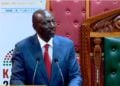
Speaking during his State of the Nation Address to Parliament on Wednesday, November 18, Ruto said the National Treasury was processing the payments and expected to make them in the coming weeks.
“We have also approved the payment of 18 billion shillings owed to public universities, both public and private universities, and another 16 billion shillings owed to both public and private hospitals under the former National Hospital Insurance Fund, NHIF,” Ruto said.
“These payments are undergoing the due process at the National Treasury for payment in the coming weeks,” he added.
Ruto said settling outstanding government obligations would help institutions and businesses recover money owed to them, improve their cash flow and protect jobs.
He also announced the approval of KSh27.68 billion to settle 28,726 verified pending bills dating back to 2005. The claims cover amounts of up to KSh50 million.
The President said the payments formed part of wider interventions aimed at supporting businesses and sustaining livelihoods.
“Together, these measures will increase incomes, make property ownership and digital access more affordable, restore cash flow to businesses, protect jobs and sustain livelihoods,” he said.
Also Read: Ruto Announces New Airport, Sets Mid-2027 Completion Target
Ruto Outlines Increased Education Spending
The KSh18 billion university debt announcement comes as the government reports increased education spending, with the national allocation rising from KSh521 billion in the 2022/2023 financial year to KSh784 billion in the current financial year.
Ruto said his administration had employed 100,000 teachers over the past four years, built 23,000 classrooms and was constructing and equipping 1,600 laboratories.
He said the investments were intended to improve learning conditions, expand access to education and reduce the financial burden on parents who had previously contributed towards teachers and school infrastructure.
“When we assumed office, Kenya faced a teacher shortage estimated at 116,000. Parents in many schools were paying for teachers employed through boards of management, while also meeting additional demands for classrooms and learning facilities,” Ruto said.
He added that increased government funding should ensure parents are not forced to meet expenses that should be covered through public resources.
“Our investment in education has lifted a heavy burden on our parents and helped reduce financial obligations they have been undertaking,” he said.
Also Read: Ruto’s Radical KCSE Printing Order Saves Kenya Ksh1.5 Billion
Ruto on Rising Healthcare Costs
The President also highlighted the financial difficulties families face when seeking medical treatment, saying serious illness can wipe out years of savings and force households to sell property or borrow money.
“For too many Kenyans and their families, falling ill has meant borrowing from friends, selling their livestock, disposing of land or abandoning treatment altogether,” Ruto said.
Addressing members of the National Assembly and the Senate, Ruto assured that public investment in essential services, including healthcare, should reduce the financial burden on households and prevent families from falling into financial distress when a member becomes ill.
Follow our WhatsApp Channel and X Account for real-time news updates, and subscribe to our YouTube Channel for in-depth interviews