President William Ruto has revealed that the government saved about KSh1.5 billion after printing national examination papers locally for the first time in 65 years, ending the long-time tradition of printing the abroad.
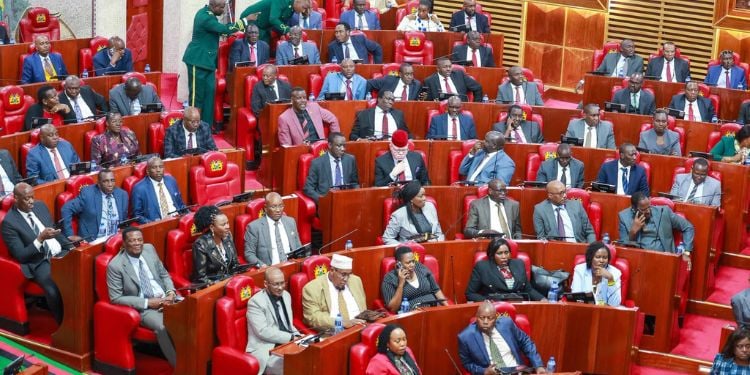
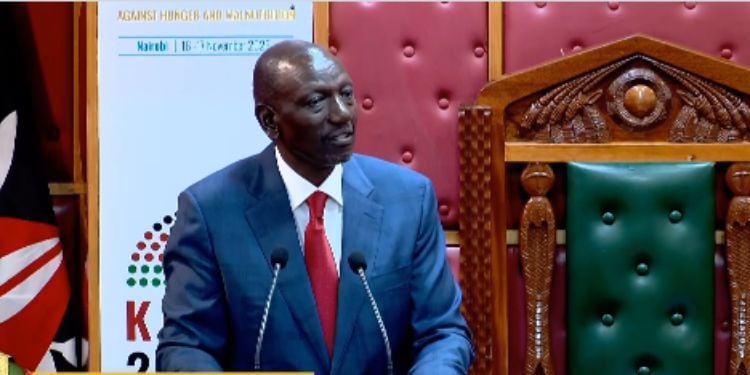
Speaking during the State of the Nation Address before a joint sitting of the National Assembly and Senate on Wednesday, November 18, 2026, Ruto said the decision had reduced public expenditure while strengthening the country’s capacity to carry out essential government operations locally.
The President questioned why Kenya could print its own currency but continued relying on external printing arrangements for national examinations.
“For the first time in 65 years, examination papers were printed here in Kenya,” Ruto told Parliament.
He added that the decision was part of broader efforts to reduce the financial burden on households through increased government investment in essential public services, particularly education.
Ruto Explains How Kenya Saved KSh1.5 Billion
During his address, Ruto disclosed that he had challenged officials in the Ministry of Education to explain why the country could print currency locally but could not undertake the printing of national examination papers.
He said the government subsequently adopted local printing, saving close to KSh1.5 billion.
“The question I asked our ministry officials is this: if we are printing currency in Kenya, why can’t we print exams in Kenya?” he posed.
“And in this single undertaking we have taken off close to a billion and a half shillings that would have been wasted.”
The President said the savings represented money that would otherwise have been spent under the previous arrangement, adding that the government was seeking to direct public resources towards services that benefit Kenyans.
3.6 Million Learners Sit National Examinations
Ruto also highlighted the success of the ongoing national examinations, saying approximately 3.6 million learners were sitting the Kenya Primary School Education Assessment (KPSEA), Kenya Junior School Education Assessment (KJSEA), and Kenya Certificate of Secondary Education (KCSE).
He described the candidates as the largest examination cohort in the country’s history and said the exercise was conducted in a calm, orderly environment.
According to the President, the government had moved away from the heavy security deployments previously associated with national examinations.
“In short, we have conducted exams without the presence of a single policeman. This is how it should be,” he stated.
Also Read: Ruto Announces Plans to Display Famous Turkana Boy Remains at Uhuru Park
He maintained that examinations should be treated as a normal part of the learning process rather than security operations that create anxiety among candidates.
“Examinations are a normal part of learning, not a security operation or a matter of life and death,” Ruto added.
Ruto Reveals Recruitment of 120,000 Teachers
Beyond printing examinations, the President highlighted government investment in education, saying Kenya inherited a teacher shortage estimated at 116,000 when his administration assumed office.
He said the government had recruited 100,000 teachers over four years and was preparing to employ another 20,000 the following month.
The recruitment programme, he explained, was intended to improve the quality of education while reducing the financial pressure on parents who had previously contributed towards hiring teachers through school boards of management.
Also Read: Ruto Announces New Airport, Sets Mid-2027 Completion Target
He also revealed that the government had constructed 23,000 classrooms and was constructing and equipping 1,600 laboratories to improve learning facilities across the country.
Education Budget Rises to KSh784 Billion
Ruto further disclosed that the national education allocation had increased from KSh521 billion in the 2022/2023 financial year to KSh784 billion in the 2026/2027 financial year.
He said the increased funding was intended to ensure that essential education services were financed through public resources rather than additional demands on parents.
The President urged education officials to ensure that funds reached schools promptly and were managed responsibly.
He also warned against unauthorised charges imposed on parents, arguing that families should not be required to finance obligations that should be covered by the government.
Ruto said investment in teachers, classrooms and learning facilities was part of a broader strategy to make education affordable, improve access to skills and prepare young Kenyans for employment.
Follow our WhatsApp Channel and X Account for real-time news updates and subscribe to our YouTube Channel for in-depth interviews.