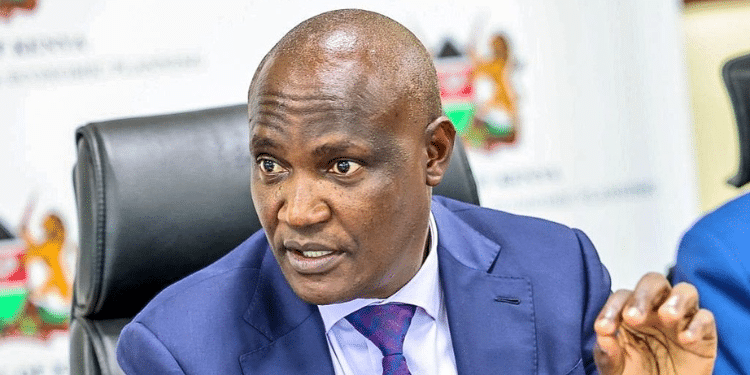
The government canceled the original Ksh249.7 billion Nairobi-Nakuru-Mau Summit Highway concession after a review found that the project posed significant long-term fiscal risks, National Treasury Cabinet Secretary John Mbadi has said.
In a statement Thursday, Mbadi said changing economic conditions, including global inflation, the weakening of the Kenya shilling, shrinking fiscal space and rising public debt obligations, rendered the original Nairobi-Nakuru Highway agreement financially unsustainable.
The Treasury CS said the review was undertaken to assess whether the project remained affordable under prevailing economic conditions following major macroeconomic developments experienced between 2020 and 2022.
Mbadi on Govt Canceling Nairobi-Nakuru Highway Deal
According to the assessment, the original concession no longer aligned with the government’s fiscal objectives and would have exposed taxpayers to substantial financial commitments over the life of the project.
A key concern identified during the review was the requirement for the government to make annual availability payments of about Ksh23 billion to the concessionaire.
The payments would have been subject to adjustments arising from inflation and foreign exchange fluctuations, potentially increasing the burden on public finances.
The government also found that it would retain demand and revenue risks under the original arrangement, meaning taxpayers would ultimately bear the consequences if traffic volumes failed to meet projected levels.
Also Read: How Fake Calling Letters for NIS Jobs Cost Victims Ksh600K
Treasury further projected a cumulative funding deficit of up to Ksh200 billion during the first 15 years of the concession period, raising concerns about the long-term sustainability of the road financing model.
Mbadi said the findings prompted the government to engage the project company in negotiations to restructure the agreement to improve affordability and ensure fiscal sustainability.
However, the discussions failed to produce a framework that met the government’s objectives, leading to the termination of the original Nairobi-Nakuru Highway concession agreement.
During the same period, the Kenya National Highways Authority received an unsolicited proposal based on a revised commercial framework, which later underwent statutory approval processes under the Public-Private Partnerships Act.
The process culminated in the signing of new project agreements in May and June this year.
Under the terminated concession, the project operated under an Availability Payment Public-Private Partnership model, in which the government would make regular payments to the private operator regardless of traffic levels.
The revised arrangement adopts a User-Pay Toll PPP model, shifting the responsibility for generating revenue to motorists using the road and transferring demand and revenue risks to the private investor.
New Deal Cuts Fiscal Burden
Treasury said the new framework significantly reduces the government’s financial exposure.
Also Read: Senate Moves to Introduce Mandatory Annual Vehicle Smoke Tests
While the original concession had a comparable investment cost of approximately USD 1.93 billion (Ksh249.7 billion), the current agreement has a comparable investment value of USD 1.342 billion (Ksh173.5 billion), according to the National Treasury.
The difference represents a reduction of USD 588 million (Ksh 76.2 billion).
Unlike the previous deal, the revised concession does not require annual government availability payments, eliminating what Treasury described as a major recurring obligation on taxpayers.
The government also said the projected funding deficit identified under the terminated agreement has been addressed through the revised commercial structure.
In addition, the new agreement includes a revenue-sharing mechanism under which the government will receive 60 percent of revenues generated above an agreed 16 percent equity internal rate of return threshold.
Mbadi said the revised framework strengthens the government’s infrastructure financing policy by mobilizing private capital, reducing long-term fiscal exposure and preserving fiscal space for other development priorities.
He added that lessons learned from the terminated concession had reinforced the government’s commitment to infrastructure financing models that uphold fiscal sustainability, protect public finances and deliver long-term economic value.
According to Treasury, the new arrangement is expected to support continued investment in strategic infrastructure while reducing reliance on public resources and transferring commercial risks to the private sector.
Follow our WhatsApp Channel and X Account for real-time news updates.