Every FIFA World Cup match carries global attention, with millions of fans watching every decision made on the pitch.
FIFA also spends years identifying, training and assigning the officials who will control the games in order to make correct decisions.
FIFA uses an evaluation system that considers an official’s experience, performance, fitness, neutrality and ability to handle pressure before deciding who will take charge of specific matches.
Referees who perform well during previous tournaments receive high-profile assignments as the competition progresses.
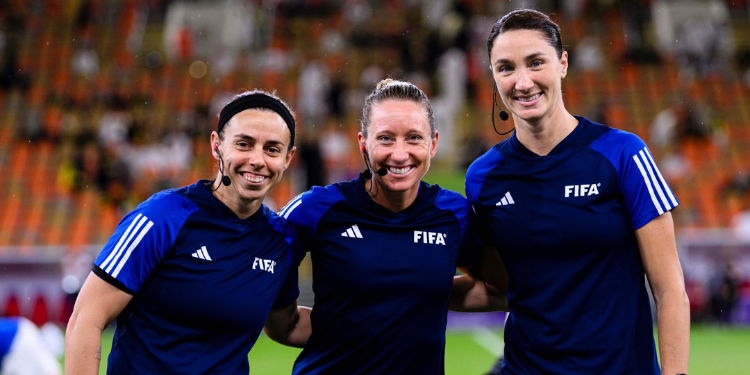
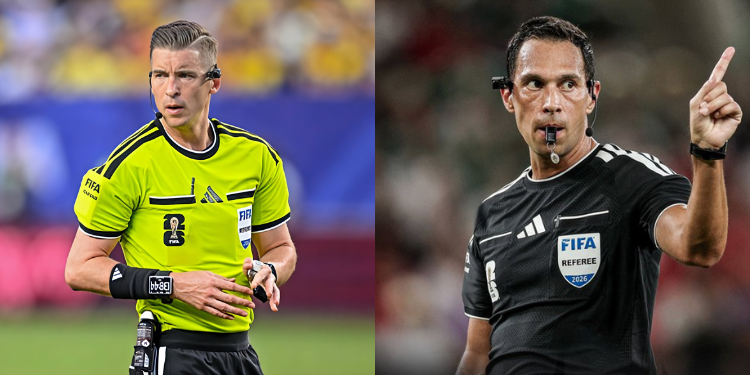
Every FIFA World Cup match has a full officiating team consisting of:
- Main referee
- Two assistant referees
- Fourth official
- Video Assistant Referee (VAR)
- Assistant VAR
FIFA’s Referee Scouting Process
The process of selecting referees begins years before the World Cup starts.
FIFA’s Refereeing Department monitors international referees from different confederations.
Also Read: How to Become VAR Referee: Salary, Qualifications and Training Explained
The world’s six football confederations, including UEFA, CAF, CONMEBOL, AFC, CONCACAF and OFC, recommend referees who have demonstrated consistent performances in major competitions.
Referees are usually selected from FIFA’s international referee list, meaning they must already have experience officiating at a high level, including continental competitions, World Cup qualifiers, international friendlies and club tournaments.
The selection process involves monitoring referees over multiple seasons and FIFA evaluates:
- Accuracy of decisions
- Understanding and application of football laws
- Control of difficult matches
- Communication with players
- Positioning and movement on the pitch
- Consistency under pressure
- Use of technology such as Video Assistant Referee (VAR)
Physical Tests, Training Camps and Performance Reviews
Before receiving a World Cup appointment, referees go through strict physical and technical assessments.
FIFA organizes preparation camps where selected officials undergo fitness tests to assess their ability to handle the intensity of international football.
Referees are tested on:
- Sprint speed
- High-intensity running ability
- Recovery between efforts
- Endurance during long matches
Apart from fitness, referees participate in classroom sessions where they study match situations, disciplinary decisions, handball interpretations, penalty incidents and VAR protocols.
They also review previous performances through video analysis, allowing FIFA instructors to identify mistakes and improve decision-making.
How FIFA Assigns Referees to Specific World Cup Matches
Even after selecting the final group of referees, FIFA does not assign officials randomly.
A special FIFA Refereeing Committee evaluates each match before appointing the referee team.
Several factors influence assignments, including:
| Factors | How FIFA Uses It When Assigning Referees |
| Nationality and neutrality | FIFA avoids assigning referees from countries that could create conflicts of interest. Officials not appointed to matches involving their own national teams or situations where their neutrality could be questioned. The aim is to ensure all teams are officiated by independent and impartial officials. |
| Experience level | High-pressure matches such as knockout games, semi-finals and the final are usually assigned to referees with extensive international experience. FIFA considers an official’s previous performances in major competitions and their ability to handle pressure before making key appointments. |
| Playing style of teams | FIFA considers the characteristics of the teams involved before selecting officials. A physically intense match requires a referee experienced in managing aggressive challenges and disciplinary issues, while a technical game may require an official with strong tactical awareness and decision-making skills. |
Also Read: Billions World Cup Teams Will Pocket as FIFA Sets Highest-Ever Prize Pool
How Referees Earn High-Profile Matches
Officials who consistently make accurate decisions, communicate effectively with players and manage pressure well are considered for knockout-stage matches.
Before every appointment, FIFA reviews match reports, video analysis and feedback from technical teams.
Referees who struggle with consistency or make serious errors may receive fewer assignments or be removed from consideration for key matches.
The final referee must demonstrate exceptional decision-making, fitness, composure and the ability to control the biggest match in international football.
Alongside the main referee, FIFA also selects assistant referees and VAR officials who have performed strongly during the tournament.
Follow our WhatsApp Channel and X Account for real-time news updates.