Video Assistant Referees (VAR) are football officials trained to use technology to assist on-field referees in making accurate decisions during matches.
VAR system was introduced into global football in 2016, with early trials approved by the International Football Association Board (IFAB) and later fully integrated into FIFA competitions.
Since then, VAR has been used to officiate top leagues including the EPL, UEFA, and the FIFA World Cup.
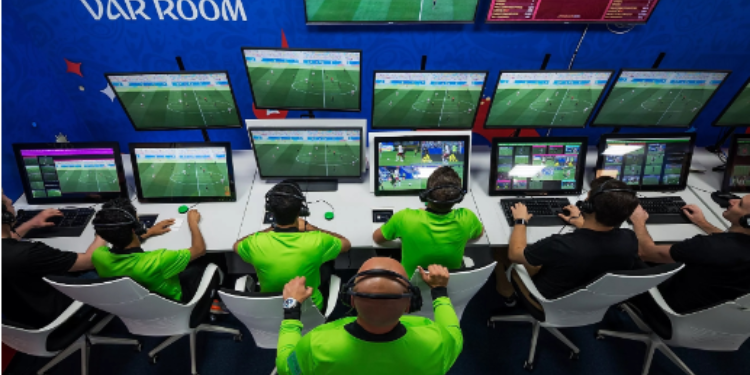
During a match with VAR technology, there are a video assistant referee, an assistant video assistant referee, and two video operators in a video operations room (VOR).
These officials check for goals, incidents in the penalty area, cards, and mistaken identity.
Qualifications and Career Path to VAR
Becoming a VAR official, the process starts with becoming a licensed on-field referee. Individuals first join their national football federation and complete the basic refereeing courses covering the Laws of the Game as set by IFAB.
After certification, referees start officiating lower-tier matches including school competitions, regional leagues, and youth tournaments.
Also Read: FIFA Boss Responds After Somali Referee is Denied Entry Into US
With experience, the referees then progress to higher domestic leagues where decision-making pressure increases.
Only those who reach elite officiating levels, which is usually national premier leagues, are considered for VAR roles.
FIFA, UEFA and CAF recruit VAR officials from the experienced referees and assistant referees who have demonstrated consistency, discipline, and strong match control in high-intensity games.
During the recruitment, referees undergo training sessions focusing on all aspects of match officiating, including the interpretation and application of football’s laws and communication skills.
Training Process and VAR Technology Preparation
Once selected, referees undergo specialized VAR training programs conducted under the supervision of FIFA and confederations.
Officials are trained to intervene only in cases of clear and obvious errors involving goals, penalty decisions, direct red cards, and mistaken identity.
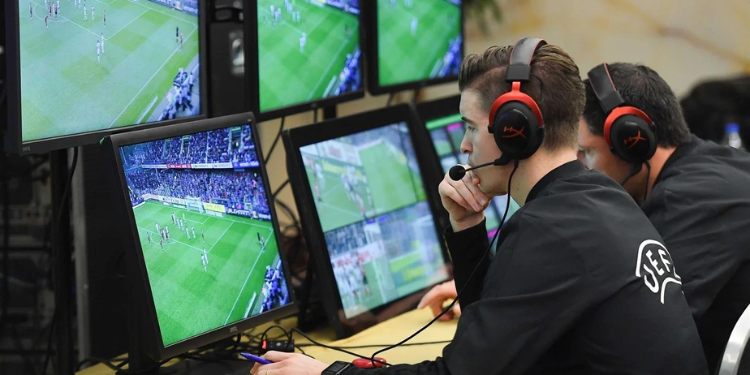
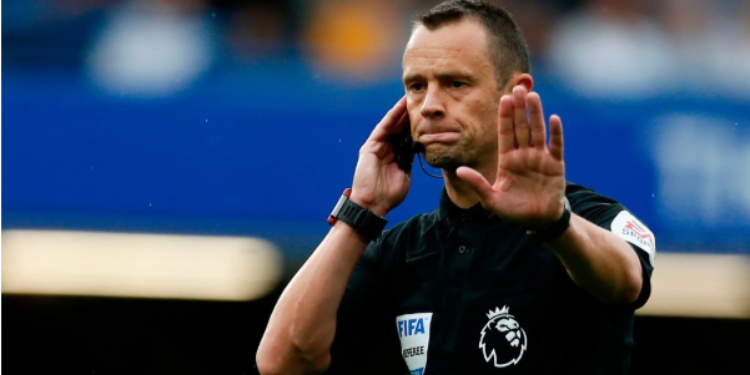
Training involves exercises using multiple camera angles and live-match scenarios. Trainees are stationed in Video Operation Rooms (VORs), where they review incidents in real time and communicate with on-field referees via headsets according to a set protocol.
UEFA also incorporates continuous workshops for the officials to asses performance and receive advanced technical training.
VAR officials are further trained on FIFA-approved technology standards, ensuring systems meet strict requirements for latency, synchronization, and broadcast accuracy.
Assistant VARs and replay operators support the process, forming a structured decision-making unit during matches.
The referees are also trained in Semi-automated offside technology (SAOT) to determine offside situations quickly, a system introduced by UEFA in 2022.
Also Read: How to Watch the 2026 FIFA World Cup in Kenya: Full TV and Streaming Guide
Salary and Earnings of VAR Officials
VAR officials earn both basic salaries and match fees. The amount varies depending on the league, competition, and country.
| Competition | Pay Structure |
| Premier League (England) | £800–£1,200 per match and €70,000–€120,000 per year |
| La Liga (Spain) | €2,100 per match and €57,500 base salary |
| Serie A (Italy) | €1,700 per match and €8,000–€30,000 salary |
| Bundesliga (Germany) | €1,100 per match |
| Ligue 1 (France) | €900 per match |
| Belgium Pro League | €880 per match |
| Euro 2024 VAR | €3,000 per match |
| FIFA World Cup VAR | $3,000–$10,000 per match and $100,000 per tournament |
Follow our WhatsApp Channel and X Account for real-time news updates.