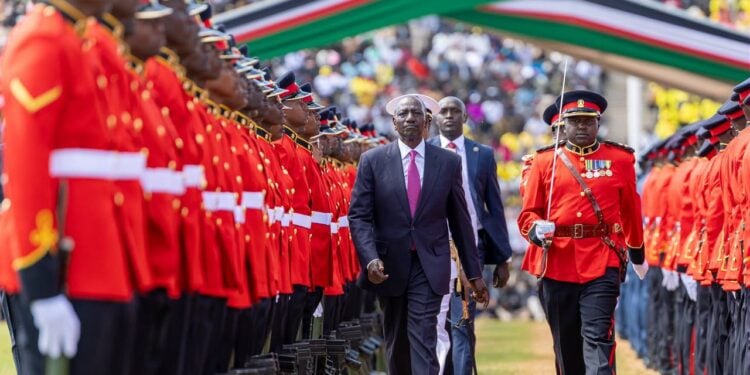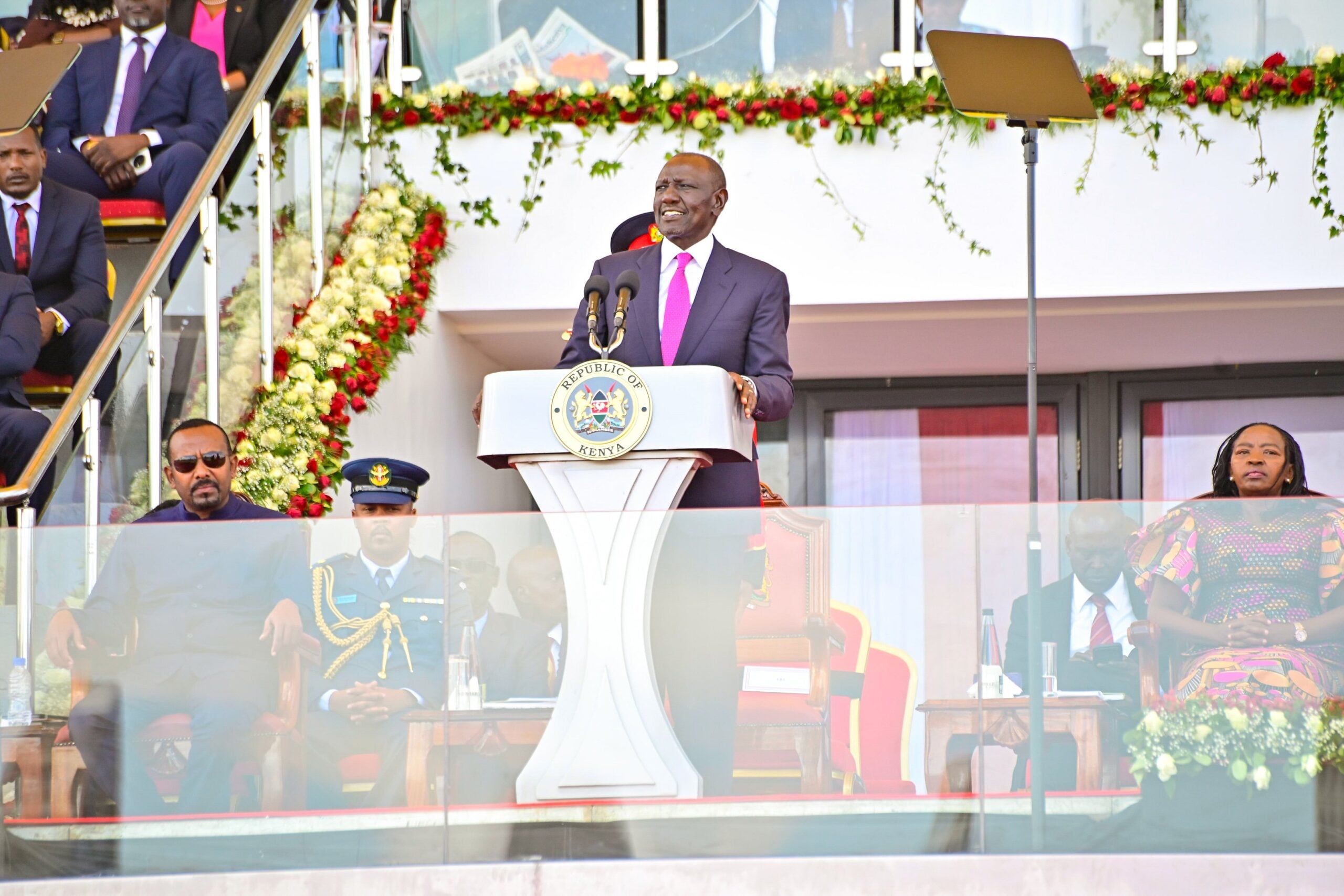
President William Ruto, in Eldoret on October 20, 2026, during the Mashujaa Day celebrations, honoured Kenya’s freedom fighters while presenting a detailed account of his administration’s first four years. Ruto reviewed progress under the Bottom-Up Economic Transformation Agenda across the economy, agriculture, health, education, housing and infrastructure. He defended his track record and announced four new measures to put more money in the pockets of ordinary Kenyans ahead of the 2027 elections. Here is the full speech, his last Mashujaa Day address as his first term nears its end.
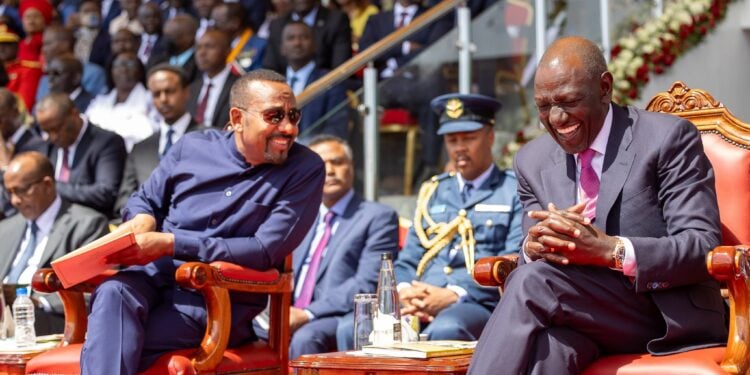
“Your Excellency Dr Abiy Ahmed Ali, Prime Minister of the Federal Democratic Republic of Ethiopia, The people of our three host counties, Uasin Gishu, Elgeyo-Marakwet and Nandi; Distinguished Leaders; Fellow Citizens; Ladies and Gentlemen,
Today, here in Eldoret, the Home of Champions, we gather to honour the extraordinary men and women whose courage, sacrifice and determination gave us the Republic we proudly call home.
Our independence in 1963 was won at an immense cost: land, liberty and lives. We honour those who fought, the families who sustained them, and the countless patriots whose names history did not record. We must never forget what it took to secure our freedom.
We honour Koitalel Arap Samoei, who paid the ultimate price for resisting colonial oppression, lured into a meeting under the false promise of peace and treacherously assassinated at point-blank range by a British colonial officer on 19 October 1905, exactly 121 years ago yesterday. We remember Mekatilili wa Menza, who defied colonial rule; Dedan Kimathi, executed for his resistance; and Field Marshal Muthoni wa Kirima, who fought courageously for our freedom.
We honour Mzee Jomo Kenyatta and his fellow Kapenguria Six: Bildad Kaggia, Achieng’ Oneko, Kungu Karumba, Fred Kubai and Paul Ngei, who endured imprisonment and detention, alongside thousands of patriots who suffered torture, dispossession, and exile, or paid the ultimate price for our independence.
The Enduring Meaning of Mashujaa Day
Later today, I will have the privilege of launching Achieng’ Oneko’s autobiography, The Price of Freedom, an important publication that preserves his legacy and a defining chapter in our nation’s history. Their struggle was not merely to replace one authority with another, but to secure for every Kenyan the freedom, dignity and right to determine their own destiny.
That is the enduring meaning of Mashujaa Day. The freedom we enjoy, the democracy we cherish and the rule of law that guides our Republic are the fruits of their sacrifice. They remind us that freedom is not merely an inheritance to be enjoyed, but a responsibility to be fulfilled. Our heroes laid the foundation of our nation; every generation must make its contribution to building upon it.
Our generation’s contribution is to give meaning to that freedom by expanding opportunity for every Kenyan. We must build a nation where every child, regardless of the circumstances of their birth, can access quality and relevant education; where illness does not condemn a family to poverty; where every household can afford food and decent shelter; and where every Kenyan has a fair chance to work, earn a decent living, build an enterprise and contribute to our nation’s prosperity. That is the contribution our generation must make.
The 2022 Mandate and Bottom-Up Agenda
That is why on 24th August 2021 I said, “I am a man on a mission. I have no space to retreat nor the luxury to surrender”. That mission demanded more than determination. It required a clear vision of the Kenya we wanted to build, a credible plan for achieving it, and the courage to place both before the people for their judgment. Armed with that vision and plan, we went to Kenyans in 2022 to seek their mandate.
Through the Bottom-Up Economic Transformation Agenda, we laid out our plan to change Kenya’s economic trajectory. We presented proposals to transform agriculture, reform education, expand access to healthcare, modernise infrastructure, create jobs and support enterprise. We explained how these interventions would work together to reduce the cost of living and increase household incomes, by lowering what families spend on essential needs while expanding what they can earn through work and enterprise.
We also sought to change the terms of our political competition. Rather than rely solely on the familiar arithmetic of ethnicity and region, we asked Kenyans to judge us by our ideas, policies, and programmes. We did not erase our differences; we demonstrated that Kenyans could organise around interests greater than those differences. Our communities remain a source of identity and pride, but leadership must be judged by its ability to work for and improve lives across all of them.
Accountability and the Voice of the People
Kenyans gave us a mandate to pursue that agenda. In doing so, they entrusted us with a responsibility, not an entitlement. Our manifesto became a covenant with the people of Kenya, grounded in the constitutional values of dignity, equality, social justice, and opportunity for all. We asked Kenyans to vote for an agenda, not an identity. They gave us a mandate, not a blank cheque. They demanded results, not excuses.
That demand for accountability has not always been comfortable. Kenyans, particularly young people, have taken to the streets to express their frustrations over the cost of living, taxation, unemployment, and the pace of change. Their protests remind us that an electoral mandate does not silence the people between elections. Citizens retain the right to question their government, challenge its decisions and demand better. We must listen, respond, and remain answerable for the commitments we made.
Also Read: Ruto Announces New PAYE Tax Exemption for Millions of Kenyans
This is the fifth Mashujaa Day I have had the honour of presiding over as President of the Republic of Kenya. At the first, in October 2022, just over a month into my term in office, we were only beginning the work of fulfilling our covenant with the people of Kenya. Today, four years later, I wish to account to Kenyans for the progress we have made in fulfilling that covenant, making our contribution to nation-building, and giving practical meaning to the sacrifices of our freedom fighters.
Economic Stabilisation and Growth
Over the last four years, we have grown our economy, stabilised our exchange rate, brought inflation under control, expanded access to credit, and reformed our capital markets. As a result, credit to the private sector has expanded. The value of our stock market has doubled, from Ksh 2 trillion to Ksh 4 trillion. Foreign direct investment has doubled in three years, from $1.5 billion in 2022 to $3.2 billion in 2025, and Kenya is now the seventh-largest economy in Africa.
We have also expanded access to affordable credit for millions of Kenyans previously excluded from formal financial services. Through the Hustler Fund, more than 10 million Kenyans are regular borrowers, and Ksh 98 billion has been advanced without collateral. Before the end of this year, we will inject an additional Ksh 5 billion into the Fund to expand credit to borrowers and support more businesses.
Agricultural Reforms and Farmer Incomes
We have undertaken far-reaching reforms in agriculture, registering 8.9 million farmers, eliminating exploitative middlemen and cartels, and substantially reducing the cost of farm inputs. In 2022, a bag of fertiliser cost Ksh 7,500. Today, it costs Ksh 2,000 under our subsidy programme. We have distributed more than 38 million bags of subsidised fertiliser, and the results speak for themselves. Maize production has increased from 34.3 million bags in 2022 to 71 million bags last year, while maize imports have declined significantly.
In coffee, the average cherry price has increased from approximately Ksh 70 to between Ksh 110 and Ksh 150 per kilogramme. In tea, the average green leaf price has risen from Ksh 35 to Ksh 56 per kilogramme. In the sugar sector, farmers are now paid weekly for their cane deliveries and will receive an additional bonus next month. These reforms are improving incomes for farmers across our agricultural value chains.
In the dairy sector, national milk production has increased by one billion litres, while the price paid to farmers has risen from Ksh 35 to Ksh 60 per litre, nearly doubling their earnings per litre. This progress is being felt here in Eldoret, where New KCC plays a central role in the dairy industry. Beginning this month, dairy farmers will earn Ksh 65 per litre and an additional bonus of Ksh 2 per litre every month, payable quarterly.
Livestock, Markets and Trade
We have strengthened livestock production, increasing annual artificial inseminations from 900,000 to 1.28 million and reducing the cost of sexed semen from KSh8,000 to KSh1,400. We have vaccinated over 22 million livestock, restocked more than 52,000 animals for 10,000 households across 16 counties, and extended drought insurance through the DRIVE programme to 1.6 million pastoralists across 21 counties.
We have also expanded international markets for Kenyan agricultural produce. In 2024, our Economic Partnership Agreement with the European Union was concluded and entered into force, securing preferential access to the European market.
In 2025, we signed a Comprehensive Economic Partnership Agreement with the United Arab Emirates to expand opportunities for our exports. We equally concluded negotiations with China, opening new markets for our agricultural produce. We have also secured continued access to the American market through the extension of AGOA, alongside ongoing negotiations for a broader trade agreement with the United States.
Education and Health Reforms
In education, we have reformed the Competency-Based Curriculum (CBC), introduced a student-centred university funding model, and advanced the New Funding Model Bill to ensure that no deserving student is denied higher education because of financial circumstances. Over the last four years, we have recruited more than 100,000 teachers, constructed 23,000 classrooms, and commenced construction of 1,600 laboratories. We have also recruited 6,000 TVET trainers, while TVET student admissions have increased from approximately 300,000 in 2022 to 1.3 million today.
In health, we have enacted far-reaching reforms to expand access to affordable, quality health for every Kenyan. We have increased beneficiaries under social health insurance from NHIF’s 7 million in 2022 to SHA’s 33.3 million today.
The difference between the old NHIF and the new SHA is clear. NHIF was exclusive; SHA is universal. NHIF served a select few; SHA serves every Kenyan. NHIF financed selected hospitals; SHA finances all healthcare facilities across the country, including health centres and dispensaries.
Under NHIF, payments were irregular and unpredictable; under SHA, facilities receive financing every month.
Today, more than 10,000 healthcare facilities receive financing directly, enabling them to purchase medicines, medical supplies, and other essential commodities according to their priorities. Since 1st January this year alone, SHA has disbursed Ksh 107 billion to healthcare facilities across the country. We have also digitised healthcare services, replacing cumbersome paper-based processes with modern systems that allow patient information to move seamlessly across healthcare facilities. This is Usawa Healthcare: not healthcare for a privileged few, but quality healthcare for every Kenyan, wherever they live and whatever their circumstances.
Housing, Youth Opportunity and Infrastructure
Equally, we undertook deliberate and intentional programmes to expand opportunities for Kenyans, particularly our young people, to earn a decent living and build better futures. Through the Affordable Housing Programme, 303,910 homes are at various stages of development, alongside more than 450 modern markets and student accommodation facilities for 180,000 students, generating over 1.1 million employment opportunities in building, construction, and related industries. Just this past Sunday, here in Eldoret, we handed over the keys to 2157 families at the Pioneer Affordable Housing Estate, giving them the dignity and security of decent homes.
Beyond housing, our labour mobility programme has connected 680,000 Kenyans to employment opportunities abroad, while our digital jobs initiatives have opened opportunities for 350,000 young people to earn a living in the digital economy. Through NYOTA, we are equipping more than 700,000 young people with skills, while over 120,000 young entrepreneurs have received start-up capital and mentorship to establish businesses, create jobs, and build sustainable livelihoods.
Infrastructure development was a key commitment we made to Kenyans so as to connect our people, open up markets and create opportunities for enterprise. Along the Northern Corridor, we are upgrading the Rironi–Mau Summit highway through Naivasha, Gilgil, Nakuru and Salgaa, strengthening the vital transport artery linking Nairobi to Eldoret, Webuye, Bungoma and Malaba, and onwards to Uganda.
We are extending the Standard Gauge Railway from Narok to Kisumu and Malaba, and have concluded an agreement to construct the Lake Victoria Ring Road, connecting Busia through Bondo, Kisumu, Kendu Bay, Homa Bay, Mbita and Sori to Muhuru Bay. The development of the Isiolo–Mandera corridor through Modogashe, Wajir, El Wak and Rhamu is on course, alongside the modernisation of Jomo Kenyatta International Airport. The Kenol–Marua dual carriageway and the 700 kilometres of Mau Mau roads are nearing completion. Altogether, 7,000 kilometres of roads are being built across many constituencies throughout Kenya. These investments will reduce transport costs, strengthen regional trade, and connect more Kenyans to economic opportunities.
At the same time, we are laying the foundations for a more productive and industrialised economy. In Lamu, the Dangote Group has initiated the East Africa Refinery project as part of our ambition to expand the country’s industrial capacity. Alongside investments in energy, ports and manufacturing infrastructure, these initiatives are intended to attract investment, create jobs and build an economy that produces more of what it consumes and exports more of what it produces.
Constitutional Obligations and Usawa
Fellow Citizens,
These are not disconnected government programmes. They are commitments made to the people, investments made on behalf of the people and opportunities being created for the people. They are the practical expression of the covenant we entered into with Kenyans in 2022 and, more importantly, the obligations established by our Constitution.
Article 10 requires us to uphold equity, social justice, inclusiveness, and the protection of the marginalised. Article 27 guarantees equality before the law and equal protection and benefit of the law. Article 43 recognises the rights of every Kenyan to healthcare, housing, food, water, social security, and education. Article 56 requires measures to ensure that minorities and marginalised groups participate in governance and access educational and economic opportunities. These are not abstract ideals. They are obligations that must find expression in the daily lives of our people.
Our Constitution does not merely guarantee the right of Kenyans to choose their leaders. It also places upon leaders the responsibility to live up to their promise, expand opportunity, protect dignity, and advance social justice.
That is the transformation we are pursuing; one demanded by the people, funded by the people and benefiting the people; that is reaching every village, every ward, every constituency, and every county, so that no Kenyan and no part of Kenya is left behind. That is how we advance Usawa.
Broad-Based Government and Inclusive Opportunity
It is in this spirit that, two years ago, we embraced a historic opportunity to establish a broad-based government, bringing together leaders from different political backgrounds in the service of our nation. I commend those who rose above partisan differences to make this possible. Together, we have demonstrated that political competition need not stand in the way of working together for our nation’s good, and that when we unite around the interests of our people, we can achieve more for Kenya.
Usawa is the conviction that every Kenyan deserves a fair opportunity to succeed, regardless of ethnicity, birthplace, ability, connections, or circumstances. It does not promise identical outcomes. It demands that opportunity should not remain the privilege of a few, but become accessible to all. Our heroes won us the freedom to determine our destiny. Our duty is to ensure that every Kenyan has a fair chance to fulfil it.
Looking Ahead to 2027 and the Next Agenda
Fellow Citizens,
Next year, we will return to the ballot box. The political transition we began in 2022 must not be reversed. We must deepen a political culture in which citizens choose an agenda, leaders implement it, and the people judge the results. The benchmark for that contest must be clear: a track record, a vision, a plan and an agenda. I will present to Kenyans an account of what my administration has achieved, and what remains to be done.
I will explain our contribution to building a country that is not only free, democratic, and governed by the rule of law, but also more equitable and inclusive; a nation in which every citizen counts, every community matters and no part of Kenya is left behind.
I will also place before Kenyans the next phase of our agenda: increasing agricultural and milk production, expanding industrialisation, unlocking our natural resources, and accelerating our transition towards a modern, competitive service economy.
Over the next three years, our ambition is to expand digital employment opportunities towards two million, international work opportunities towards one million and employment opportunities generated through housing and related investments towards two million. We will pursue these goals alongside new investments in roads, energy, and logistics, supported by sustainable financing arrangements through the National Infrastructure Fund. These are ambitious targets, and we will be prepared to explain how they will be financed, implemented and measured.
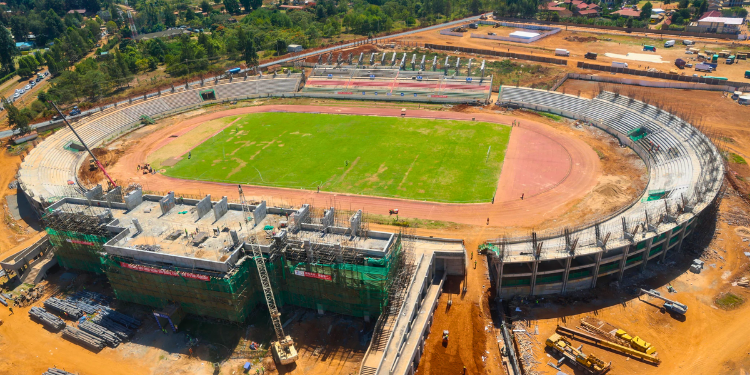
Also Read: Eldoret Traders Report New Opportunities as Kipchoge Keino Stadium Set to Host Mashujaa Day
In the months ahead, we will unlock new opportunities in our energy sector. Work in the Lake Turkana Basin is progressing rapidly, with oil exports targeted to begin in December. Just yesterday, in a demonstration of growing confidence in our capital markets, private investors acquired a 25 per cent stake in Kenya Pipeline Company from public entities, marking another step towards mobilising private capital for strategic infrastructure. Together, these developments will strengthen our energy sector, attract investment, and create new opportunities for the Kenyan economy.
Standards of Leadership and Democracy
That is the standard I intend to meet, and it is the standard every leader seeking the trust of Kenyans should measure up to. Our democracy must be a contest of ideas, policies, and programmes, not a competition in ethnic choreography, personality attacks, or empty sloganeering. Every leader should be prepared to present a credible record, a clear vision of where they want to take our country, and a practical plan for getting us there.
No Government programme is above criticism. No leader is beyond accountability. We should debate the merits of competing proposals, question their costs and demand results. But let our disagreements produce better policies, not deeper divisions. No one should seek power without accepting accountability. No one should seek leadership without responsibility.
There is no contradiction between democracy, constitutionalism, the rule of law and economic transformation. The rule of law protects our rights. Constitutionalism limits the exercise of power. Democracy gives citizens the freedom to choose. A credible development agenda gives that choice substance, and accountability gives it consequences. None can replace the others. Together, they give meaning to the sacrifices of our heroes. The freedom they won must never end at the ballot box. It must reach the classroom, the farm, the hospital, the workplace, the marketplace, and every home in every village.
Four New Measures for Kenyans
Fellow Citizens,
I have spoken today about the strides we have made and the transformation we have achieved. But I recognise that our progress must be balanced and its benefits felt across all sectors of our society. The stability we have achieved in our economy now affords us an opportunity to ease the burden on sections of our population and ensure that more Kenyans share in the benefits of our progress.
That is why, on this Mashujaa Day, I wish to announce four further measures to put more money into the pockets of hardworking Kenyans, make property ownership more affordable, expand access to the digital economy and open new pathways to employment for our young people.
First, we have prepared proposals to exempt Kenyans earning Ksh 32,333 per month or less from Pay As You Earn (PAYE) income tax. For workers on modest incomes, every shilling saved means more money to meet their families’ needs, including food, transport, and other essentials. These proposals will be presented to Parliament beginning next week.
Second, the National Treasury has developed proposals to exempt land transactions valued at Ksh 1 million or less from stamp duty and to introduce progressive rates for higher-value transactions. These measures will help reduce the cost of acquiring and transferring land, strengthen security of land ownership and make property ownership more accessible to ordinary Kenyans.
Third, we propose to remove the 25 per cent import duty on mobile phones. A mobile phone is no longer a luxury. It is a classroom, a marketplace, a bank, an office and, for many young Kenyans, a gateway to employment. Making phones more affordable will bring the opportunities of the digital economy within reach of more citizens.
Fourth, from 1 January 2027, we propose to expand the national internship programme to accommodate 50,000 young Kenyans, each receiving a monthly stipend. Placements will be made through a transparent, digital and merit-based system, alongside incentives to encourage private employers to provide meaningful work experience.
Too many young people cannot secure employment without experience, yet cannot gain experience without employment. This programme is intended to break that cycle by providing a pathway from education to practical and productive workplace experience and, ultimately, meaningful employment.
These measures address four barriers that Kenyans confront every day: the burden of taxation on modest incomes, the cost of acquiring property, the expense of accessing digital opportunities and the difficulty of entering the labour market. The necessary legislative, fiscal and administrative processes will follow, with attention to sustainable financing, transparency, and effective implementation.
Our purpose is clear: to put more money in the pockets of workers, make ownership easier for families, bring digital opportunity within reach, and open the doors of employment to our young people. That is what it means to translate Usawa from a principle into practical action.
Honouring Security Services and the Champions Tradition
Fellow Citizens,
The story of our nation is a story of courage, sacrifice, and achievement across generations. Our freedom fighters secured our independence. Those who came after them built our institutions, expanded opportunity, and defended our democratic freedoms. And in every generation, Kenyans have continued to distinguish themselves through hard work, discipline, and determination.
Today we also honour the men and women of our security and intelligence services: the Kenya Defence Forces, National Police Service, National Intelligence Service, Kenya Prisons Service and National Police Reservists, whose courage and vigilance keep our country safe, often far from their families and without public recognition. Because they stand watch, our children can learn, our people can work, and our communities can live in peace. We salute their service, remember those who have made the ultimate sacrifice and stand with the families they have left behind. They, too, are the heroes of our nation.
Here in Eldoret, the Home of Champions, we know that greatness is not achieved in a single moment. It is built upon the efforts of those who came before us.
In Tokyo in 1964, Wilson Kiprugut won Kenya’s first Olympic medal, a bronze in the 800 metres. Four years later, Kipchoge Keino won gold in the 1,500 metres at the Mexico City Olympics. Their victories showed a young nation what its people could accomplish on the world stage. In Munich in 1972, Charles Asati, Hezekiah Nyamau, Robert Ouko and Julius Sang carried one baton to Olympic gold in the 4 × 400 metres relay. Four athletes. Four laps. One baton. One victory for Kenya.
That tradition continues through the extraordinary achievements of our athletes today. From Faith Kipyegon and Beatrice Chebet to Peres Jepchirchir, Faith Cherotich and Lilian Odira, our champions have carried Kenya’s flag with pride and inspired generations of young people. We salute every athlete who has represented our country, including those whose names may never appear in the record books, but whose dedication strengthens our sporting tradition.
And now, our ambition is not only to send Kenyan champions to the world, but to welcome the world to Kenya. As we prepare to co-host the Africa Cup of Nations with Uganda and Tanzania, we are investing in modern sporting facilities, including the Raila Odinga International Stadium and the modernisation of Kasarani. These investments will nurture talent, create opportunities, and strengthen our country’s place in international sport. For decades, our athletes have carried Kenya to the world. Now we are preparing to bring the world home.
The Baton of Freedom and Opportunity
The story of our champions offers a lesson for our nation. In a relay race, no athlete wins alone. Each runner must receive the baton, run their part with courage and determination, and pass it on without losing sight of the team’s purpose. Our freedom fighters carried the baton through sacrifice. Those who built the Republic carried it through nation-building. Those who defended our constitutional freedoms carried it through courage and conviction. Today, the baton is in our hands.
We will be judged not merely by the positions we held or the promises we made, but by the contribution we made: whether more children can learn, more families can access healthcare, more young people can find work, more enterprises can prosper, and more Kenyans can live with dignity. That responsibility belongs to all of us; to the farmer, the teacher, the health worker, the entrepreneur, the athlete, and the young Kenyan determined to build a better future. You are the heroes of today, and your work gives meaning to the freedom we inherited.
We inherited the baton of freedom. We must pass on the baton of opportunity. Our heroes fought to give every Kenyan a country to call their own. Our duty is to build a Kenya in which every citizen has a fair opportunity to make something of their own. Let us honour their sacrifice by protecting our freedoms, upholding our Constitution, respecting our differences, and building together a nation in which every citizen counts and every community has a fair chance to prosper.
Usawa ni sawa. Mbele Pamoja. Happy Mashujaa Day.
God bless you. God bless Kenya. I thank you.”
Follow our WhatsApp Channel and X Account for real-time news updates