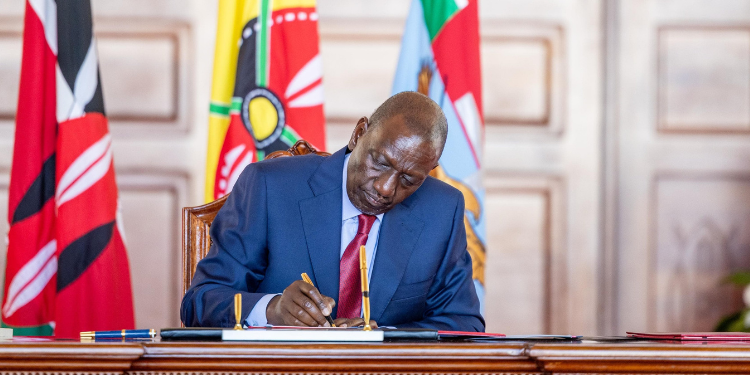
The government has moved to reassure Savings and Credit Cooperative Organizations (SACCO) members after reports suggesting that President William Ruto’s administration was planning to use cooperative savings to finance the proposed National Infrastructure Fund.
The clarification on the SACCO deposits from the government comes after widespread concern among members.
The saving organizations reportedly received numerous calls from depositors seeking answers on whether their savings were at risk.
Further, the reports on the government potentially tapping into nearly KSh1 trillion held by SACCOs to support infrastructure development projects caused panic among depositors, with most threatening to withdraw their savings from the organizations.
However, government officials and cooperative sector leaders have maintained that there are currently no plans to access members’ deposits.
Ministry Explains Why SACCO Deposits Cannot Be Used For Government Funding
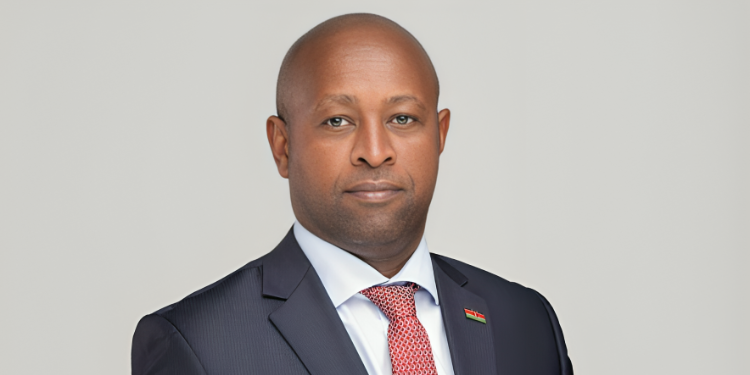
Speaking during an interview with the NTV, Patrick Kibiru Kilemi, the Principal Secretary in the Ministry of Co-operative and Micro, Small & Medium Enterprises (MSMEs) Development, emphasized that the SACCOs do not keep any deposits.
“In matters of financial intermediation, our SACOs are doing 100%. What that means is that we do not keep deposits. The deposits are given out there as loans. The ratios are almost one-to-one,” PS Patrick Kilemi stated.
The Ministry of Cooperatives further explained that SACCO deposits are not readily available for government investment, clarifying that the SACCOs operate by mobilizing members’ savings and lending those funds to members who require credit.
The PS noted that most of the money collected by SACCOs circulates within the economy rather than being held as idle funds.
With the deposit-to-loan ratio in many SACCOs approximately one-to-one, officials argued that it is practically impossible for the government to access the funds as suggested by the reports.
Also Read: Govt Clarifies About Borrowing Money Saved in SACCOS
Industry Leaders to SACCO Members
Leaders within the cooperative movement have also sought to reassure members over the safety of their savings.
According to industry representatives, SACCOs collectively manage close to KSh1 trillion in member deposits, and accessing these funds would require recalling loans already issued to members, businesses, and other borrowers across the country.
Industry leaders further argued that much of the concern stemmed from a misunderstanding of how SACCOs operate.
Unlike conventional investment pools, SACCOs primarily use members’ savings to provide affordable credit to their members, according to the industry leaders therefore, all savings are currently secured and protected under existing cooperative and financial sector regulations.
Treasury Dismisses SACCO Claims
The National Treasury has also dismissed claims circulating on social media alleging that the government, under the leadership of President Ruto, intends to borrow SACCO savings for the National Infrastructure Fund.
In a statement released on July 6, Treasury Cabinet Secretary, John Mbadi, dismissed claims of making any statement suggesting that SACCO deposits would be used to finance the proposed fund.
In addition, the National Treasury urged Kenyans to ignore the circulating claims and rely only on official communication channels for accurate information regarding public finance and government policy.
Infrastructure Investments
While the government has ruled out any immediate plans to use SACCO deposits, officials indicated that the idea of cooperative societies participating in infrastructure investments is not an impossibility.
Stakeholders noted that there could be opportunities in the future for SACCOs to invest in infrastructure projects if suitable legal frameworks, policies and investment structures are put in place.
According to cooperative sector leaders, mature cooperative institutions in countries such as Canada, the United States and parts of Europe often participate in large-scale national development projects as institutional investors.
Industry players argued that Kenyan SACCOs could eventually evolve into similar institutions capable of participating in Public-Private Partnership projects and other strategic investments.
However, they emphasized that any future participation would be voluntary and investment-driven rather than a government directive to access members’ savings.
“In our proposed SACO Amendment Bill, we talk about SACO liquidity deferred, shared services. How can we achieve arbitrage within the SACO ecosystem, especially when some SACOs have excess liquidity, and others are struggling? Therefore, there are those opportunities, and yes, at the right time, the infrastructure fund will offer one. When the returns are right, it’s all for us,” PS Patrick affirmed.
Also Read: SACCO Report Exposes Kenya’s Fastest-Growing Loan Category – Here Is Why It’s Booming
Proposed SACCO Reforms
The debate on SACCO deposits and government interventions has also drawn attention to ongoing reforms contained in the proposed SACCO Amendment Bill.
According to the reforms, the proposed legislation seeks to modernize the cooperative sector by improving efficiency, liquidity management, and financial stability.
Among the proposals is the establishment of a Central Liquidity Facility that would allow SACCOs to support one another through short-term lending and liquidity management arrangements.
The bill also proposes a Shared Services Framework that would enable SACCOs to pool resources, adopt modern financial technologies, and reduce operational costs while maintaining their independence.
In addition, the reforms seek to strengthen the Deposit Guarantee Fund to enhance protection for members’ savings and boost confidence in the sector.
Another proposal in the SACCO Amendment Bill involves the creation of a centralized data system to improve oversight, transparency, and regulatory supervision within the cooperative movement.
Follow our WhatsApp Channel and X Account for real-time news updates.