When it comes to love, everyone has their own way of showing it to the person they wish to have. But for Ewart Scott Grogan, his story is unique: He walked for two and a half years just to win a girl’s heart.
During the pre-colonial and colonial period, explorers and missionaries arrived from the several parts of the world to British East Africa. Many of them built structures, including towers, castles, schools, and mission stations. Ewart Scott Grogan is among the explorers who left a landmark on the Kenyan coast.
Ewart Scott Grogan is a British adventurer-turned-settler who became famous for an extraordinary trek across Africa from Cape Town to Cairo and later for his association with the hilltop property known as Grogan’s Castle in Taveta.
The Cape-to-Cairo Journey that Built a Reputation
Ewart Scott Grogan was born on 12 December 1874 in England and came to British East Africa in the late 19 century.
Also Read: Truth Behind Donholm’s Iconic Mushroom-Shaped Water Tower
Between 1898 and 1900, when he was 24 years old, Grogan embarked on one of the most ambitious overland journey, walking from Cape Town to Cairo across the African continent.
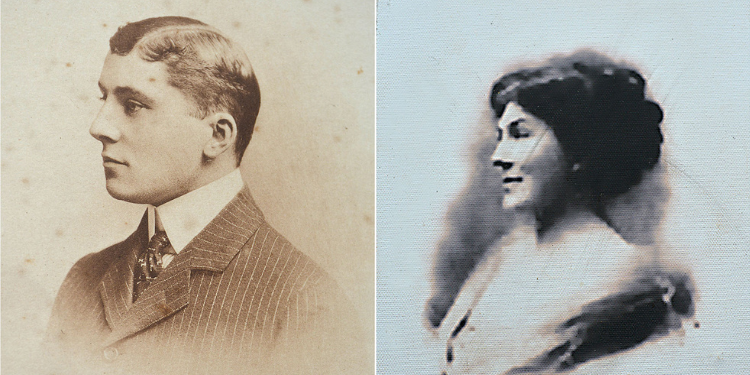
The young Grogan decided to do this so as to prove to Gertrude Edith Watt the love and how committed he is. This was after Gertrude’s family doubted his suitability as a husband.
According to his documented book From Cape to Cairo, Grogan’s motivations were complex, combining personal ambition, adventure, and the competitive spirit of imperial exploration during the era.
His journey took him through unmapped regions of southern, central, and eastern Africa during a period of colonial period.
He later documented his experiences in his memoir From Cape to Cairo: The First Traverse of Africa from South to North, which contributed to his reputation as a bold and resilient explorer.
Parts of the narrative from the book include dramatic descriptions of wildlife encounters and hostile environments, during the journey.
Settlement in Taveta and the Making of Grogan’s Estate
After returning from the journey, he went back to Europe and married Gertrude in 1900. The two later relocated to British East Africa present-day Kenya in the same year.
Being among the early European settlers in the British protectorate. He acquired and developed land in the Coast region of the colony, including the Taveta region near the modern-day border with Tanzania.
Taveta, located in Taita-Taveta County, sits between Tsavo West National Park, Lake Jipe, and the foothills of Mount Kilimanjaro.
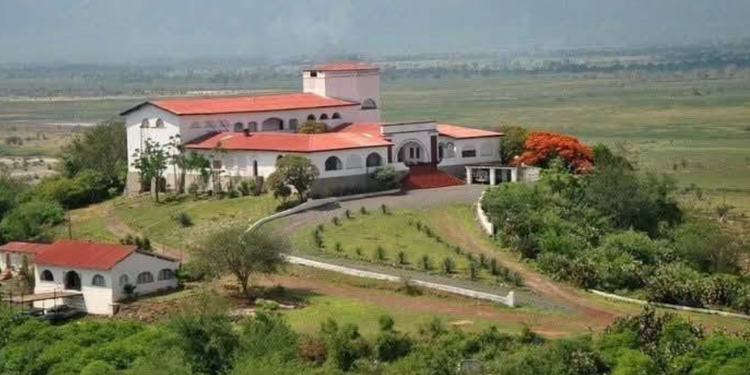
It was an area of ecological richness and frontier settlement activity during the colonial period. In Taveta, Grogan built a hilltop estate which was later called Grogan’s Castle.
The structure was developed in 1930. Grogan built a unique building on top of a conical hill, which he intended to be an agricultural college that was to be supported by rich agricultural surroundings. He then set up irrigation systems.
He targeted an agricultural hub, with irrigation and farming integral the its operations, supporting crops such as sisal, cotton, maize, and coconuts on the fertile surrounding lands.
However, the British Empire did not support his project, and he decided to change the original idea into his own residence, calling it “Grogan’s Castle”.
Today, Grogan’s properties have been preserved, including his own bed that he used, and many of its features and original furnishings still remain on display within the castle.
Also Read: Kenya National Archives: How Joseph Murumbi Transformed a Former Bank Into Nairobi Landmark
Legacy of Grogan’s Castle in the Kenyan Coast
Today, Grogan’s Castle in Taveta is a restored heritage and tourism site, associated with the modern Grogan’s Castle Hotel and Lake Jipe Conservancy.
It overlooks a landscape that includes wildlife corridors, volcanic plains, and views stretching toward Mount Kilimanjaro on clear days.
The legacy of Ewart Grogan himself remains complex, with historical and literary accounts describing him in many ways, including as an adventurer, an entrepreneur, an eccentric settler, and a controversial colonial figure.
Grogan died on 16 August 1967 in Cape Town, South Africa, at the age of 92.
Follow our WhatsApp Channel and X Account for real-time news updates