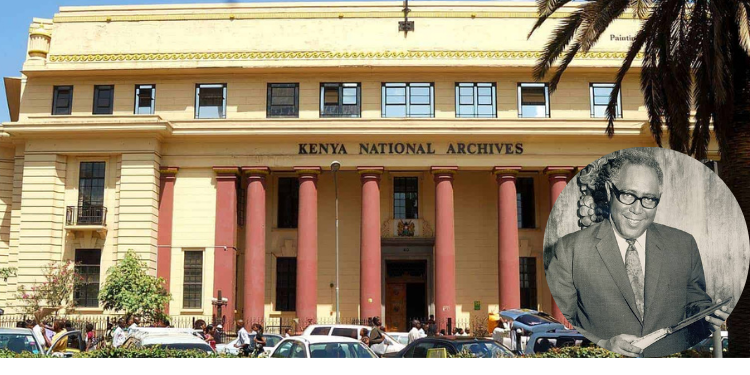
If you were to meet in Nairobi Central Business District (CBD) with your friend, you’d probably tell them, ‘Tupatane Archives’
Kenya National Archives is one of Nairobi’s best-known landmarks, located along Moi Avenue and also known as The Murumbi Art Gallery.
The building started life as a commercial bank, then changed over time before becoming the structure that preserves documents, photographs, artifacts, and records of Kenya’s history.
With its strategic location in the CBD opposite Ambassadeur Hotel, the building serves as a meeting point for many people in Nairobi.
How the Building Was Transformed from a Bank to Nairobi’s Landmark
The building structure was designed by the architects James Kerr Watson and Cobb & Archer. Construction of the building began in 1928 and was completed in 1931.
The building was originally built for the National Bank of India, with the structure replacing an earlier iron-sheet banking premises that had served the same site.
Also Read: Truth Behind Donholm’s Iconic Mushroom-Shaped Water Tower
In 1958, the National and Grindlays Banks merged to form Kenya Commercial Bank, and after independence, KCB relocated to the KenCom Building in 1970.
Following Kenya’s independence in 1963, the government sought a permanent home for the country’s growing collection of historical records.
In 1965, the Parliament established the Kenya National Archives and Documentation Services (KNADS), an institution tasked with preserving Kenya’s heritage, and the building was the ideal storage facility.
Before the National records were moved to the building, they were previously housed at Jogoo House, which is now the Ministry of Education.
Why the National Archives is Called the Murumbi Art Gallery
Joseph Zuzarte Murumbi served as Kenya’s Vice President between 1966 and 1967, and he was a passionate collector of African art, literature, manuscripts and historical artifacts.
He had the largest private collection of Africana on the continent, including traditional artifacts, rare books, jewelry, textiles, furniture and postal stamps.
By the mid-1970s, Murumbi’s collection had attracted interest from international buyers who wanted to acquire and export the materials.
However, then National Archives Director Dr Maina Kagombe intervened to ensure the collection remained in Kenya.
Kagombe reminded Murumbi of his own advocacy for preserving African heritage within Africa. In 1976, the government published a Gazette Notice restricting the disposal of antiquities, a move that proved instrumental in securing Murumbi’s collection for the nation.
Murumbi then donated his artifacts to the national archives, and a gallery inside the building was named after him, the Murumbi Art Gallery.
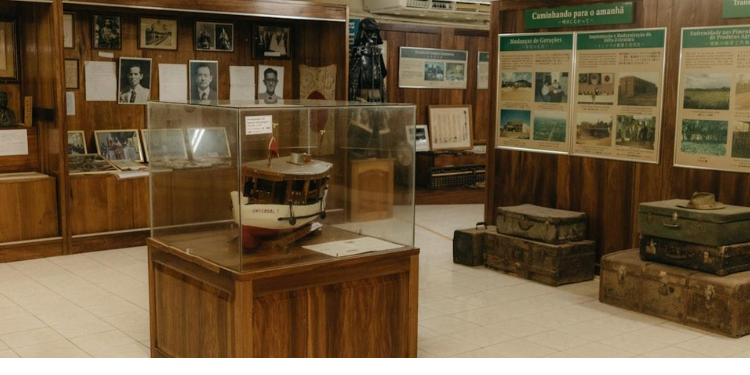
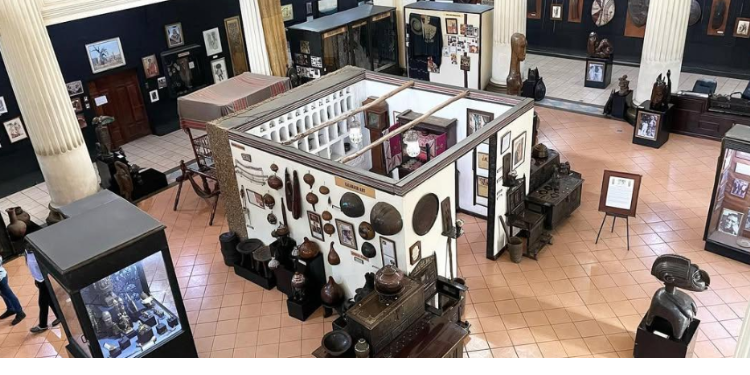
The Murumbi Gallery, inside the National Archives, contains thousands of artifacts from Kenya and across Africa, including collections from Ethiopia, Uganda, Nigeria, and other African countries. The galleries include ceremonial masks, traditional weapons, textiles, furniture, manuscripts, and religious artifacts.
What the National Archives Holds
The National Archives stores microfilming facilities that convert paper records into preservation films that can last up to 500 years.
These records include newspapers dating back to the 1920s, government reports, administrative records, labor union documents, and historical land records known as green cards.
Some newspapers in the collection date back to 1901 and are used by researchers.
Also Read: Who Owns Trademark Hotel Nairobi? Iranian Family Behind Kenya’s Award Winning Hotel
The institution also houses an audiovisual archive containing recordings of political speeches, oral histories and documentary footage preserved on film reels, magnetic tapes, CDs and VHS formats.
Among the materials preserved are speeches by prominent independence leaders, including Tom Mboya, and interviews documenting the histories of various Kenyan communities.
Researchers seeking access to archival materials must obtain annual permits, with access governed by strict protocols.
Government records inside the facility become publicly accessible only after 30 years, with sensitive and classified documents remaining restricted under government regulations.
Many of these records are stored in the building’s basement vaults, where climate-controlled conditions and stringent security protocols are maintained.
Follow our WhatsApp Channel and X Account for real-time news updates.