Former President Uhuru Kenyatta assumed office as Kenya’s fourth president on April 9, 2013, following his victory in the March 2013 General Election. He later secured a second term after the 2017 elections, serving until 2022.
During his reign, several Kenyan companies and commercial entities significantly expanded their operations between 2013 and 2022.
The growth was driven by a combination of acquisitions, mergers, infrastructure investments, digital innovation, regional expansion and government-backed economic programmes.
Brookside Dairy
Brookside Dairy strengthened its dominance in Kenya’s dairy industry by acquiring several rival processors, including Ilara Dairy, Delamere Dairy and Buzeki Dairy (Molo Milk).
The acquisitions increased its milk-processing capacity, broadened its product portfolio, and expanded its distribution network across Kenya and neighboring East African markets.
During the same period, Brookside consolidated its position as the country’s largest dairy processor while continuing its regional expansion strategy.
Brookside Company is associated with the Kenyatta family through executive chairman Muhoho Kenyatta.
Also Read: Where Is Uhuru Kenyatta Today? Inside the Former President’s Life After State House
NCBA Group
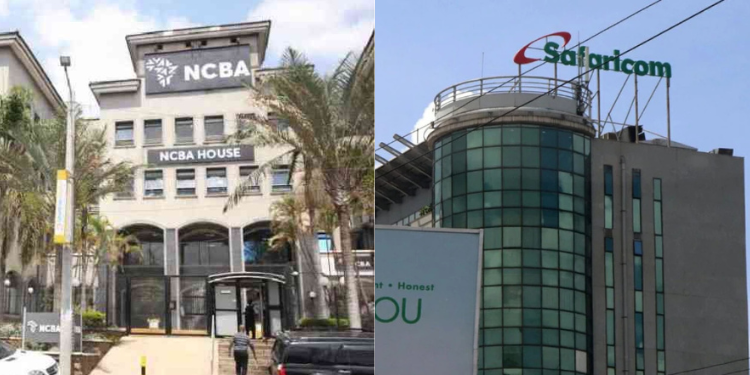
Commercial Bank of Africa (CBA) merged with NIC Bank in 2019 to form NCBA Group, creating one of Kenya’s largest financial institutions by assets.
The merger allowed the lender to expand its regional presence, boost lending capacity, strengthen digital banking, and broaden its product offerings, including the M-Shwari mobile lending platform.
The consolidation also enhanced its competitiveness in Kenya’s banking sector.
Heritage Hotels
Heritage Hotels, which is linked to the Kenyatta family, embarked on expansion plans that included restructuring its management and pursuing new hospitality investments in Kenya and the wider East African region.
The group announced plans to develop additional hotel facilities while strengthening its position in Kenya’s tourism industry through new leadership and investment strategies.
Mediamax Network Limited
Mediamax expanded its presence in Kenya’s media industry through investments in television, radio and print.
The company strengthened its brands, including K24 TV, Kameme FM, Kameme TV, and The People Daily, broadening its reach and consolidating its position as one of Kenya’s largest privately owned media houses.
Northlands and Related Kenyatta Family Business Interests
Business interests associated with the Kenyatta family diversified significantly during the period.
Investments expanded into large-scale real estate developments such as Northlands City, as well as commercial agriculture, banking, hospitality, and other sectors.
Private Logistics and Port-Related Firms
Private logistics companies, freight operators, clearing agents, and transport firms benefited from increased activity at the Port of Mombasa following investments in port expansion and the Standard Gauge Railway (SGR).
The infrastructure projects improved cargo-handling capacity, reduced transit time between Mombasa and Nairobi, and created additional opportunities for businesses involved in logistics, warehousing, and transportation.
Kenya Defence Forces Commercial Enterprises
The Kenya Defence Forces expanded their commercial footprint through investments in manufacturing and industrial ventures during Uhuru’s presidency.
The military established industrial projects to produce goods locally, reduce dependence on imports, and increase participation in commercial manufacturing.
Small and Medium Enterprises (SMEs)
Thousands of SMEs benefited from government-backed initiatives such as the Stawisha SME Mashinani Programme, launched in 2020 through Kenya Industrial Estates.
The programme sought to strengthen grassroots enterprises by providing affordable financing, machinery support and business development services.
Additional credit guarantee schemes introduced during the period also improved access to financing for small businesses.
Construction and Engineering Firms
Kenyan and international construction companies expanded significantly through contracts awarded under the government’s infrastructure agenda.
Major projects included the Standard Gauge Railway, Nairobi Expressway planning, road expansion, affordable housing projects, airport upgrades and other Big Four Agenda infrastructure programmes, generating billions of shillings in contracts for contractors, suppliers and engineering firms.
Also Read: M-PESA Powers Safaricom Growth as Transactions Hit KSh 41.68 Trillion
Safaricom and Fintech Companies
Safaricom recorded substantial growth during the period through the continued expansion of M-Pesa, increased mobile data usage and the rollout of new digital financial products.
Rising smartphone penetration and increased demand for digital payments also fuelled growth among fintech companies offering mobile lending, digital banking and payment solutions.
Independent Power Producers (IPPs) and Energy Companies
Private power producers expanded electricity generation through investments in geothermal, wind and solar energy projects as Kenya increased investment in renewable energy.
Projects such as Lake Turkana Wind Power and geothermal expansion contributed to higher electricity generation capacity while creating opportunities for private energy companies.
Commercial Agriculture and Agri-processing Firms
Companies operating in dairy, tea, and horticulture expanded production through investments in value addition, processing facilities, export markets, and supply chains. Notable players included Brookside Dairy, New KCC, KTDA Holdings, Kakuzi Plc, and Vegpro Group.
For instance, KTDA Holdings strengthened smallholder tea production by managing over 70 tea factories that serve more than 600,000 farmers and process about 60% of Kenya’s total tea output, while also expanding into value-added products and new export markets across Europe, the Middle East, and Asia.
State Corporations and Parastatals
Several state corporations, including those responsible for ports, railways, transport and public utilities, expanded operations following increased government investment in infrastructure.
The expansion of these agencies generated procurement opportunities for private suppliers while increasing service delivery capacity across key sectors of the economy.
Follow our WhatsApp Channel and X Account for real-time news updates.