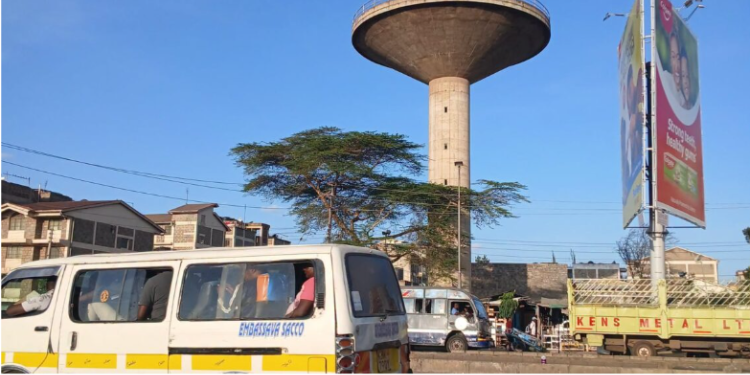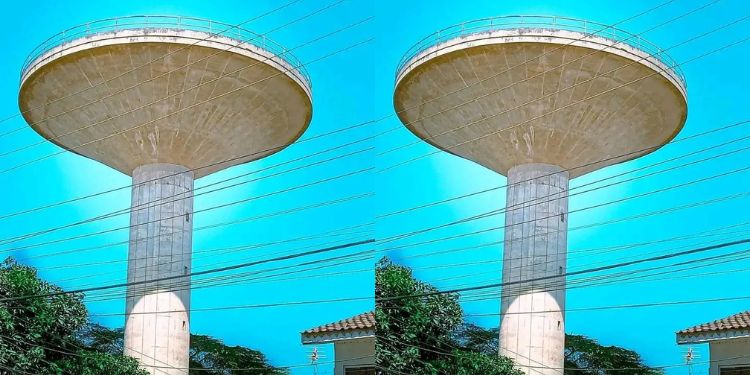
If you have ever visited the Donholm area in Nairobi, then you’ll probably see a mushroom-shaped structure along Jogoo Road.
The Kenya Times has exclusively established the story, the structure, and the history of the architect behind it.
James Kerr Watson, a Scottish architect, contractor, and farmer, left a landmark in Nairobi through his Doonholm dairy farm and the road that would later become Jogoo Road.
More than a century later, the mushroom-shaped Donholm Water Tower is one of the most recognizable reminders of his legacy.
Watson, who arrived in British East Africa in 1908, transformed thousands of acres of land east of Nairobi into one of the colony’s earliest and largest dairy operations.
Architect Behind Mushroom-Shaped Structure in Donholm
James Kerr Watson was born on October 3, 1881, in Ayr, Scotland. He arrived in Kenya in 1908 together with his brother, Andrew Macrae Watson, seeking opportunities in British East Africa.
Also Read: Inside the Delays That Stalled 88 Residential Tower, Nairobi’s Tallest Residential Building
The two brothers acquired 4,600 acres of land on the Athi Plains southeast of Nairobi and established what became known as Doonholm Dairies. The name “Doonholm” was derived from an estate associated with their home in Scotland and was later renamed to Donholm.
The farm stretched from the area around present-day City Stadium to what is now Jomo Kenyatta International Airport (JKIA). By the end of 1909, the Watson brothers had become among Nairobi’s earliest milk suppliers.
During the period, the brothers built the iconic mushroom-shaped water tower in the early 1900s to supply water under gravity pressure to support dairy operations and the surrounding areas.
Building structures in East Africa Built by James Watson
The brothers built their two-story farmhouse in 1910 and developed an all-weather road through the property to transport milk to Nairobi. Workers from the Uganda Railway reportedly assisted in the construction in exchange for game meat. That route would eventually become today’s Jogoo Road.
In 1910, Watson started what is considered East Africa’s first cattle dip, which was officially opened by Governor Sir Percy Girouard to combat East Coast Fever. He later imported Ayrshire cattle from Scotland.
Watson, as a pioneer in construction techniques, used pre-cast concrete blocks and locally quarried stone to erect some of East Africa’s early permanent buildings, including:
In Kenya
- The first St Andrew’s Church
- The original MacKinnon Building
- Whiteway Laidlaw building
- The Theatre Royal on Sixth Avenue
- Exchange Buildings
- The original YMCA Building
- Muthaiga Country Club
- Silopark House
- The Nairobi Post Office
- Residential houses in Muthaiga
- The Kenya National Archives
- Mombasa Post Office
In Kampala, Uganda
- Namirembe Cathedral
- The National Bank of India
- Kampala Post Office
Also Read: EXPLAINED: Why Unfinished Buildings Are Covered in Green Nets
Family Life, Later Years and Death
James Kerr Watson married Helen Elizabeth Nell Watson, and the couple raised their family in Kenya while managing their flourishing enterprises.
As Nairobi expanded, large sections of the original Doonholm estate were subdivided. Some portions were later acquired by the colonial government during the development and expansion of Embakasi Airport, which eventually became JKIA.
The dairy farm gave way to urban development, leading to the emergence of Donholm Estate and other surrounding areas.
Watson died in Nairobi on November 11, 1955, at the age of 74. He was buried alongside his wife, Helen Elizabeth Watson, at Nairobi City Park Cemetery.
Follow our WhatsApp Channel and X Account for real-time news updates.