President Donald Trump has reportedly promised to issue mass pardons for his top aides before leaving office.
According to a Friday, April 10, report by The Wall Street Journal, the president made the pledges in private meetings and conversations with administration officials.
The Journal reported that Trump has joked in meetings about pardoning “everyone who has come within 200 feet of the Oval” before his term ends in January 2029.
People familiar with the comments said the president has repeated the line on multiple occasions, sometimes to laughter, but also in ways that suggest he is seriously considering broad clemency for his staff.
In one instance, Trump reportedly mused about holding a news conference in the final days of his administration to announce mass pardons for aides.
White House Press Secretary Karoline Leavitt downplayed the remarks, telling the Journal that the newspaper “should learn to take a joke,” while also noting that Trump’s pardon power remains “absolute.”
Use of pardons in second term by Trump
Since returning to the office last year, President Trump has used his constitutional authority to grant pardons to reward allies, campaign donors, and supporters of his political movement.
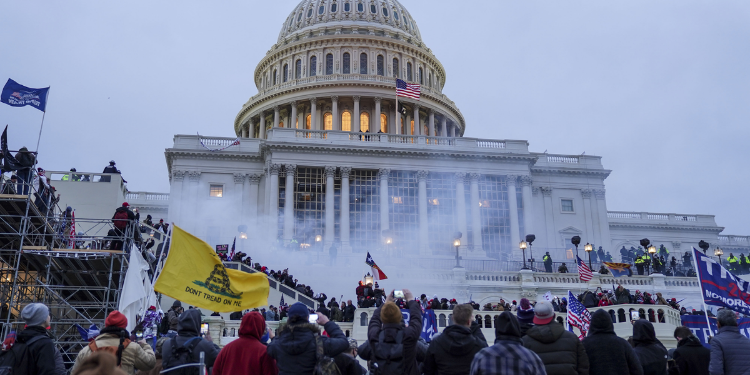
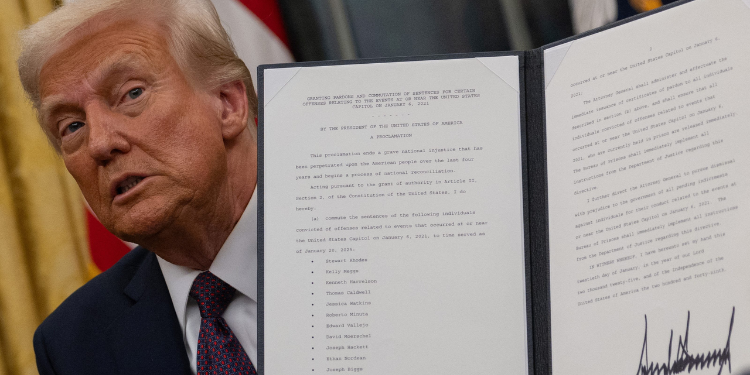
One of his first acts upon taking office in January 2025 was to pardon 1,500 individuals charged or convicted in connection with the January 6, 2021, attack on the U.S. Capitol.
In the 445 days since, Trump has issued more than 1,600 pardons, many of them to political allies or individuals connected to donors.
Among those granted clemency were a cryptocurrency billionaire whose company partnered with Trump family members on a digital currency venture, and a former Honduran president convicted of conspiring with drug cartels to import cocaine into the United States.
Trump has also pardoned individuals convicted of significant fraud, eliminating millions of dollars in restitution owed to victims.
Also Read: Trump Issues Sweeping Pardons for 2016 Election-Related Convictions
While Trump himself enjoys sweeping immunity from criminal prosecution for official acts under a 2024 Supreme Court ruling, that protection does not extend to his staff.
The ruling arose from one of two federal criminal cases brought against Trump by a Department of Justice special counsel during his years outside Washington under the Biden administration.
By issuing preemptive pardons, Trump could effectively shield aides from federal charges related to actions taken on his orders during his remaining years in office.
The Constitution grants the president broad authority to “grant Reprieves and Pardons for Offenses against the United States,” a power that has historically been used both to correct injustices and to protect political allies.
Comparisons to Biden’s final acts
Trump’s reported plans echo last-minute pardons issued by President Joe Biden before leaving office in January 2025.
Also Read: Trump Sends Letter to Israeli President Asking him to Pardon PM Netanyahu
Biden granted sweeping preemptive pardons to members of his family, including his brother James Biden and sister-in-law Sara Biden, as well as to Dr. Anthony Fauci, General Mark Milley, and members of Congress who served on the House committee investigating the January 6 insurrection.
Biden also extended pardons to police officers and staff members who worked on the committee’s investigation, citing the need to protect them from politically motivated prosecutions.
In the aftermath of the January 6 riot, Trump considered issuing mass pardons to his staff and campaign aides to protect them from potential prosecutions by the incoming Democratic administration. He ultimately rejected the idea but later told aides he regretted not doing so.
His return to the White House in 2025 marked a renewed and aggressive use of the pardon power, with clemency grants often directed toward individuals with personal or political ties to the president.