Kenyan social entrepreneur and nutritionist Wawira Njiru, founder and CEO of Food4Education (F4E), has been named the recipient of the 2026 German Africa Prize.
Wawira has been honored for her work transforming school feeding into a sustainable economic and social system.
The German Africa Foundation recognized Njiru for developing a model that connects school meals with local agriculture, employment, and economic participation.
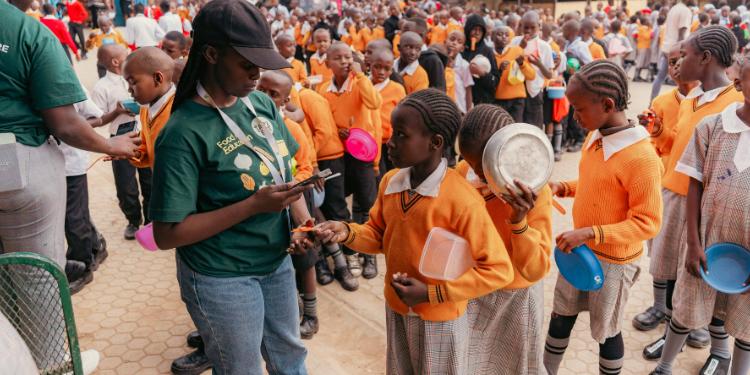
Food4Education, which began by feeding just 25 children, now serves more than 660,000 children at over 1,900 schools across Kenya and has delivered more than 200 million meals
Wawira Njiru’s School Feeding Model
Njiru founded Food4Education in 2012 while pursuing her studies. The initiative started as a small school feeding programme and has now grown into one of Kenya’s largest meal programmes.
The organization provides affordable, nutritious meals to children. The model combines family contributions, government funding, and philanthropic support.
Also Read: How M-PESA Tap-to-Pay Works and What Changes for Kenyans
Food4Education also uses technology through its Tap2Eat platform, allowing families to contribute towards school meals using NFC-enabled wristbands or cards. Technology also supports planning for food procurement, preparation, and distribution.
The organization’s operations include the Giga Kitchen in Nairobi, which uses solar and steam-powered systems as part of its large-scale meal production. According to Food4Education, its model can provide a nutritious meal for roughly 30 US cents while keeping food waste below 2%.
Supporting Farmers and Creating Jobs
Beyond feeding schoolchildren, the Food4Education model has linked school meals to Kenya’s agricultural economy.
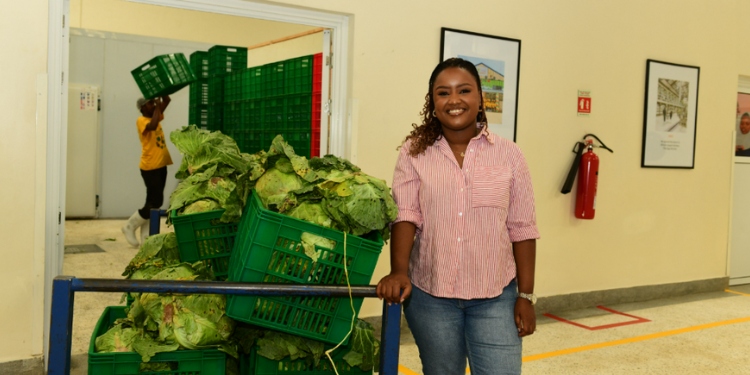
About 80% of the food the organization serves comes from local smallholder farmers, giving producers a consistent market for their crops.
The model also supports other participants in the supply chain, including traders, transporters and local businesses.
Food4Education now employs more than 6,000 people, with women and young people making up most of its workforce.
Employees work across areas including kitchen management, food safety, logistics, supply chains and technology.
The organisation passed the milestone of 200 million meals served in May 2026, as it expanded its operations and worked towards its target of feeding one million learners every day by 2027.
Njiru has described the approach as a shift away from viewing school feeding solely as charity.
According to her, the programme shows how government spending on meals can simultaneously support children’s nutrition, farmers’ markets, and employment.
“What we have built in Kenya shows what is possible when African solutions are designed around our own realities and built to work at scale. African governments are no longer asking us how many children we can feed,” said Waw1ra.
Also Read: Pamela Kosgei Wins Falmouth Road Race, Takes Home KSh1.29M
German Africa Prize Recognition
The German Africa Foundation said Njiru’s work demonstrates how an African-developed solution can address a global challenge.
Claus Stäcker, president of the German Africa Prize jury and director of Africa programmes at Deutsche Welle, said Njiru had shown that school feeding can extend beyond providing meals by involving families and strengthening local economic cycles.
The award will be presented to Njiru on November 4, 2026, by Germany’s Federal Minister for Economic Cooperation and Development, Reem Alabali Radovan, at the Allianz Forum in Berlin.
German Africa Prize has been awarded by the German Africa Foundation since 1993. It recognizes individuals from African countries whose work makes exceptional contributions in areas including sustainable development, democracy, peace, research, innovation, environmental protection, human rights and cultural exchange.
Follow our WhatsApp Channel and X Account for real-time news updates.