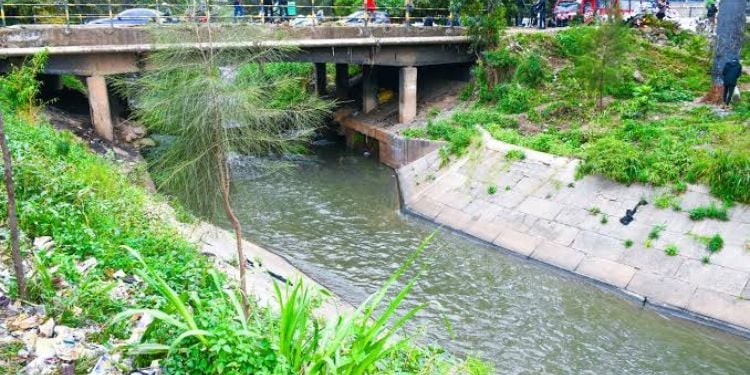
The Kenyan government has reported progress in the implementation of the Nairobi River Regeneration program, which aims to rehabilitate river basins in the city.
According to a progress report shared by the government, the project with a KSh50 billion budget aims to restore the environment, improve public health, and create green public spaces for Nairobi residents.
Whilst informal settlement along the riparian areas posed an initial obstacle, the government now reports that communities in the marked sections have largely cooperated with relocation notices.
However, some sections in Lavington and Kileleshwa have resisted riparian compliance, threatening to undermine progress for millions of downstream residents.
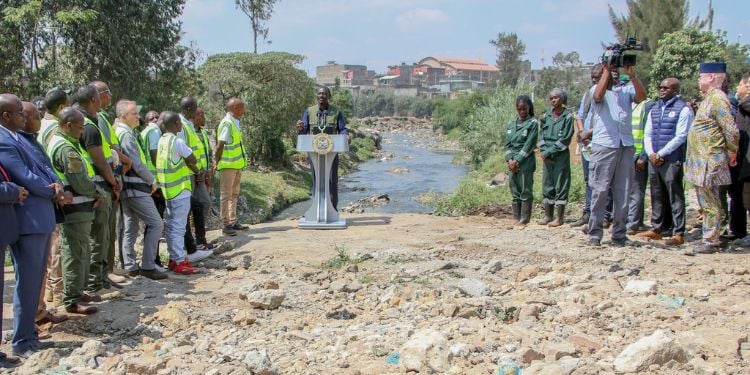
Speaking during an inspection tour of the project on Wednesday, President William Ruto assured residents along the Nairobi River that there will be no forced evictions, but rather a well-coordinated plan for their relocation.
“I told you we are going to build a sewer system. Today I stand to tell you that we are going to build sewers on both sides of the river,” Ruto noted during the visit to Nairobi’s Lucky Summer area.
“While building this sewer, we will not infringe on any citizen’s rights. Where we will require land, we will sit down with the area residents. And no citizen will be forcibly evicted. We will engage the citizens and compensate them.”
President Ruto further committed to fulfilling his promise to give Nairobi a new face, a day after signing a cooperation agreement with the Nairobi County government, led by Governor Johnson Sakaja.
The head of state promised that more than 44 bridges will be built along the Nairobi River to ensure safe crossings for residents in all the estates that traverse the river.
The plan, according to President Ruto, will also see the construction of new schools, playing grounds, access roads, and recreational centres- among other amenities.
The river’s basin extends beyond Nairobi to Makueni and Tsavo, making upstream compliance crucial to the project’s success.
Social and Economic Impact Of the Project
The Nairobi River Regeneration Project aims to restore “the city’s dignity” by framing environmental restoration as a catalyst for economic growth.
Also Read: CS Duale Issues Fresh Orders Over Pollution of Nairobi River
It seeks to transform neglected spaces into productive areas that improve living conditions while stimulating local economies.
According to a progress report shared by the state, the initiative has created over 40,000 jobs, primarily for youth engaged in cleanup operations, tree planting, and construction. This effort builds on the existing Climate Works Mtaani Initiative, expanding opportunities for community participation and skills development.
Plans under the project include establishing modern markets for 20,000 informal traders and developing riverfront businesses. These initiatives are intended to enhance GDP contribution and create sustainable economic opportunities along the river corridor.
The project is also expected to reduce waterborne diseases and heavy metal poisoning, improving overall human productivity and urban resilience. Cleaner river systems, the government notes, will directly benefit surrounding communities by reducing health risks from polluted waterways.
Community-led initiatives, particularly in areas like Kamukunji, have engaged youth in environmental advocacy. Former dumping grounds have been transformed into assets such as football pitches, parks, and recreational spaces, fostering local ownership and stewardship of restored areas.
Also Read: Sakaja Speaks on Areas That Risk Eviction to Pave Way for Nairobi River Regeneration
Critical Perspectives, Challenges and Risks
Upstream areas, including Dagoreti and Kangemi, have faced legal challenges regarding ancestral land ownership. Such litigation can delay project implementation and requires careful negotiation to balance environmental and social interests.
The success of the project relies on broader catchment management. Pollution from upstream areas threatens downstream resources, including the Thwake Dam, making upstream cooperation critical to the overall effectiveness and sustainability of the river regeneration effort.
Follow our WhatsApp Channel and X Account for real-time news updates.