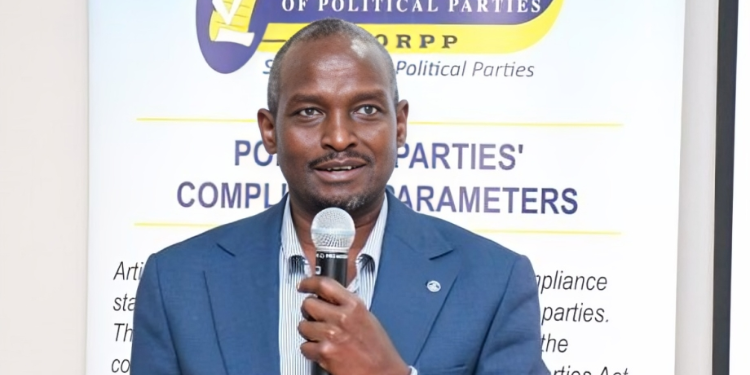
Former Cabinet Secretary for the Ministry of Interior and Coordination of National Government Fred Matiang’i has criticized the government’s G2G fuel arrangement.
According to Matiang’i, the government’s lack of proactive measures in the ongoing fuel crisis is deepening the challenges rather than solving them.
Matiang’i explained that the government should never have signed the G2G fuel agreement.
“The alternative is, I mean, if we were in government, first of all, we would not sign that kind of G2G arrangement,” Matiang’i stated during an interview with Citizen TV on Sunday, April 19.
Further, he argued that the current fuel crisis stems from poor policy choices that the government should make immediate reforms.
Matiang’i Reform Proposal to the Government on Fuel Crises
In addition to calling for the government to do away with the G2G fuel agreement, the former interior CS has proposed the revamping of the National Oil Corporation of Kenya (NOC) to take a more central role.
Revamping of NOC would ensure that the corporation is actively performing its role in Kenya, according to Fred Matiang’i.
Further, Fred argued that the private sector and cartels in the marketing sector should be held accountable for their involvement in the fuel crises.
Also Read: Fuel Price Hike Sparks Fears of Higher Electricity Bills
To provide a stable solution for the ongoing fuel crisis, the former interior CS called for the replacement of the government administration.
“So the solution is, that is why we are asking for the replacement of this administration. So that we can provide Kenya with a better government, more responsible leaders, a trustworthy people, looking after the affairs of our country,” Fred Matiang’i explained.
In addition, Matiang’i requested that the government give direct answers to why the country is experiencing a fuel price crisis.
He also criticized the government officials who are insulting the public who are seeking answers to the ongoing crises.
According to Fred Matiang’i, the public is within its rights to demand an answer in the case of public-interest crises, and the fuel agreement should be published, with a detailed explanation provided by the government officials involved.
Alternatively, the government should present the G2G-signed fuel agreement to parliament and explain how the agreement is affecting the people of Kenya, as well as the details it entails, for accountability.
Also Read: Ruto Explains Why Fuel Prices Are Higher in Kenya Than in Regional Neighbors
Government on Reasons for Fuel Price Difference in Kenya and Neighboring Countries
Addressing the ongoing fuel price crisis in Kenya, President William Ruto on April 19 argued the comparisons of fuel prices in Kenya should be made with countries at the same level.
Given that Kenya is a middle-income country, a fair fuel price comparison can only be made with other middle-income countries, according to Ruto.
Ruto emphasized that the comparison would either result in the prices in Kenya being slightly lower or equivalent to those in middle-income countries.
Additionally, he noted that the fuel in Kenya is used to support transport infrastructure, including the maintenance and construction of tarmac roads.
According to the president, the transport infrastructure in Kenya was more than that of the six to seven neighboring countries combined.