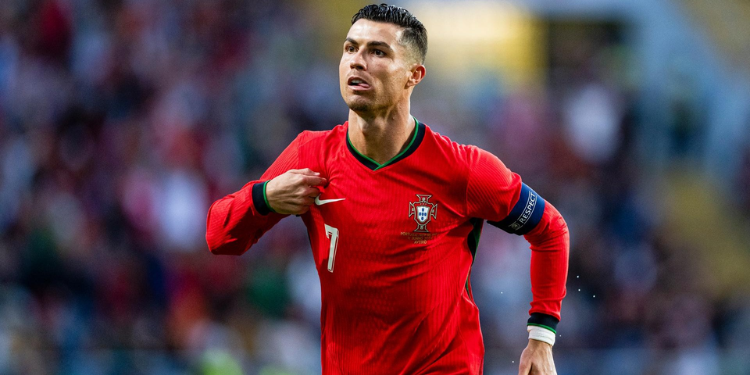
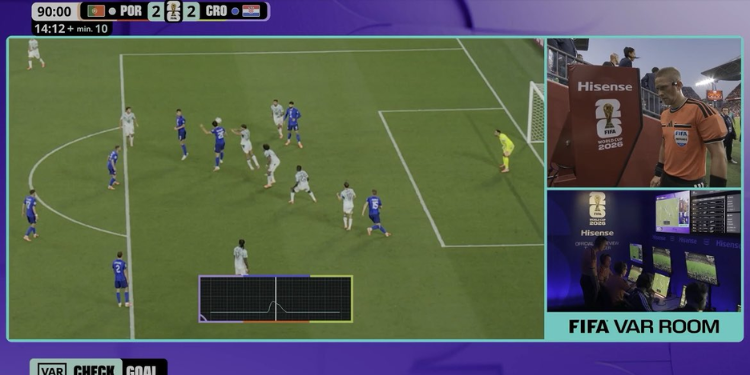
Portugal’s dramatic FIFA World Cup Round of 32 victory over Croatia was decided not only by VAR but also by a tiny piece of technology hidden inside the official match ball.
For a brief moment, Croatia thought it had rescued the match after defender Joško Gvardiol found the back of the net deep into the 103rd minute to make it 2-2.
The incident occurred shortly after Cristiano Ronaldo netted his maiden World Cup knockout goal in the second half before being withdrawn with a disgruntled expression on his face.
Celebrations, however, were cut short after the goal was ruled out for offside following a Video Assistant Referee (VAR) review.
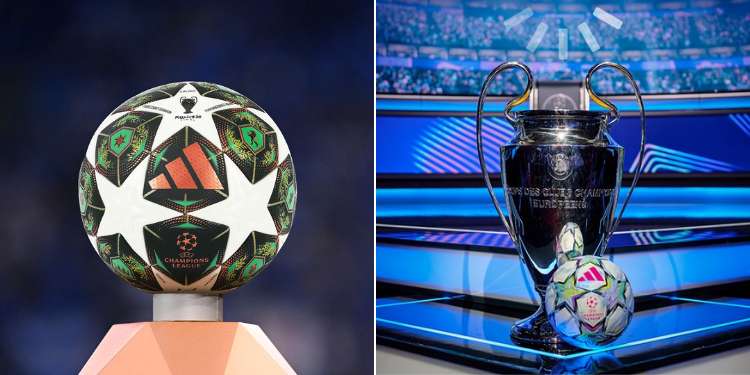
What made the decision remarkable was the role played by Adidas’ Connected Ball Technology, which confirmed a crucial touch that television replays alone could not clearly establish.
Smart Ball Technology Saves Portugal as Croatia’s Goal Was Ruled Out
According to data generated by the Connected Ball Technology embedded inside the Adidas Trionda match ball, Croatia forward Igor Matanović made contact with the ball in the build-up to Gvardiol’s goal.
That slight touch proved decisive. Before the goal, Ivan Perišić floated a long pass into the penalty area, where Mario Pašalić prepared to receive it.
While the ball appeared to bounce before reaching him, it was unclear from conventional camera angles whether Matanović had flicked it with his head.
The sensor inside the ball confirmed that Matanović had indeed made contact and that changed the offside calculation.
Although Pašalić had been in an onside position when Perišić delivered the initial pass, he had moved into an offside position by the time Matanović redirected the ball.
Since Matanović’s touch constituted a new attacking phase, the assistant referee correctly flagged Pašalić offside, leading VAR to overturn Gvardiol’s equalizer.
Portugal’s 2-1 lead therefore stood, sending the former European champions into the Round of 16 while ending Croatia’s World Cup campaign.
Also Read: Explained: Why Germany’s Goal Against Paraguay Was Disallowed at the FIFA World Cup 2026
What Is Connected Ball Technology?
The official World Cup match ball is fitted with an Inertial Measurement Unit (IMU) sensor, commonly referred to as a microchip.
Developed by Adidas, the technology transmits ball movement data to the VAR team in real time, allowing officials to detect even the slightest contact between a player and the ball.
The sensor records precise information about touches, speed and movement hundreds of times per second, making it easier for referees to determine critical moments such as offsides and possible handballs.
During broadcasts, viewers can see the sensor’s data represented by a distinctive “heartbeat” graphic that illustrates the exact moment contact is made.
Unlike earlier assumptions, the sensor is not suspended in the centre of the ball. Instead, Adidas integrated it directly into one of the ball’s panels while balancing the remaining structure with counterweights to ensure the ball performs like a standard professional football.
The technology is battery-powered, with each fully charged match ball capable of operating for approximately six hours.
The ‘snicko’ graphic is similar to the tech used in cricket to confirm whether a ball has been edged by the batter or not.
Also Read: Witch Doctors, Beer Crises and Giant-Killings: World Cup Knockouts Begin
FIFA has increasingly relied on technology to improve officiating, combining semi-automated offside technology with Connected Ball Technology to provide referees with faster and more accurate information.
According to Adidas, the technology can detect even the slightest contact, giving match officials unprecedented data when reviewing contentious incidents.
Portugal to Face Spain
Croatia has become the latest team to see a goal ruled out following a VAR review, but it is among the first sides to have such a decision directly informed by the smart chip embedded in the official match ball.
The decision proved pivotal as Portugal advanced to the Round of 16, where they will face Spain, while Croatia exited the tournament after their dramatic late equaliser was ruled out.
Follow our WhatsApp Channel and X Account for real-time news updates.