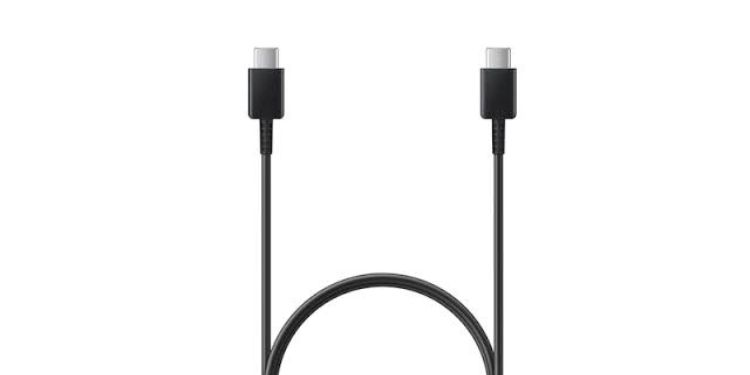
The Communications Authority of Kenya (CA) has announced the mandatory adoption of USB Type-C chargers as the standard for all mobile cellular devices sold or produced in the country.
Following international trends such as the European Union Directive 2022/2380, CA has mandated that all mobile cellular devices, including smartphones, tablets, and feature phones, must use this universal interface.
CA’s Chief Executive Officer, David Mugonyi, issued a notice on March 24 announcing new technical specifications for mobile cellular devices in Kenya, including the use of Type-C chargers for all phones.
“The charging solution for mobile cellular devices shall be USB Type-C,” the CA’s Technical Specifications for Mobile Cellular Devices, 2026 states.
The directive from the CA is part of the newly published Technical Specifications for Mobile Cellular Devices 2026, which will help the country reduce electronic waste.
Smartphones, tablets, and even the low-cost feature phones popularly known as kabambe that use Micro USB will now upgrade the charging system to align with the directive.
Under the new specification, the charging cable must be detachable from the power adapter to increase the modularity and longevity of charging accessories.
“Standardizing charging systems is expected to reduce duplication of accessories, allowing users to reuse chargers across devices while also improving compatibility with fast-charging technologies,” CA explained.
Apple phones produced before the iPhone 15 in 2023 and iPads older than the third generation that use the Lightning connector, before the company shifted to USB-C to comply with EU legislation, are now regarded as non-compliant with the CA new phone specification.
Additionally, all the devices sold in Kenya are required to conform to the Type G 3-pin standard used in the Kenya National Distribution Grid.
Manufacturers providing a non-3-pin plug are now legally required to include a compatible adapter to ensure the high-performance USB-C ecosystem operates safely within Kenya’s 240V, 50Hz power infrastructure.
USB Type-C Charger Specification by CA
A Type C charger is not only a charging port but also a 24-pin reversible connector standard developed by the USB Implementers Forum (USB-IF).
A detachable cable design feature in the Type C chargers separates the cable from the power adapter, promoting sustainability and ensuring that the charging solution is interoperable across different device types.
The design of the Type C charger is more effective, as it allows users to plug it in either way, making it easier than the pin-based charging system on mobile devices.
Specifications in the charger ensure that devices are safe for users from electrical shock, excessive heat, and potential explosions during the charging.
Also Read: Communications Authority Rolls Out New Specifications for Phones Sold in Kenya
Advantages
Compared to older pin-style chargers, USB Type-C offers superior reliability and safety. It is designed to work in accordance with Kenya’s national grid requirements of 240V at 50Hz.
While older systems were often restricted to specific brands, Type-C is built for universal compatibility.
In addition, the Type C delivers high power up to 240 watts and fast data transfer up to 40 Gigabits per second in phones, laptops, and tablets.
Also Read: Communications Authority Bans 21 Illegal Phone Brands, Orders Vendors to Stop Sales
New Technical Specifications for Mobile Cellular Devices in Kenya
Every device must have a valid 15-digit IMEI issued by the GSMA. The IMEI must be permanently printed on the handset and be accessible by dialing *#06#. In addition, the Type C charging system must be adapted.
Chargers and adaptors also need to meet national standards and align with ITU-T L.1000 specifications, operating around 240V.
CA type approval information, model name, IMEI, supported frequency bands, and supplier should be displayed in the device.
Additionally, devices in Kenya are required to support voice calls and SMS, while 3G and 4G models must also provide data and internet services.
Compliance with standards such as ETSI EN 301 511 and ETSI EN 301 908 will ensure that devices function properly.