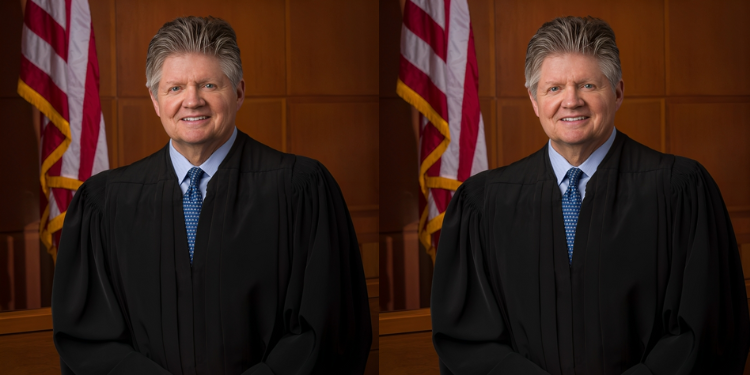
A federal judge in Minnesota has barred the Trump administration from detaining and deporting refugees awaiting permanent residency in the United States.
In a ruling delivered on Wednesday, January 28, US District Judge John R. Tunheim ordered the United States Department of Homeland Security (DHS) to release anyone detained in the crackdown and bring back anyone sent to another state to Minnesota within five days.
“The Court will issue a temporary restraining order: enjoining Defendants from arresting or detaining any member of the putative class in Minnesota on the basis that they are a refugee who has not yet adjusted to lawful permanent resident status; and ordering the immediate return and release of the members of a putative subclass consisting of those refugees who are presently detained under the policy,” read part of the written ruling.
The judge added that since the operation began, the Department of Homeland Security (DHS) has effected arrests and detentions without notice or warrant, despite the refugees being previously screened and admitted into the U.S.
“These refugees have undergone rigorous background checks and vetting, been approved by multiple federal agencies for entry, been given permission to work, received support from the government, and been resettled in the United States,” noted Judge Tunheim
Trump’s Detention of Minnesota Refugees
The ruling came after lawyers filed a class-action lawsuit on behalf of refugees following the DHS announcement of Operation Parris earlier this month.
DHS described the crackdown as a sweeping initiative re-examining thousands of refugee cases through new background checks and intensive verification of refugee claims.
According to the Department of Homeland Security, 5,600 refugees who had resettled in the US and had not yet become permanent residents would be subject to this vetting process.
However, one of the plaintiffs in the case, referred to as D Doe, explained that he was at home with his family when a man in plain clothes knocked on his door and said that he had hit Doe’s car.
Also Read: Ex-FIFA Boss Backs Fan Boycott of US World Cup Over Trump’s Policies
When Doe went outside to check the damage, he was surrounded by armed men and arrested.
“I was detained first in Minnesota, and then flown to Texas, where I was interrogated about my refugee status. I was released in Texas and had to find my way back home,” read part of his submission.
Doe argued that he had to flee his home country because I was facing government repression, but it was happening again in the U.S
Doe’s wife, who is also a refugee, had been afraid of going outside since her husband’s arrest and had been staying with friends because she feared agents would return to her home.
Such arrests had caused panic among Minnesota’s refugees, many of whom had already been wary of leaving their homes or going to work because they feared being stopped and racially profiled by the thousands of immigration agents conducting aggressive immigration sweeps throughout the state.
Before they are approved to enter the US, refugees undergo extensive vetting that can take years. When they arrive in the US, they do so on flights coordinated with the government.
“Operation Parris’s scheme of detaining lawfully present refugees is an unprecedented assault on core human rights that are enshrined in both the 1951 convention and the 1980 Refugee Act,” said Michele Garnett McKenzie, executive director of The Advocates for Human Rights, who praised the court’s decision.
How Operation PARRIS Led to Arrests and Detentions of Minnesota Refugees
The DHS and its agency, U.S. Citizenship and Immigration Services (USCIS), previously launched Operation PARRIS (Post-Admission Refugee Reverification and Integrity Strengthening), a sweeping initiative to reexamine thousands of refugee cases through new background checks and intensive verification of refugee claims.
Also Read: Trump Threatens Iran with Venezuela-Style Show of Force Amid US Military Buildup
Through Operation PARRIS, USCIS has conducted background checks, reinterviews, and merit reviews of refugee claims with an initial focus on about 5,600 refugees in Minnesota who have yet to be granted green cards.
Additionally, USCIS began referring some cases to Immigration and Customs Enforcement (ICE), with reports of refugees being arrested, detained, and transferred to detention centers in Texas.
Since Operation PARRIS is part of a larger effort by the Trump administration to relitigate, reconsider, and second-guess previous grants of refugee status, it means that families who followed all the rules and were lawfully admitted to the U.S. may now be returned to their home countries.
Elsewhere, in November 2025, USCIS announced a broader review and reinterview process for more than 200,000 refugees who were lawfully admitted to the United States between early 2021 and early 2025. In a policy memo, USCIS also froze green card approvals for refugees admitted during this timeframe, regardless of nationality.
Therefore, more than 100 refugees who had been lawfully resettled in the state had been arrested in recent weeks.
Some were flown to detention centers in Texas and then were abruptly released and left to find and pay their own way back home.
Follow our WhatsApp Channel and X Account for real-time news updates.