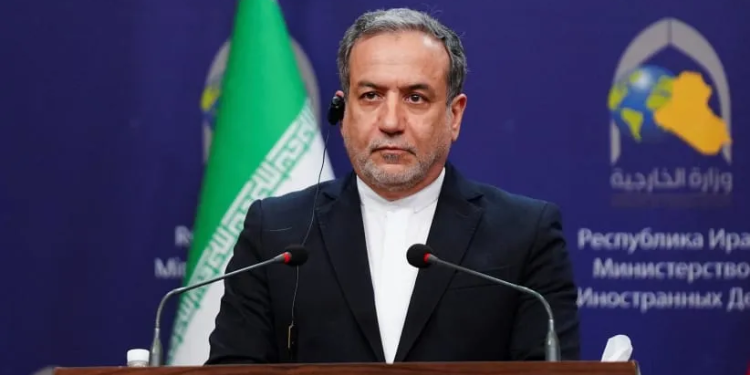
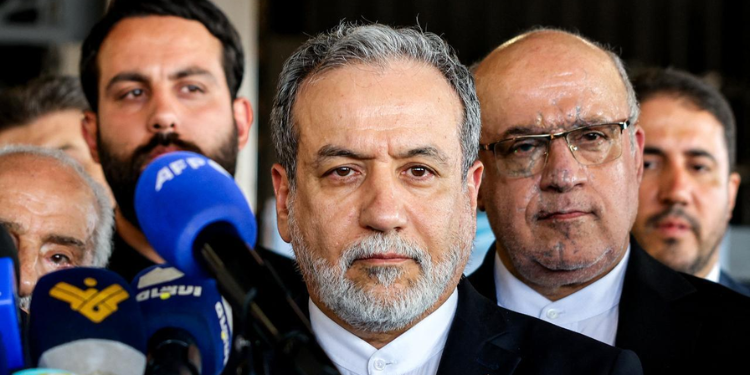
An Iranian lawmaker has warned that Iran could seize and sell ships belonging to what it calls hostile nations if the United States (U.S) fails to pay compensation for damage caused in the recent US–Iran conflict.
The remarks were made on Iranian state television and have added to already high tensions surrounding the strategic Strait of Hormuz.
The statement was issued by Ali Khezrian, a sitting Member of Parliament representing Tehran and a member of the Majlis National Security and Foreign Policy Committee.
Khezrian appeared on Islamic Republic of Iran Broadcasting (IRIB), the country’s official state broadcaster, during a studio television interview aired on April 12, 2026.
In the interview, Khezrian said Iran reserves the right to stop, seize, and sell vessels belonging to “enemy” or “hostile” states operating in the Persian Gulf.
Risk of Escalating War
He said such actions would be viewed as a response to what Iran considers unpaid war reparations for damage to Iranian infrastructure during the recent conflict between the U.S. and its allies.
Also Read: IDF Wary of Possible Return to Conflict as US Iran Talks Collapse
Khezrian stated that proceeds from the seizure or sale of ships could be used to cover Iran’s war-related costs and reconstruction needs.
He framed the threat as an issue of justice and compensation, arguing that Iran should not bear the cost of rebuilding alone.
He added that Iran would not allow hostile vessels to pass freely through the Strait of Hormuz if compensation demands are ignored.
The lawmaker also addressed claims made by US officials, saying that, contrary to those assertions, vessels linked to hostile countries had not passed through the strait during the current wartime and post-ceasefire period.
He stressed that decisions on ship passage, inspections, or restrictions are not made by parliament alone but fall under the authority of Iran’s armed forces general staff and the navy of the Islamic Revolutionary Guard Corps (IRGC).
While Khezrian’s remarks were strongly worded, he said that no final parliamentary plan had yet been approved.
He said discussions were ongoing and that control of the waterway remains a military matter during periods of heightened tension.
Other Iranian lawmakers have made similar remarks in recent weeks.
Also Read: Kenya Signals Possible Free Trade Agreement with India Worth Over $2.1 Billion in Imports
Alaeddin Boroujerdi, another member of the Majlis National Security Committee, has previously spoken about introducing tolls and establishing what he described as a new sovereign regulatory system governing ship passage in the strait.
Iran–U.S. Nuclear‑Talk Stance
Iran and the United States remain deadlocked over nuclear talks, with no direct negotiations underway as of April 12, 2026.
The Iranian officials say any return to talks must be indirect and linked to clear sanctions relief from Washington.
Iran’s Foreign Ministry, led by FM Abbas Araghchi, has said the U.S. must first lift economic sanctions in a verifiable manner before Tehran considers limits on its nuclear program.
Iranian officials say past U.S. actions, including the 2018 withdrawal from the Joint Comprehensive Plan of Action (JCPOA), have broken trust and require firm guarantees.
The Atomic Energy Organization of Iran (AEOI) has confirmed that uranium enrichment continues above JCPOA limits. Iran says the programme is for peaceful purposes.
Cooperation with the International Atomic Energy Agency (IAEA) remains limited, and full monitoring access has not been restored.
The U.S. government, through the White House and the State Department (DOS), says it prefers diplomacy but accuses Iran of expanding its nuclear activities beyond civilian needs.
Washington says sanctions will remain in place until Iran returns to full compliance with its nuclear commitments.
No date has been set for new talks, even as indirect mediation efforts have not produced an agreement.
Both sides say diplomacy remains possible, but official positions remain unchanged.