Monday, June 1, 2026
  • News
    • Latest News
    • Breaking News
    • Fact Check
    • Investigations
    • Explainers
  • Politics
    • Global Politics
    • Elections
    • Government & Policy
    • Diplomacy
    • Conflicts & Security
    • Political Analysis
  • Business
    • Global Economy
    • Markets
    • Technology
    • Startups
    • Energy
    • Finance
  • World News
    • Americas
    • Asia
    • Asia Pacific
    • Africa
    • Europe
    • Middle East
  • Africa
    • Central Africa
    • East Africa
    • West Africa
    • Southern Africa
  • Health
    • Global Health
    • Public Health
    • Health Policy
    • Medical Research
    • Diseases & Conditions
    • Mental Health
    • Nutrition
    • Climate & Health
    • Health Explainers
  • Sports
    • Athletics
    • Basketball
    • Boxing
    • Cricket
    • Football
    • Formula 1
    • Golf
    • Rugby
  • Weather
    • Climate Business
    • Climate Change
    • Climate Solutions
    • Living Green
  • Culture
    • Arts
    • Film & TV
    • Food
    • Music
    • Lifestyle
    • Travel
  • Opinion
    • Editorials
    • Letters
  • Behind The Brand
REGISTER
LOGIN
No Result
View All Result
The Kenya Times
  • News
    • Latest News
    • Breaking News
    • Fact Check
    • Investigations
    • Explainers
  • Politics
    • Global Politics
    • Elections
    • Government & Policy
    • Diplomacy
    • Conflicts & Security
    • Political Analysis
  • Business
    • Global Economy
    • Markets
    • Technology
    • Startups
    • Energy
    • Finance
  • World News
    • Americas
    • Asia
    • Asia Pacific
    • Africa
    • Europe
    • Middle East
  • Africa
    • Central Africa
    • East Africa
    • West Africa
    • Southern Africa
  • Health
    • Global Health
    • Public Health
    • Health Policy
    • Medical Research
    • Diseases & Conditions
    • Mental Health
    • Nutrition
    • Climate & Health
    • Health Explainers
  • Sports
    • Athletics
    • Basketball
    • Boxing
    • Cricket
    • Football
    • Formula 1
    • Golf
    • Rugby
  • Weather
    • Climate Business
    • Climate Change
    • Climate Solutions
    • Living Green
  • Culture
    • Arts
    • Film & TV
    • Food
    • Music
    • Lifestyle
    • Travel
  • Opinion
    • Editorials
    • Letters
  • Behind The Brand
  • News
    • Latest News
    • Breaking News
    • Fact Check
    • Investigations
    • Explainers
  • Politics
    • Global Politics
    • Elections
    • Government & Policy
    • Diplomacy
    • Conflicts & Security
    • Political Analysis
  • Business
    • Global Economy
    • Markets
    • Technology
    • Startups
    • Energy
    • Finance
  • World News
    • Americas
    • Asia
    • Asia Pacific
    • Africa
    • Europe
    • Middle East
  • Africa
    • Central Africa
    • East Africa
    • West Africa
    • Southern Africa
  • Health
    • Global Health
    • Public Health
    • Health Policy
    • Medical Research
    • Diseases & Conditions
    • Mental Health
    • Nutrition
    • Climate & Health
    • Health Explainers
  • Sports
    • Athletics
    • Basketball
    • Boxing
    • Cricket
    • Football
    • Formula 1
    • Golf
    • Rugby
  • Weather
    • Climate Business
    • Climate Change
    • Climate Solutions
    • Living Green
  • Culture
    • Arts
    • Film & TV
    • Food
    • Music
    • Lifestyle
    • Travel
  • Opinion
    • Editorials
    • Letters
  • Behind The Brand
No Result
View All Result
The Kenya Times ~ Trending, Breaking News and Videos
No Result
View All Result
ADVERTISEMENT

How Identity, Politics and Crime Keep Mungiki Alive

The Kenya Times - Editorial DeskbyThe Kenya Times - Editorial Desk
February 22, 2024
Reading Time: 7 mins read
How Identity, Politics And Crime Keep Mungiki Alive

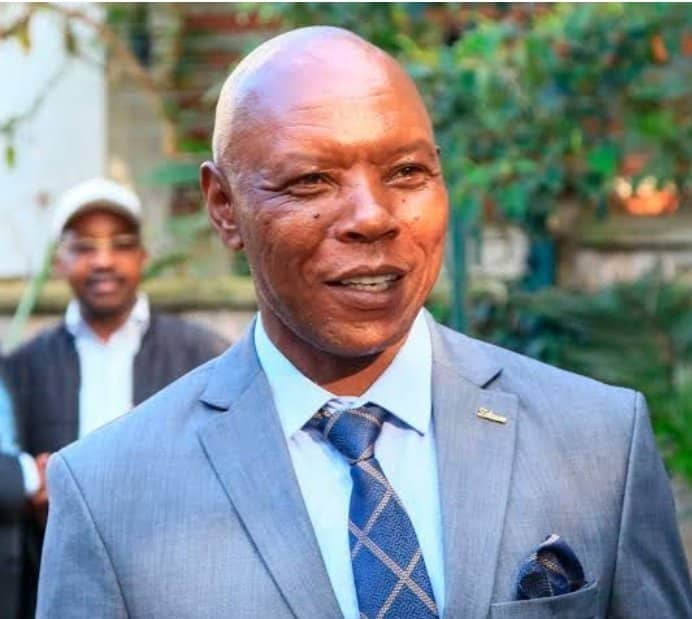
Former Mungiki Leader Maina Njenga. PHOTO/Courtesy.

FacebookTwitterLinkedInRedditWhatsApp
Advertisement

Kenya has scores of youth gangs known for their violence and links to the politically powerful. None is more infamous than the Mungiki movement, with a past membership estimated to be at least a million. Though banned, it’s constantly in the news as a tool or target of big political players. Bodil Folke Frederiksen, who has studied Mungiki as part of her field-based research on youth culture in Kenya, traces the origins, growth and persistence of the group.

What gave rise to Mungiki?

Mungiki emerged in the late 1980s in what was then Kenya’s Rift Valley Province. The province was the site of simmering conflicts over land ownership and rights between the indigenous majority (mainly the Kalenjin) and more recently arrived settlers (mostly Kikuyu).

The early 1990s witnessed the first bout of politically instigated inter-ethnic conflict intended to diminish Kikuyu influence in local politics. Mungiki emerged as a Kikuyu youth movement, defending the dispossessed: women, migrants and landless youth.

At this time the grouping also opposed the autocratic and corrupt government of Daniel arap Moi, a Kalenjin. Later, Mungiki groups were co-opted by Moi and used in election politics. He was the first of a series of high-ranking politicians to do so.

The politics of ethnicity laid the groundwork for Mungiki.

In the 1997, 2002 and 2007 parliamentary and presidential elections, leading politicians mobilised violent youth militia in support of their campaigns.

ADVERTISEMENT

After the disastrous 2007 presidential elections, Mwai Kibaki’s victorious Kikuyu-dominated Party of National Unity mobilised Kikuyu youth militia in retaliation against the gangs deployed by the opposition party, Orange Democratic Movement. Mungiki was central in the resulting violence.

By the turn of the millennium, Mungiki had become a mostly urban phenomenon. Poverty, youth unemployment and political disillusionment created fertile ground for the group. Young men in particular regarded themselves as a “no future” generation, seeing that they had few opportunities to establish themselves as successful adults with the economic means to sustain a family.

Urban informal settlements were neglected by the state and local authorities. Youth-based groups filled the void. In Nairobi’s shantytowns, Mungiki activists and militia competed with other militias like Kamjesh, and the Taliban in Mathare Valley. Like Mungiki, they were involved in the war over public transport, provision of basic services like electricity and demanding protection money from businesses. But they also had a role in welfare, job creation and security.

Mungiki leaders have assessed membership to be between 1.5 million and 4 million. These figures are likely exaggerated. Active membership is more likely to be in the thousands.
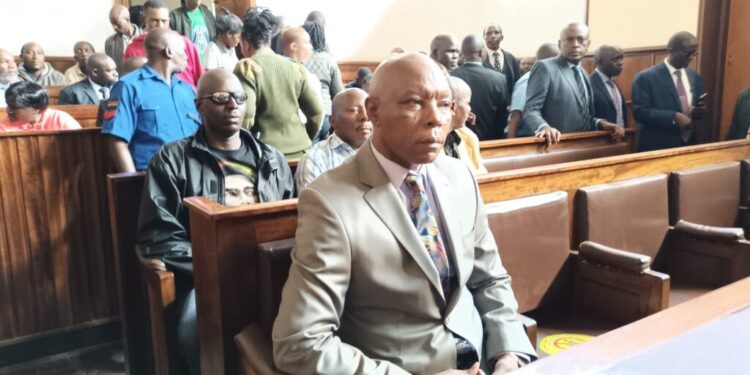
We Do Not Regret Being Mungiki Members - Maina Njenga
Maina Njenga during a past court proceeding. PHOTO/Courtesy.

What are the group’s practices and beliefs?

Mungiki is based on the intersection between generation, ethnicity, religion and class. Its members are young, poor and predominantly Kikuyu, the largest ethnic group in Kenya. Mungiki operates primarily in urban neighbourhoods where it combines vigilante, welfare, cultural and criminal activities. It uses violence to achieve and maintain control. Over time it has had close but unstable links with political parties and leaders, and has sought, won and lost registration as a political party, National Youth Alliance.

Mungiki can be understood as a neo-traditional social movement. It reaches back into Kenya’s pre-colonial and colonial history for the origins of its beliefs and practices. It bases its values on Kikuyu religion and cosmology.

ADVERTISEMENT

One central Kikuyu practice was the transfer of power from one generation of men to the next, a ritual known as “ituika”, every 30th or 40th year. Another was ritual circumcision of men and women on the threshold of adolescence, an initiation into maturity. A third was taking the oath of loyalty to bind members of the group together in secrecy for ever.

The values underlying these practices continued during Kenya’s anti-colonial struggle in the 1940s and 1950s, in the liberation movement known as Mau Mau, which was predominantly Kikuyu.

These values, although modified and expanded, still form the core of Mungiki’s practices and beliefs. The objectives of Mungiki are, broadly, the empowerment of youth; the reintroduction of traditional values, key among them clear gender roles; the fight against corruption; and reforms towards an egalitarian society whose members aid each other.

Mungiki has many shapes. It is a youth organisation, which has been called a sect, a gang, a militia. It has attempted to become a recognised political party. Its many faces and resilience have kept it afloat for more than 30 years.

Why was it banned?

Mungiki is the child of Kenya’s violent colonial and post-colonial history. Throughout its existence, the organisation has resorted to violence to recruit and keep members.

In the early 2000s it stepped up its violence and in many instances made use of terror: murders of defectors, fatal punishment of those who refused to pay protection money, brutal warfare against other militia-like organisations. Large parts of its activities are criminal, like extorting money from households and shops, bribing and threatening to make inroads into the informal commuter transport industry, and killing and mutilating to achieve its goals.

At the political level, national and local leaders may see the popularity and persistence of the movement as a threat to stability and their own hold on power.

Though banned, it hasn’t really gone away, has it?

The movement has undergone a number of transformations. After it was banned in the early 2000s, its leader, Maina Njenga, was imprisoned. He made public his conversion to Christianity in 2006, and on his release in 2009 he declared the movement finished. Nevertheless, it still resurfaces, although much less strongly than in its heyday.

Many of its members have been killed or imprisoned.

Mungiki refuses to die because, on the positive side, it rests on the cultural and religious traditions that are still alive in Kenya. It has a moral appeal to young men and women for stressing “clean living”, without loose sex and alcohol. It expresses young people’s efforts to be political actors.

On the negative side, the basic living conditions have not changed for the majority of young Kenyans. There has not been a transfer of power to the young generation. Salaried jobs are few and far between; poverty is widespread. Kenyan politics are still violent, the domain of elderly, entitled men, and ridden with mistrust and corruption.The Conversation

Bodil Folke Frederiksen, Associate Professor Emerita, Roskilde University

This article is republished from The Conversation under a Creative Commons license. Read the original article.

Tags: Central KenyaJohn MichukiKikuyuMaina NjengaMt. KenyaMungikiUhuru Kenyatta
The Kenya Times - Editorial Desk

The Kenya Times - Editorial Desk

The Kenya Times ~ Editorial Desk. You can reach us at [email protected]. For corrections, please email [email protected].

Related Posts

Inside Jkia’s Ebola Defense System: Gate 16, Isolation Units And Aircraft Testing

Inside JKIA’s Ebola Defense System: Gate 16, Isolation Units and Aircraft Testing

May 31, 2026
Ruto Set For Another State Visit Next Week

Ruto to Jet Out for Another State Visit

May 30, 2026
Yann Bedzigui Appointed As New Chief Of Staff To Au Commission Chairperson

African Union Commission Appoints New Chief of Staff

May 25, 2026
Kpmg Africa Venture Summit Sees African Business Leaders Call For Affordable Capital

African Businesses Push for Affordable Financing, Stable Policies at Nairobi Summit

May 23, 2026
ADVERTISEMENT

The Kenya Times Facebook

LATEST ARTICLES

  • Jill Biden Reveals Regret Over Joe Biden’s 2024 Run in New Interview
  • Stars Abroad: Moses Shumah, Kenyan Striker Breaking Records in Zambia
  • Doctors Question Transparency of Trump’s Heart Test Results
  • Corazone Aquino: Kenyan Star Named After Philippines’ Former President
  • KMA Reveals How to Know Licensed Doctors After Deadly Kitale Surgery
  • Iran Ends All Negotiations With US, Vows to “Completely” Block the Strait of Hormuz
  • Wise vs Remitly vs Western Union: Best International Transfer in 2026
  • KDF Soldiers Take Charge as Protests Erupt in Nanyuki Over Ebola Quarantine Facility
  • End of an Era as Paris Lounge & Grill Rebrands, Kentwood Address Undergoes Renovation
  • Benny McCarthy Makes Changes to Harambee Stars Squad Days After Unveiling 24 Players
  • Ruto Delivers Weighty Apology During Madaraka Day Speech [FULL TEXT SPEECH]
  • Njeri Maina Explains Why President Ruto Can’t Be Impeached
  • Plane Crashes in Maasai Mara
  • How “And” Lost to “Or” in the Finance Bill 2026
  • Opinion | How New Taxes on Bank Card Transactions Charges Will Raise the Costs for Ordinary Kenyans if Adopted by Parliament
ADVERTISEMENT

Company

About Us

Our Authors

Our Experts

Social Media

Policies

Privacy Policy

House Rules

Standards and Policies

Terms and Conditions

Subscription

My Account

Contact Us

Contact Us

Join Our Team

Advertise With Us

© Copyright 2026 | The Kenya Times | All Rights Reserved

Welcome Back!

Sign In with Facebook
Sign In with Google
Sign In with Linked In
OR

Login to your account below

Forgotten Password? Sign Up

Create New Account!

Sign Up with Facebook
Sign Up with Google
Sign Up with Linked In
OR

Fill the forms below to register

All fields are required. Log In

Retrieve your password

Please enter your username or email address to reset your password.

Log In
Your Privacy and Cookies
We use cookies on our website to give you the most relevant experience by remembering your preferences and repeat visits. By clicking “Accept”, you consent to the use of ALL the cookies.
Do not sell my personal information.
Cookie settingsACCEPT
Privacy & Cookies Policy

Privacy Overview

This website uses cookies to improve your experience while you navigate through the website. Out of these cookies, the cookies that are categorized as necessary are stored on your browser as they are essential for the working of basic functionalities of the website. We also use third-party cookies that help us analyze and understand how you use this website. These cookies will be stored in your browser only with your consent. You also have the option to opt-out of these cookies. But opting out of some of these cookies may have an effect on your browsing experience.
Necessary
Always Enabled
Necessary cookies are absolutely essential for the website to function properly. This category only includes cookies that ensures basic functionalities and security features of the website. These cookies do not store any personal information.
Functional
Functional cookies help to perform certain functionalities like sharing the content of the website on social media platforms, collect feedbacks, and other third-party features.
Performance
Performance cookies are used to understand and analyze the key performance indexes of the website which helps in delivering a better user experience for the visitors.
Analytics
Analytical cookies are used to understand how visitors interact with the website. These cookies help provide information on metrics the number of visitors, bounce rate, traffic source, etc.
Advertisement
Advertisement cookies are used to provide visitors with relevant ads and marketing campaigns. These cookies track visitors across websites and collect information to provide customized ads.
Others
Other uncategorized cookies are those that are being analyzed and have not been classified into a category as yet.
SAVE & ACCEPT
LOGIN | REGISTER
  • Login
  • Sign Up
  • Cart
No Result
View All Result
  • News
    • Latest News
    • Breaking News
    • Investigations
    • Explainers
    • Fact Check
  • Politics
    • Global Politics
    • Conflicts & Security
    • Elections
    • Diplomacy
    • Government & Policy
    • Political Analysis
  • Business
    • Global Economy
    • Markets
    • Technology
    • Startups
    • Energy
    • Finance
  • World News
    • Americas
    • Asia
    • Asia Pacific
    • Africa
    • Europe
    • Middle East
  • Africa
    • East Africa
    • West Africa
    • Southern Africa
    • Central Africa
  • Health
    • Global Health
    • Public Health
    • Health Policy
    • Medical Research
    • Diseases & Conditions
    • Mental Health
    • Nutrition
    • Climate & Health
    • Health Explainers
  • Sports
    • Athletics
    • Basketball
    • Boxing
    • Cricket
    • Football
    • Formula 1
    • Golf
    • Rugby
  • Weather
    • Climate Business
    • Climate Change
    • Climate Solutions
    • Living Green
  • Culture
    • Arts
    • Film & TV
    • Food
    • Lifestyle
    • Music
    • Travel
  • Opinion
    • Editorials
    • Letters
  • Behind The Brand
  • Contact Us

Not enough quota to unlock this post
Unlock left : 0
Are you sure want to cancel subscription?