South Carolina Attorney General Alan Wilson defeated Lt. Gov. Pamela Evette in Tuesday’s Republican primary runoff for governor, securing the party’s nomination in the state’s first open race for the office since 2010.
Wilson, who finished second in the June 9 primary, pulled ahead during the short two-week runoff campaign.
Evette had led the initial crowded primary with President Trump’s endorsement, but Wilson built momentum with support from several former opponents, including Rep. Nancy Mace.
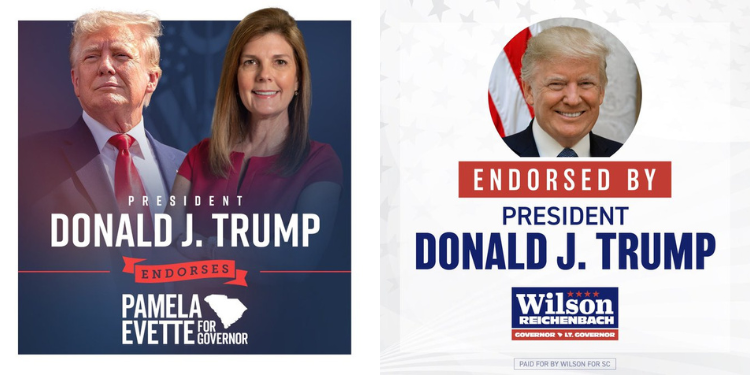
Trump’s Rare Dual Endorsement Shapes Final Days of Race
On Friday last week, Trump issued a rare dual endorsement just days before the vote. In a Truth Social post, he wrote that both candidates were “MAGA and America First all the way” and that he could not hurt one by endorsing only the other. “With either one you can’t go wrong,” he added.
The move helped Trump avoid another high-profile endorsement setback after losses in recent gubernatorial primaries elsewhere.
Key Endorsements That Shifted the Republican Runoff
Wilson also picked up backing from Sen. Tim Scott of South Carolina, Sen. Ted Cruz of Texas, and West Virginia Gov. Patrick Morrisey.
At 52, Wilson has served as attorney general for 15 years. An Iraq War veteran and son of Rep. Joe Wilson, he gained national attention for prosecuting the Alex Murdaugh murder case.
Evette, a business leader and Trump ally, had finished first in the primary but saw her lead slip.
Wilson Now Faces Democratic Nominee in November General Election
Wilson will face Democratic nominee state Rep. Jermaine Johnson in November. South Carolina has not elected a Democrat as governor since 1998, making Wilson the strong favorite in the solidly Republican state.
Current Gov. Henry McMaster, the longest-serving in state history, is term-limited.
Wilson presented himself as a tested conservative firmly established in Columbia politics. Supporters cited his experience and legal record. Evette has promoted her business background and allegiance to Trump’s agenda.
Wilson’s campaign focused on uniting support from eliminated primary candidates and magnifying endorsements from across the conservative spectrum.
His campaign had also been boosted much after Trump’s last-minute endorsement, considering the president at first had only endorsed Evette.
Also Read: Trump Endorses Rivals Evette and Wilson Ahead of June 23 South Carolina Governor Runoff
For many voters, the race came down to familiarity and trust. Wilson’s long tenure as the state’s top law enforcement official gave him an edge in a state where Republicans dominate statewide offices.
The Murdaugh prosecution he oversaw, reopened in the campaign’s final stretch, reminded voters of his high-profile work.
Trump’s late adjustment in the race drew attention but did not appear to dramatically sway the outcome.
Both candidates downplayed any potential division caused by the dual endorsement in the campaign’s closing days.
The winner will take over from McMaster, who ascended to the governorship when Nikki Haley became U.N. ambassador during Trump’s first term.
Why South Carolina Remains a Strong GOP Stronghold
The seat has been in Republican hands for decades, and the November general election is expected to be a simple win for the GOP nominee.
Political analysts and commentators had viewed the runoff as a measure of Trump’s clout in Southern primaries. His first choice failed, and co-endorsement gave him the chance to say he was with the ultimate winner.
Also Read: Republicans Go Against Trump in Rare Senate Rebuke Over Iran Military Action
Wilson’s victory sets up a general election against Johnson, a state representative from the Columbia area.
Just before his win was confirmed, Wilson promised voters that he would not stop fighting for them regardless of the outcome.
“Thank you, South Carolina. No matter what happens tonight, I will never stop fighting for the state that raised me.
“It has been the honor of my life to serve you, and my commitment to the people of this great state will never waver,” he said via X.
Ahead of the midterms, the campaign strategy will now focus more on economic growth, education, and public safety than on the primary clashes witnessed in the GOP primary and runoff.