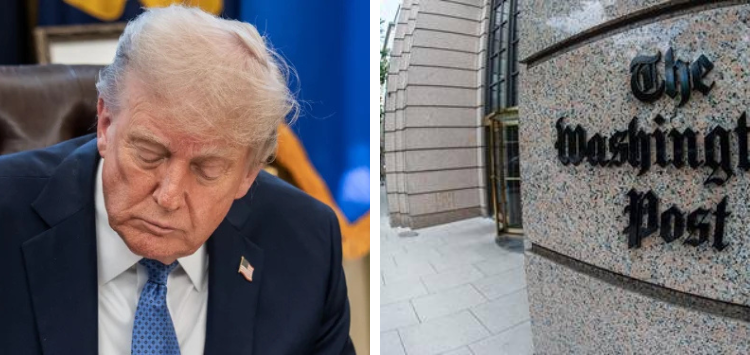
The Justice Department under President Donald Trump issued grand jury subpoenas compelling testimony from a Washington Post national security reporter and several Wall Street Journal reporters, then withdrew them after the news organizations challenged the demands in federal court.
The subpoenas, issued this spring, sought to force journalists to appear before a federal grand jury in the Eastern District of Virginia as part of national security investigations linked to coverage of the U.S. conflict with Iran.
No reporters ultimately testified, and the subpoenas were rescinded earlier this month.
Subpoenas Targeted National Security Reporting
The Washington Post confirmed that national security reporter Ellen Nakashima was served with a subpoena. Three unnamed Wall Street Journal reporters also received subpoenas requiring them to testify before a federal grand jury.
The demands were part of a broader leak investigation launched by the administration.
In March, the Justice Department subpoenaed records connected to a Wall Street Journal report published on February 23 that detailed Pentagon concerns about the risks of an extended military campaign against Iran.
The article appeared shortly before U.S. and Israeli military operations were launched.
According to officials familiar with the matter, President Trump encouraged Acting Attorney General Todd Blanche to aggressively pursue investigations into unauthorized disclosures of sensitive national security information.
News Organizations Fought the Demands
Both news organizations challenged the subpoenas in federal court. The Washington Post filed a motion seeking to quash the subpoena issued to Nakashima, prompting a closed-door hearing before a federal judge.
Before the matter could proceed further, the Justice Department withdrew the subpoenas. As a result, none of the targeted journalists were required to testify.
Dow Jones, the publisher of the Wall Street Journal, strongly opposed the government’s actions. Ashok Sinha, the company’s chief communications officer, described the subpoenas as an attack on constitutionally protected newsgathering and said the organization would vigorously defend its reporting.
The withdrawal represents a setback for prosecutors attempting to compel journalists to reveal information as part of the leak investigation. News organizations have long argued that protecting confidential sources is essential to independent reporting.
Investigation Tied to Iran Coverage
The reporting at the center of the dispute focused on internal government discussions leading up to military action against Iran. The Wall Street Journal reported that Joint Chiefs of Staff Chairman Gen.
Dan Caine and other Pentagon officials had warned Trump about the potential risks of expanding military operations.
Also Read: ‘He Failed Badly’ Trump Predicts Starmer Resignation Over Immigration and Energy
Administration officials viewed the disclosures as damaging leaks that could threaten operational security and endanger personnel. Prosecutors pursued the subpoenas as part of efforts to identify the sources behind the reports.
The Justice Department has defended such measures as necessary to protect classified information and safeguard national security during active military operations.
Rare Move Revives Press Freedom Debate
Efforts to force journalists to testify before federal grand juries remain relatively uncommon. Justice Department guidelines generally discourage subpoenaing members of the press and require senior-level approval and evidence that other investigative options have been exhausted.
However, similar tactics have been used in previous administrations. During the administration of President Barack Obama, an ABC News reporter was subpoenaed in a leak investigation in 2011.
Earlier, during President George W. Bush’s administration, New York Times reporter Judith Miller and Time magazine reporter Matthew Cooper faced grand jury demands in the investigation into the disclosure of CIA operative Valerie Plame’s identity.