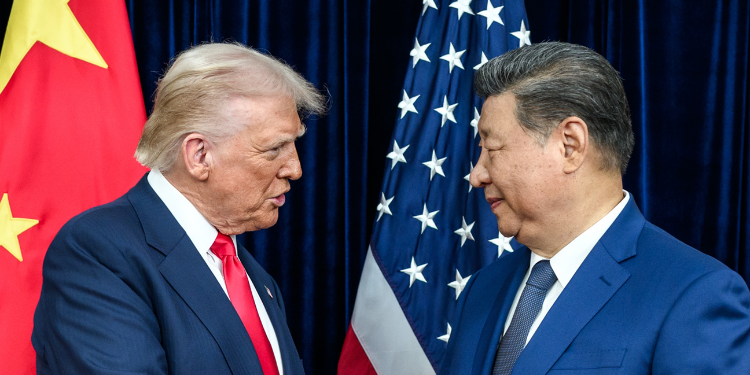
China has issued an update on a planned visit by President Donald Trump, following reports of a delay to the meeting with President Xi Jinping.
Speaking during a regular press briefing on Tuesday, March 17, Chinese Foreign Ministry spokesperson Lin Jian addressed questions about the timing of the visit and whether it was linked to tensions in the Strait of Hormuz.
Lin said China remains in communication with the United States, adding that Washington had clarified that reports suggesting the visit was tied to the situation in the strait were “completely false.”
He added that both sides remain engaged.
“China and the U.S. remain in communication on President Trump’s visit to China,” Lin said when asked about the timing and whether Beijing had been formally notified of any changes.
Pressed further on a possible timeline, he said discussions were ongoing, including on dates, but gave no additional details.
Also Read: Iran Declares Figure Ali Larijani Dead Hours After Trump’s Strike Claims
This is after U.S. President Donald Trump pushed back his planned trip to China, saying he will travel in “five or six weeks” instead of later this month.
Speaking in the Oval Office, Trump said the timing of the visit had been adjusted as he remains focused on developments in the Middle East.
He told reporters that the delay was linked to the ongoing conflict in the region, adding that he needed to remain in the United States at this time.
Trump said China was “fine with it” and that he looks forward to meeting Chinese President Xi Jinping.
“He looks forward to seeing me, I think,” Trump added.
China reiterates position on Hormuz
The postponement comes days after Trump urged several countries, including China, to deploy warships to help secure the Strait of Hormuz.
In response to an earlier inquiry by The Kenya Times on that call, the spokesperson for the Chinese Embassy in the United States, Liu Pengyu, said Beijing’s position remains focused on de-escalation rather than military involvement.
“China’s attitude on the situation in the Middle East is objective and impartial. We call for an immediate stop to military operations to avoid the spiraling escalation of the situation and prevent the conflict from spilling over and spreading,” spokesperson Liu said.
“The Strait of Hormuz and waters nearby are an important route for international goods and energy trade. Keeping the region safe and stable serves the common interests of the international community. All parties have the responsibility to ensure a stable and unimpeded energy supply.”
The embassy added that China would continue engagement with relevant parties, “and play a constructive role for de-escalation and restoration of peace.”
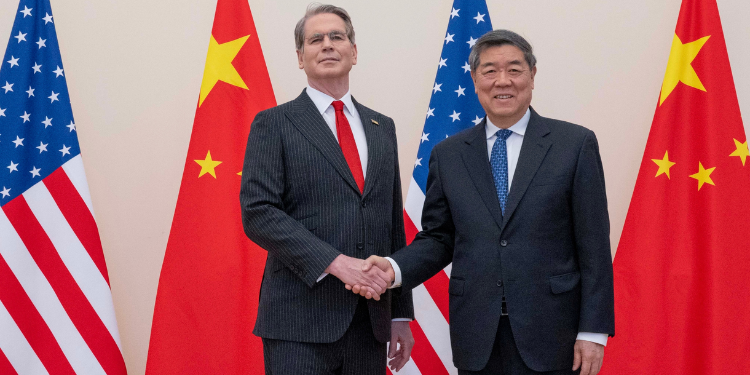
U.S. officials, however, have continued engagements with their Chinese counterparts. Treasury Secretary Scott Bessent and U.S. Trade Representative Jamieson Greer have been meeting this week to discuss trade.
Also Read: China Weighs In on Hormuz Crisis After Trump Urges Global Warship Deployment
The Secretary in a statement on Tuesday said that they “held a very productive two days of talks in Paris, France with Chinese Vice Premier He Lifeng to discuss trade and economic relations between our countries.”
“We will be issuing a statement in the next few days reaffirming the stability in the relationship between the first and second largest economies in the world,” Bessent said.
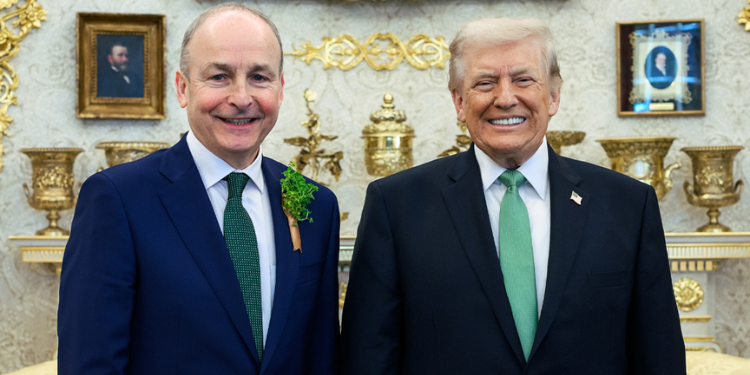
Trump during a meeting with Irish Prime Minister Micheál Martin at the Oval Office also criticised members of the North Atlantic Treaty Organization (NATO) over their response to his call for support in securing the Strait of Hormuz.
He described the lack of immediate backing as a “very foolish mistake” and questioned whether the alliance would support the United States in a similar situation.
“I’ve long said that, you know, I wonder whether or not NATO would ever be there for us,” the president said.
Trump criticises NATO allies
He added that while the United States does not depend on the alliance in this case, member states should have responded to the request.
Trump also pointed to coordination with countries in the Middle East, naming Qatar, the United Arab Emirates, Saudi Arabia, and Bahrain.
The president said these countries had supported efforts around the strait as discussions continue to form a coalition to secure the waterway.
Later, the president who has been pressing allies to help safeguard the critical waterway to ease a chokepoint on the region’s oil exports, fumed that the U.S. is not getting support “despite the fact that we helped” NATO “so much,” and said that it was in allies’ interest to prevent Iran from securing a nuclear weapon.
“You would have thought they would have said, ‘We’d love to send a couple of minesweepers.’ That’s not a big deal,” Trump said. “It doesn’t cost very much money. But they didn’t do that.”
In a Truth Social post earlier Tuesday, Trump said he was “not surprised” at NATO because he views it as a “one way street — We will protect them, but they will do nothing for us.”