China has responded after United States President Donald Trump urged global powers to deploy warships in the Middle East to secure the strategic Strait of Hormuz.
Beijing called for an immediate cessation of hostilities in the Middle East hours after Trump, on Saturday, March 14, publicly appealed to several countries to help protect the shipping corridor amid escalating tensions between the United States, Israel, and Iran.
Spokesperson for the Chinese embassy in Washington, Liu Pengyu, told CNN that Beijing’s focus is on de-escalation, not military deployments.
“As a sincere friend and strategic partner of Middle Eastern countries, China will continue to strengthen communication with relevant parties, including parties to the conflict, and play a constructive role for de-escalation and restoration of peace,” the spokesperson said.
The embassy added that all parties have a responsibility to ensure the uninterrupted flow of global energy supplies.
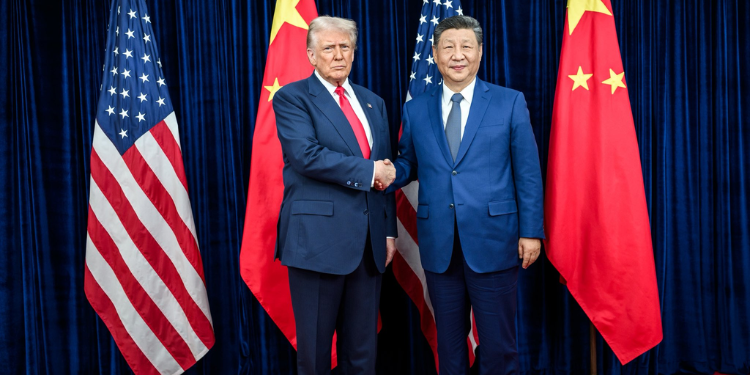
The development comes ahead of a scheduled meeting in Beijing between Trump and Chinese President Xi Jinping in the coming weeks.
The Kenya Times reached out to the Chinese Embassy in the United States for additional comment regarding their positions on deploying naval forces to the Strait of Hormuz.
Spokesperson Liu responded as follows:
“China’s attitude on the situation in the Middle East is objective and impartial. We call for an immediate stop to military operations to avoid the spiraling escalation of the situation and prevent the conflict from spilling over and spreading.
The Strait of Hormuz and waters nearby are an important route for international goods and energy trade. Keeping the region safe and stable serves the common interests of the international community. All parties have the responsibility to ensure stable and unimpeded energy supply.”
Trump calls on China and other major powers to send warships
President Trump had earlier on Saturday urged multiple countries to deploy naval forces to the region after Iran moved to restrict access through the Strait of Hormuz, a critical maritime corridor connecting the Persian Gulf to the Gulf of Oman.
Also Read: Blow to Trump as Country Rejects US Military Flyover Requests Tied to Iran War
Roughly one-fifth of the world’s oil supply passes through the narrow waterway each day, making it one of the most strategically important shipping routes in the global energy market.
In a post on his Truth Social platform, Trump said countries that depend on oil shipments passing through the strait should help secure it.
“Many countries, especially those who are affected by Iran’s attempted closure of the Hormuz Strait, will be sending war ships, in conjunction with the United States of America, to keep the Strait open and safe,” Trump wrote.
He specifically mentioned countries including China, France, Japan, South Korea, and the United Kingdom.
Trump also claimed the United States had already “destroyed 100 percent of Iran’s military capability,” but warned Tehran could still threaten shipping lanes through drone strikes, naval mines, or missile attacks.
“Hopefully China, France, Japan, South Korea, the UK, and others, that are affected by this artificial constraint, will send Ships to the area so that the Hormuz Strait will no longer be a threat by a Nation that has been totally decapitated.”
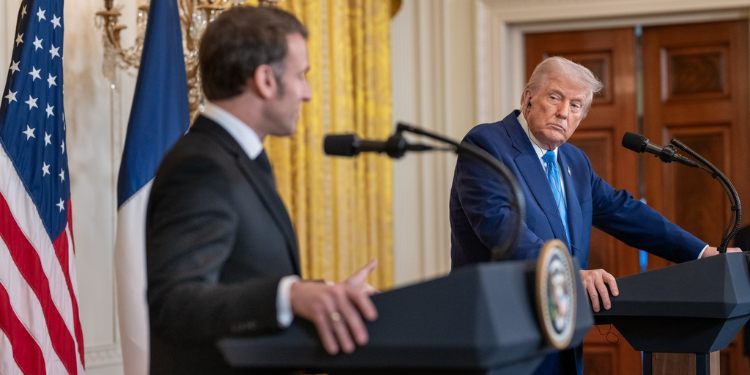
France earlier rejected deployment reports
China’s comments, which followed Trump’s call for international action, come after France dismissed reports that it was preparing to send an aircraft carrier strike group toward the Gulf.
French officials said the carrier group is stationed in the Eastern Mediterranean and its military posture is unchanged.
The clarification from France followed speculation earlier in the week that Paris was preparing to dispatch up to 10 warships toward the Strait of Hormuz soon after Trump’s call. French authorities said their stance remains defensive.
Also Read: Macron Pushes Back After Trump Urges Allies to Send Warships to Hormuz
Meanwhile, Iran has rejected U.S. claims that it has fully closed the Strait of Hormuz. Iranian Foreign Minister Abbas Araghchi said in a recent interview that the strait is not completely blocked but that restrictions apply to U.S. and Israeli vessels.
According to Araghchi, Iran’s measures are aimed at countering military pressure from Washington and Tel Aviv rather than targeting global trade.
He also warned Gulf countries against allowing U.S. forces to launch strikes on Iran from their territory, saying such actions could draw those states into the conflict. Araghchi at the same time addressed recent U.S. strikes targeting Kharg Island, a major Iranian oil export hub.
The foreign minister alleged that some missiles used in the attack were launched from locations in the United Arab Emirates close to civilian areas. Iran has warned that it may retaliate against sites from which such attacks originate.
Separately, Iranian military officials have warned that ports and facilities in the UAE hosting U.S. military assets could become potential targets if the conflict escalates further.
Maritime attacks increase in the Gulf
According to maritime monitoring agencies, at least 29 incidents involving ships have been reported in the Strait of Hormuz since Iran announced restrictions on traffic through the strait.
The United Kingdom Maritime Trade Operations (UKMTO) and the International Maritime Organization confirmed multiple recent attacks on tankers and cargo vessels.
On March 1, the oil tankers MT Skylight and MKD VYOM were struck and later abandoned after fires broke out, resulting in three deaths.
Other ships targeted in recent days include the container vessel Safeen Prestige and the cargo ship Safesea Vishnu, which suffered significant damage following missile and projectile strikes.
An Indian sailor was also reported killed during a March 11 attack on a merchant vessel in the region.
Meanwhile, Brent crude prices have surged above $103 per barrel.