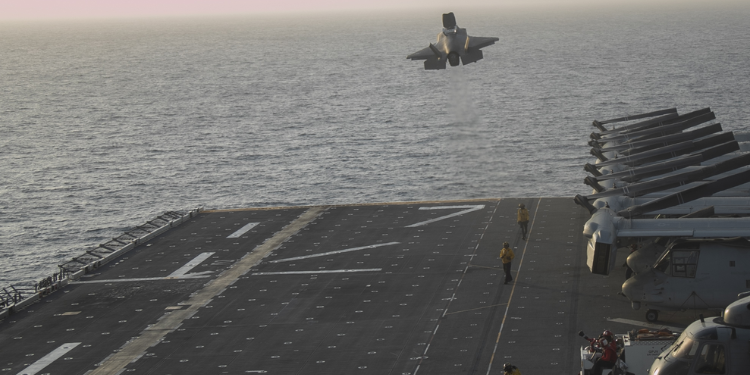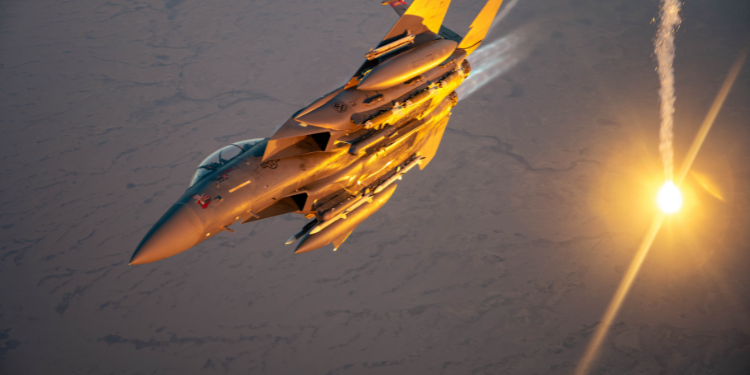

Iranian state media has reported that the Iran’s forces destroyed a “hostile” American aircraft near the southern province of Bushehr.
The early Friday, May 29 report, first carried by Iran’s state broadcaster and later by other news agencies, cited Bushehr governor Masoud Tangestani as saying the aircraft was brought down in Jam governorate on Thursday night.
“The incident that occurred tonight was related to the destruction of a hostile aircraft,” the semi-official Tasnim news agency quoted Tangestani as saying. “The city is now in a normal situation.”
Reuters reported that Iranian state television announced “a U.S. aircraft was destroyed in Iran’s Jam governorate in Bushehr,” though there was no immediate confirmation from the United States military or the White House.
However, the agency later said that no U.S. aircraft were shot down despite a claim made on Iranian state TV, according to a U.S. official, speaking on the condition of anonymity.
Warning shots fired at 4 vessels by Iran near Strait of Hormuz
Iranian media, including Mehr news agency, also reported that warning shots had earlier been fired at four vessels allegedly attempting to traverse the Strait of Hormuz without authorization from Iranian security authorities.
According to the reports, explosions heard near Bandar Abbas were linked to what Iranian officials described as “warning missiles” directed toward ships operating near the strategically vital waterway.
Also Read: How Trump Is Delaying the U.S.-Iran Agreement at the Final Moment
The claims come amid rapidly deteriorating tensions following a series of tit-for-tat military exchanges involving Iranian drones, American strikes and retaliatory attacks targeting U.S. assets in the Gulf region.
On Thursday, Iranian state broadcaster IRIB reported that Iranian forces confronted four vessels attempting to enter the Persian Gulf through the Strait of Hormuz “without coordination with the security forces.”
“They were warned, but after they ignored the warning, warning shots were fired at them, forcing them to return,” IRIB said in a Telegram statement.
The confrontation reportedly triggered direct American military action. According to U.S. officials cited by AFP and Reuters, American forces launched strikes against a ground control station in Bandar Abbas after Iranian drones targeted ships near the strait.
A U.S. official told AFP that the operation struck a drone control facility in southern Iran, while Reuters reported that American forces also intercepted four Iranian attack drones before a fifth could launch.
“These actions were measured, purely defensive and intended to maintain the ceasefire,” a U.S. official said.
Shortly afterward, Iranian media reported multiple explosions east of Bandar Abbas, with air defense systems activated across the area for several minutes.
Iran then responded by targeting what it described as the American base from which the strikes had originated.
A spokesperson for Iran’s Revolutionary Guards Corps (IRGC) said Tehran had launched retaliatory strikes at approximately 4:50 a.m., though Iranian authorities did not publicly specify the location of the targeted U.S. installation.
Kuwait’s military later confirmed that its air defense systems had been activated against what it described as “enemy” missile and drone threats, adding that explosions heard across parts of the country were linked to interceptions conducted by Kuwaiti defenses.
Also Read: Gulf Doubts Deepen as Iran’s Deterrence Appears Strong After Trump Strikes
The escalation has significantly rattled an already fragile ceasefire framework established in April after months of conflict involving Iran, the United States and Israel.
This comes amid reports that the United States and Iran had reached a preliminary understanding on Thursday to extend their ceasefire for another 60 days and ease restrictions on shipping through the Strait of Hormuz, which remains at the center of the crisis.
The narrow waterway handles a substantial percentage of the world’s oil and gas shipments, making any military confrontation in the area a major concern for global energy markets and international shipping.
Why it matters
Although diplomatic efforts led by regional mediators — particularly Pakistan and Gulf states — have recently pushed Washington and Tehran closer toward a possible framework agreement, deep divisions remain over sanctions, military presence in the Gulf and Iran’s broader strategic influence in the region.
President Donald Trump has repeatedly claimed that negotiations are progressing toward a final agreement, recently announcing that a broader peace memorandum involving Iran and multiple Middle Eastern countries was close to completion.
However, military activity around Hormuz has continued to intensify despite those diplomatic claims.
Iran has increasingly asserted control over maritime traffic through the strait and recently established the Persian Gulf Strait Authority, a state body tasked with overseeing transit operations through the chokepoint.
The authority has published maps showing expanded Iranian claims of oversight over shipping routes near Hormuz and warned that only vessels willing to comply with Iranian directives would be permitted safe passage.
The United States has sharply criticized the move, with Treasury Secretary Scott Bessent accusing Tehran of attempting to “extort global maritime trade.”
Washington recently imposed sanctions on the Persian Gulf Strait Authority, warning that entities cooperating with it could face penalties for supporting the IRGC.
As of Friday morning, U.S. officials had not publicly acknowledged the reported aircraft loss, and independent verification of Iran’s claims remained unavailable.
Follow our WhatsApp Channel and X Account for real-time news updates.