Even after a major US-Israel military campaign against Iran and ongoing ceasefire negotiations, Tehran has managed to bolster its deterrent power over key Gulf Arab states rather than see it diminished, according to a prominent Israeli Iran analyst.
Danny Citrinowicz, a former Israeli military intelligence expert on Iran and senior fellow at the Institute for National Security Studies (INSS), argues that most Gulf countries remain deeply concerned about their vulnerability to Iranian retaliation.
In a post on X on Saturday, May 23, Citrinowicz said Iran’s deterrence against most Gulf states has not weakened. It has grown stronger.
“Most countries in the region fear today that it will not be possible to defend them effectively against an Iranian attack, or to prevent Tehran from leveraging its influence over the Strait of Hormuz,” he wrote.
Gulf States Move Cautiously Amid Rising Regional Tensions
As a result, he expects most Gulf states will keep some kind of working ties with Iran’s regime, whether it looks new or old after the fighting.
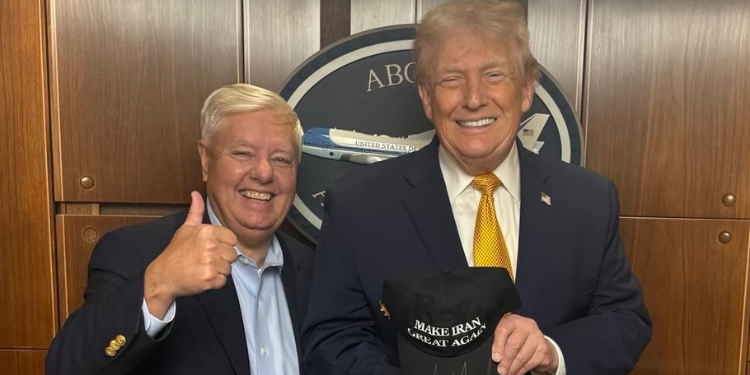
Citrinowicz, who has spent years tracking Iran’s military and political moves, made the remarks in response to comments from US Senator Lindsey Graham (R-SC).
Graham told reporters that some regional leaders had urged President Donald Trump to press the military campaign harder to weaken the Iranian regime and secure better terms in any deal.
Others, however, warned of Iran’s ability to disrupt oil flows and strike Gulf energy facilities in response.
Graham quoted those worried voices saying it was not possible to fully secure the Strait of Hormuz from Iranian interference, and that Iran could destroy large parts of the Gulf oil infrastructure in retaliation.
Also Read: “Highly Concerned” Netanyahu Pushes Trump Toward Fresh Iran Strikes as Nuclear Deal Fears Grow
Graham himself sounded skeptical, saying that the days will tell whether the campaign truly neutralized those threats.
The Strait of Hormuz is a narrow waterway at the mouth of the Persian Gulf. Nearly 20 percent of the world’s oil passes through it every day.
Iran sits right on its northern shore, but its missiles, drones, and naval forces can reach the waterway in minutes if not seconds.
Even after the recent strikes, Gulf leaders doubt anyone can guarantee safe passage if Iran decides to cause trouble.
Gulf States Fear the US Cannot Fully Protect Them From Iranian Attacks
According to Citrinowicz’s analysis, this is not a new fear, but the current Iran-U.S. war has sharpened it.
For years, Gulf states watched as Iran launched missiles and drones toward Israel and kept its network of proxies active.
The current conflict gave Gulf states a different reality after Iran started seeing them as targets.
They saw that American protection, while powerful, has limits when spread across the region. Regardless of U.S. air defenses in the region, Iran’s missiles and drones reached targets, even though most of them were intercepted.
Some Arab officials allegedly quietly concluded they cannot count on the US to absorb all the risk for them if oil facilities start burning.
Saudi Arabia, the United Arab Emirates, Qatar, and others have spent billions on American weapons and air defenses, but still, Iranian missiles penetrated and hit targets.
Also Read: Iran Moves Goalposts on Trump Talks – Refuses Nuclear Discussions Until War Ends
For the United States, this creates a difficult position even as Trump claims that he has all the cards.
Washington wants to claim success and move on to new deals, end the war, and lower energy prices ahead of the November elections.
But if Gulf partners hedge their bets and keep channels open to Tehran, America’s isolation strategy becomes harder to maintain.
Higher tensions in the Gulf usually mean higher prices at gas stations in the US and Europe.
Asian buyers such as China and India, which depend heavily on Gulf oil, also have a stake. China, in particular, has bought Iranian oil even under sanctions and could expand that role if Gulf states look for quiet insurance policies.
Citrinowicz believes that many Gulf states prefer quiet diplomacy over open alignment against Tehran.
Trump Says All War Objectives Have Been Achieved in Iran Conflict
President Trump and his allies have been arguing that Iran’s military and economy took serious hits. They say the regime is weaker and more isolated than before.
Senator Graham said he hopes for a good outcome and questioned claims that Iran can still cause chaos after such heavy damage.
Still, the region’s behavior tells its own story. Reports of mediation efforts by Qatar and others suggest Arab states want the shooting to stop before things spiral further.
They remember how quickly a limited conflict can threaten their entire economic model.