Virginia voters narrowly approved a constitutional amendment on Tuesday that lets the Democratic-controlled General Assembly draw new congressional district lines for the rest of the decade.
The measure passed with 51.4 percent in favor and 48.6 percent against, according to final tallies from the Virginia Department of Elections. More than 3 million votes were cast in the special election.
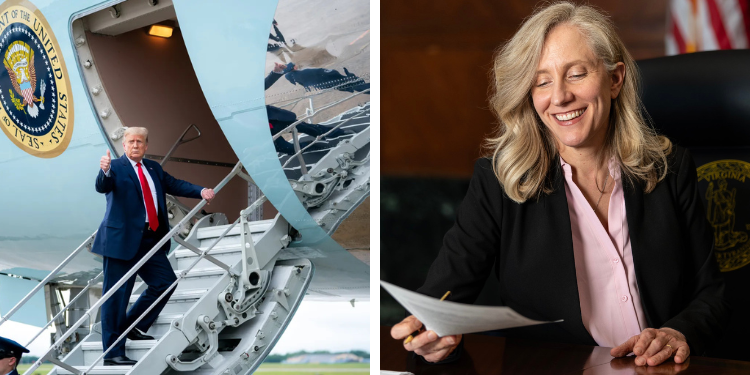
Governor Abigail Spanberger described the result as a direct response to President Donald Trump’s calls for Republicans to gain more House seats through redistricting in other states.
In a statement after the vote, April 21, Spanberger said Virginia’s approach gives voters the final say at the ballot box rather than letting politicians act alone.
She noted the change is temporary and will end after the 2030 census, when the state’s bipartisan redistricting commission takes over again.
“Virginians have the opportunity to take action in response to this extraordinary moment,” Spanberger said. She pointed to Trump’s public comments that he feels “entitled” to additional Republican seats ahead of the midterms.
The new map, already passed by the legislature and signed by Spanberger, would take effect if the amendment passes.
It is drawn to give Democrats a strong edge in 10 of Virginia’s 11 congressional districts. The current map has a 6-5 Democratic majority.
Also Read: Win for Democrats After Virginia Vote Delivers Exactly What the GOP Feared
Analysts say the proposed lines could let Democrats pick up as many as four seats in the 2026 elections. That shift would come mainly from reshaping districts in Northern Virginia, Richmond, and Hampton Roads to more efficiently spread out Democratic voters.
Republicans called the effort a partisan power grab that breaks the spirit of the 2020 voter-approved reform to create an independent commission.
Former Gov. Glenn Youngkin and GOP leaders in the General Assembly argued it weakens the fair process Virginians supported just six years ago.
They pointed out that Spanberger had previously expressed support for keeping redistricting out of politicians’ hands mid-decade.
GOP critics said the move sets a dangerous precedent, even as some Republican-led states pursue their own map changes.
Virginia decides
The referendum saw moderate turnout in Democratic strongholds around Washington, D.C., while the countryside and Republican-leaning areas voted solidly against it.
Early voting topped 1.3 million ballots, one of the highest totals for a standalone spring election in state history.
Judicial challenges to the amendment had reached the Virginia Supreme Court, but the justices allowed the vote to go forward. Any final rulings on the cases will come later.
The fight in Virginia is part of a larger national battle over congressional maps ahead of the 2026 midterms. Both parties have accused the other of trying to tilt the House balance with mid-decade redraws.
Democrats argue their plan in Virginia simply counters aggressive moves by Republicans in states like Texas. Republicans say Virginia’s map is one of the most aggressive gerrymanders proposed this cycle.
Also Read: Trump Makes Bold Moves to Ensure Republicans Win Midterm Election
If the new lines hold, Virginia’s delegation could flip from 6 Democrats and 5 Republicans to as lopsided as 10-1. That potential gain would give Democrats a considerable boost in their effort to win or hold the U.S. House.
The amendment keeps the existing commission in place for the next census cycle after 2030.
Spanberger cast her own early vote in favor and urged Virginians to do the same. In public comments, she described the referendum as a chance for voters, not just elected officials, to shape the rules for the next several election cycles.
The narrow margin shows how divided Virginia remains on the issue despite its recent shift toward Democrats in statewide races.
The outcome adds another flashpoint to an already heated midterm landscape, where control of Congress could hinge on map fights in a handful of states.
Trump had earlier been warned that he could be impeached if Democrats took the majority in the House after the midterm elections in November.