A new twist has emerged after a Reuters report, citing Iranian sources, claimed Saturday, April 11, that the Trump administration had agreed to release frozen Iranian assets, including $6 billion held in Qatar, as a goodwill gesture ahead of U.S.-Iran talks in Islamabad.
The claim has taken a fresh turn after a senior U.S. official swiftly denied any such agreement.
The $6 billion in question originated from Iranian oil sales to South Korea. It was frozen in South Korean banks in 2018 after the first Trump administration reimposed sanctions on Iran and withdrew from the 2015 nuclear deal.
The funds stayed frozen for most of Biden’s presidency, until September 2023, when the administration gave the go-ahead for sanctions. After that, about $6 billion was sent to restricted accounts in Qatar.
Biden unfreezes part of the assets.
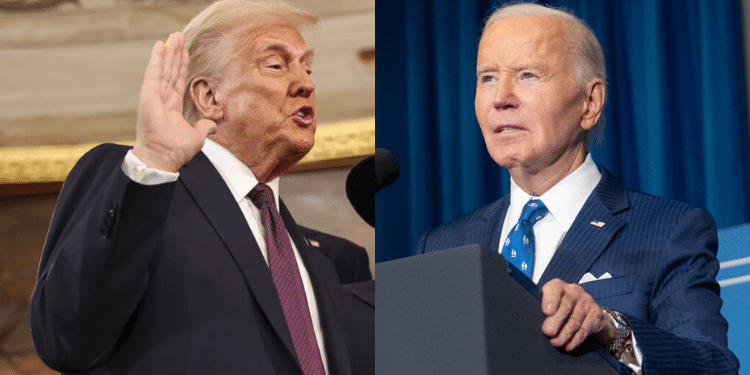
The Biden administration made the move, which was highly criticized by Donald Trump and his camp, as part of a prisoner swap, where Iran released five detained U.S. citizens. Freedom for the five Iranians held in the United States was also part of the deal.
The Biden administration maintained that the money could be used only for humanitarian purchases with strict oversight by the Treasury Department.
However, after Hamas attacked Israel on October 7, 2023, the Biden administration effectively froze the money again. U.S. officials said that Iran would not be able to get the money “for the foreseeable future” and that Washington still had the right to put a complete freeze on it.
Also Read: Trump Sends More Troops and Jets to Middle East Despite Iran Ceasefire
Qatar helped stop the payments, and the accounts have not been touched since late 2023. Since the refreeze, no part of the $6 billion has been spent or given to Iran.
As of April 2026, the funds remain in Qatari banks under the same restrictions. The Trump administration has not altered its status.
Amid ongoing regional tensions, including a fragile ceasefire and disputes over the Strait of Hormuz, Iranian sources told Reuters that unfreezing the assets was one of Tehran’s demands conveyed to the U.S. side, and that Washington had agreed. A second Iranian source specifically referenced the $6 billion in Qatar.
The Trump administration denies Iran’s claims.
A high-ranking U.S. official told CBS News reporter Jennifer Jacobs that the U.S. would not agree to the deal. “The U.S. has not agreed to release any Iranian frozen assets,” the official said, which goes against what Iran said.
No meetings between U.S. and Iranian leaders had produced any deal on the assets at the time of the reporting, even as Vice President JD Vance led a U.S. delegation, including Steve Witkoff and Jared Kushner, for bilateral discussions with Pakistani officials in Islamabad.
Pakistan has facilitated the broader talks amid a recent U.S.-Iran ceasefire arrangement tied to safe passage through the Strait of Hormuz.
Iranian officials have linked the release of assets to Hormuz security, claims the U.S. has refuted.
The $6 billion remains one element in a larger pool of Iranian assets frozen abroad under U.S. and international sanctions, estimated by some analysts in the tens of billions overall.
Talks are still going on in Islamabad, but reports say the Pakistani mediators are not expecting much from them at this stage. They are more interested in keeping the conversation going than making quick progress.
Also Read: I Feel Sorry for Him, Like All Slaves: Tucker Carlson Fires Back at Trump
The U.S. is targeting to curb Iran’s nuclear program and address regional security, making sure Iran does not attack U.S. allies in the Middle East. On the other hand, Iran wants sanctions relief and access to frozen funds.
As of Saturday, the factual record shows that the $6 billion that Biden’s team refroze after the Hamas attacks remains inaccessible to Iran.
Iranian assertions of a U.S. agreement to unfreeze it stand contradicted by direct U.S. statements.
No independent confirmation of any release has emerged from Qatari authorities or U.S. Treasury officials.