
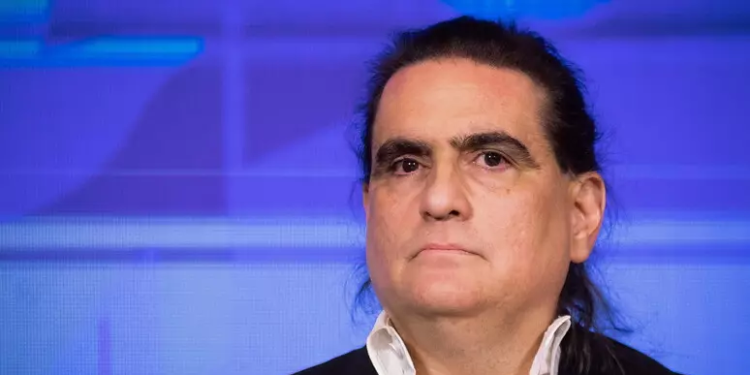
Venezuela has announced the deportation businessman Alex Saab to face criminal proceedings in the United States in a dramatic reversal for one of former Venezuelan leader Nicolás Maduro’s closest allies.
In a statement released May 19, Venezuelan authorities confirmed that Saab was deported on May 16, 2026, citing ongoing criminal investigations against him in the United States.
“The deportation measure was adopted, taking into consideration that the aforementioned Colombian citizen is involved in the commission of various crimes in the United States of America, as is public knowledge and widely reported,” the Venezuelan government said in its statement.
Venezuela deports Alex Saab to the U.S.
The announcement did not explicitly confirm Saab’s destination. However, multiple reports indicated he was transferred from Caracas to South Florida following his removal from detention.
The move comes less than three years after former U.S. President Joe Biden pardoned Saab as part of a 2023 prisoner exchange agreement between Washington and Caracas.
At the time, Saab’s release was tied to the return of detained Americans and broader efforts by the Biden administration to encourage electoral reforms in Venezuela.
Saab, a Colombian-born businessman who later obtained Venezuelan nationality, had long been regarded as one of Maduro’s closest financial operators.
Also Read: Inside Job? U.S. Soldier Arrested After $400K Maduro Raid Betting Win
U.S. officials previously described him as Maduro’s “bag man” because of his role in securing international business deals and sanctions-evasion networks for the Venezuelan government.
His relationship with Venezuelan authorities appeared to change after Maduro’s ouster earlier this year and the rise of acting leader Delcy Rodríguez.
Reports indicated that Rodríguez removed Saab from government positions and stripped him of influence over foreign investment operations in Venezuela.
Conflicting reports had circulated for months, suggesting the businessman was either under house arrest or detained internally by Venezuelan authorities.
The deportation could deepen divisions inside Venezuela’s ruling Chavista coalition, which has faced growing internal tensions since Maduro’s removal from office.
Influence
Saab amassed significant wealth through Venezuelan state contracts, including programs linked to the country’s subsidized food distribution system known as CLAP.
Federal prosecutors in the United States have reportedly been investigating Saab’s alleged involvement in corruption and bribery schemes tied to food import contracts awarded during Maduro’s rule.
According to previous U.S. court filings, Saab and longtime associate Alvaro Pulido allegedly used a network of shell companies connected to inflated food import deals involving government programs intended to provide staples to poor Venezuelans during the country’s economic crisis.
Saab was first arrested in 2020 after his private aircraft stopped in Cape Verde during a flight to Iran.
Venezuelan officials at the time argued that he had been acting as a diplomat on a humanitarian mission to bypass U.S. sanctions.
Maduro’s government strongly opposed Saab’s detention and repeatedly campaigned for his release, eventually celebrating his return to Venezuela in 2023 as what officials described as a major victory over U.S. pressure.
The current deportation represents a major reversal in Saab’s political standing.
The businessman may now become a key witness in ongoing American investigations into Maduro and senior Venezuelan officials.
Earlier reports revealed Saab had secretly cooperated with the U.S. Drug Enforcement Administration (DEA) before his original arrest.
Also Read: Insider Reveals Trump’s Secret Plan to Go After Cuba After Venezuela
Court proceedings in 2022 disclosed that Saab had provided information linked to corruption investigations involving figures within Maduro’s inner circle.
As part of earlier cooperation agreements with U.S. authorities, Saab reportedly forfeited more than $12 million tied to illicit business activities.
Maduro himself is currently awaiting trial in Manhattan after being captured during a U.S. military operation earlier this year.
Some analysts and regional reports have suggested Saab’s return to U.S. custody could strengthen federal cases examining the operational and financial structures tied to the former Venezuelan leadership.
His deportation also comes amid broader shifts in relations between Caracas and Washington, following political changes in Venezuela and growing U.S. interest in reopening the Venezuelan oil and mining sectors to American investment.
The Venezuelan statement notably referred to Saab only as a “Colombian citizen,” a detail some observers interpreted as legally significant because Venezuelan law prohibits the extradition of Venezuelan nationals.
During Saab’s earlier detention battle, Maduro and senior officials had publicly presented what they said was Saab’s Venezuelan passport in support of claims that he held diplomatic status and should not have been extradited.
The United States has not yet publicly commented on Saab’s latest transfer or confirmed details surrounding his legal status following the deportation.