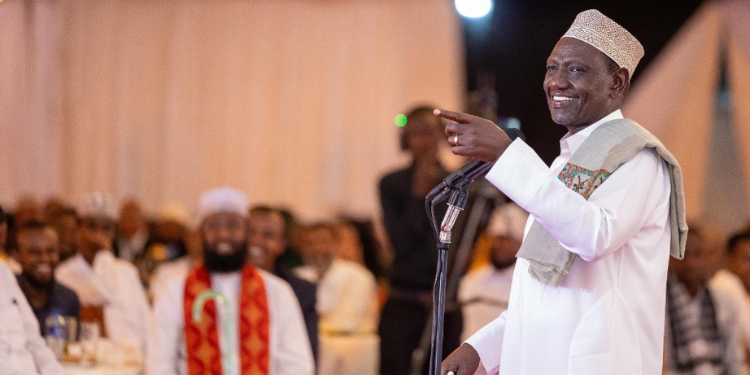

Friday, March 20, 2026, has been declared a public holiday to mark Idd-ul-Fitr.
Interior Cabinet Secretary Kipchumba Murkomen made the announcement through a special gazette notice dated March 18, 2026.
“IT IS notified for the general information of the public that, in exercise of the powers conferred by section 2 (1) of the Public Holidays Act, the Cabinet Secretary for Interior and National Administration declares that, Friday, the 20th March, 2026, shall be a Public Holiday to mark Idd-ul-Fitr.”
Idd-ul-Fitr, which translates to “the festival of breaking the fast,” marks the end of the holy month of Ramadan. The day is observed by Muslims through prayers, charity, and celebrations with family and community.
Muslims traditionally begin the day with special congregational prayers known as Salat al-Eid, followed by feasting and the exchange of greetings such as “Eid Mubarak.”
An essential aspect of the celebration is zakat al-fitr, a charitable donation given to the poor and needy before the prayers.
Eid ul-Fitr
The announcement comes as Muslims across Kenya prepare for the official sighting of the Shawwal crescent moon, which determines the exact end of Ramadan.
Also Read: Eid-ul-Fitr: What to Know About the Muslim Holiday After Ramadan
The Office of the Chief Kadhi confirmed that the moon will be observed on the evening of Thursday, March 19, corresponding to the 29th day of Ramadan 1447 AH.
According to a notice issued by Acting Chief Kadhi Sukyan Hassan Omar, the National Moon Sighting Committee will convene at the Kadhi’s Court in Upper Hill, Nairobi, from 6:00 pm to 9:00 pm.
The committee will receive and verify reports of the crescent sighting.
“Muslims are encouraged to look out for the new moon and share any credible, locally-based sighting information with the National Moon Sighting Committee.”
Reports can be submitted through an official live reporting platform, via telephone, or relayed through Kadhi’s Courts, Muslim organisations, imams, and community leaders.
To ensure transparency and inclusivity, several institutions have been invited to participate in the exercise. These include the Supreme Council of Kenya Muslims (SUPKEM), the Council of Imams and Preachers of Kenya (CIPK), the Jamia Mosque Committee, the Fatwa Council of Kenya, as well as representatives from mosques, educational institutions, media houses, and Muslim chaplaincy services.
Idd-ul-Fitr signifies the conclusion of Ramadan, a month dedicated to fasting, prayer, and spiritual reflection. This year, Muslims in Kenya began observing Ramadan on February 19, following confirmed local moon sightings.
The celebration not only marks the end of fasting but also symbolizes gratitude, renewal, and unity within the Muslim community. Families gather for meals, share gifts, and extend acts of kindness, reinforcing social bonds and compassion.
Government support during Ramadan
Earlier this year, the government introduced measures to support Muslims during Ramadan, particularly by enhancing access to essential food items.
In January, Health Cabinet Secretary Aden Duale welcomed a government decision to waive key import levies on dates, a staple used to break the fast during Iftar.
Also Read: Govt Waives Tax on Importation of Select Products Ahead of Ramadan
In a statement issued on January 30, Duale thanked President William Ruto for backing the move, describing it as a gesture of solidarity with the Muslim community.
“We convey our sincere appreciation to H.E. President William Ruto for the Government’s steadfast support and solidarity with Kenya’s Muslim community through the waiver on the importation of dates ahead of the Holy Month of Ramadan,” he said.
The waiver followed consultations on food security and drought mitigation, as well as a formal request from SUPKEM seeking tax relief on dates imported for Ramadan.
According to a directive from the National Treasury, the government approved exemptions from the Import Declaration Fee (IDF) and the Railway Development Levy (RDL) for dates imported specifically for Ramadan use.
However, a full tax exemption was not granted. Instead, the government committed to covering import duty and VAT costs.
The waiver applies for a defined period running from February 12 to March 20, 2026, ensuring an adequate supply of dates throughout Ramadan.