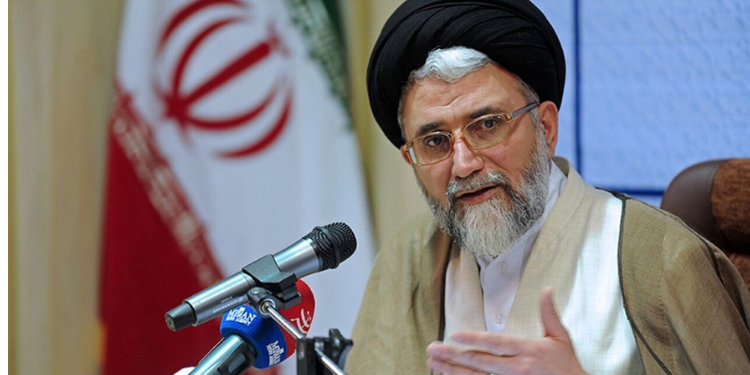
Iran’s Intelligence Minister Esmaeil Khatib has reportedly been killed in an Israeli military strike.
Israeli Defense Minister Israel Katz announced on March 18, 2026, the elimination of Khatib, warning that “significant surprises are expected throughout this day on all fronts.”
There has been no confirmation from Iranian authorities or media of Khatib’s death.
Khatib is one of the Islamic Republic’s senior security officials.
The killing comes amid the intensified conflict between Israel and Iran, marking what Israeli officials described as a targeted assassination of a high‑ranking Iranian leader.
Israel Eliminates Esmaeil Khatib
Israel has said the operation occurred overnight, without specifying the exact location or timing of the strike.
Also Read: Trump Miscalculated? Iran Issues Another Tough Demand to The United States
According to Katz, Israeli Prime Minister Benjamin Netanyahu had authorized the military to kill any other senior Iranian official being targeted without the need for additional approval.
Khatib had served as Iran’s Minister of Intelligence since August 2021 and was a close ally of Iran’s leadership, including the late Ali Khamenei.
His ministry has been a focal point in Iranian intelligence operations, including surveillance and counter‑espionage activities directed at regional attacks.
Katz’s announcement described the strike as part of a broader campaign by Israel to target key Iranian figures.
Other Iranian top officials killed since the attack started including:
- Ali Khamenei – Iran’s Supreme Leader
- Ali Shamkhani – Secretary of Iran’s Defense Council
- Abdolrahim Mousavi – chief of staff of Iran’s armed forces.
- Aziz Nasirzadeh – Iran’s minister of defense in Pezeshkian’s government
- Mohammad Pakpour – Commander-in-chief of Iran’s Islamic Revolutionary Guard Corps (IRGC)
Iran Rejects Ceasefire, Demands Complete and Permanent End to War
Iran’s Foreign Minister Seyyed Abbas Araghchi has warned U.S. President Donald Trump, stating that Washington miscalculated in the ongoing conflict.
In an interview with Al Jazeera, Seyyed Abbas Araghchi stated that Tehran is not seeking a ceasefire but demands a complete and permanent end to the ongoing conflict.
Araghchi said U.S. officials have shifted their stated war aims from regime change to the disintegration of Iran, the collapse of its government, or demands for unconditional surrender, illustrating what he described as strategic inconsistency and miscalculation, and he argued that these conflicting objectives have left the United States in a difficult position.
In his statement, he blamed the United States, led by Trump, for entering the war, saying American involvement was influenced by Israel and Prime Minister Netanyahu, yet they did not know what their goal was.
Further, he said parties that had demanded Iran’s unconditional surrender are now seeking assistance from rivals to help reopen the Strait of Hormuz, indicating mounting strategic pressure.
The United States was blamed for initiating the conflict and should acknowledge its mistake and end its actions.
Also Read: Democratic Insider Predicts Trump Will Quit by Next Year After Series of Losses in Midterms and War
Araghchi emphasized that Iran is not pursuing a ceasefire but is instead calling for a complete and permanent end to the war to prevent future escalation.
Israeli Airforce Destroys Ayatollah Ali Khamenei’s Plane
Israeli Air Force jets struck and destroyed the aircraft used by Ayatollah Ali Khamenei and senior Iranian officials, crippling military operations.
In a statement on March 16, the Israeli Air Force confirmed destroying a plane at Mehrabad Airport in Tehran used by Ali Khamenei, senior Iranian officials, and military personnel.
The aircraft was reportedly used to advance military procurement and to manage relations with Axis countries through domestic and international flights.
“The Air Force destroyed the plane of the leader of the Iranian terror regime at the “Mehrabad” airport in Tehran – the plane was used by Ali Khamenei, leader of the Iranian terror regime, additional senior officials from the terror regime, and elements in the Iranian military, to advance military procurement and manage relations with Axis countries through domestic and international flights,” the statement read in part.