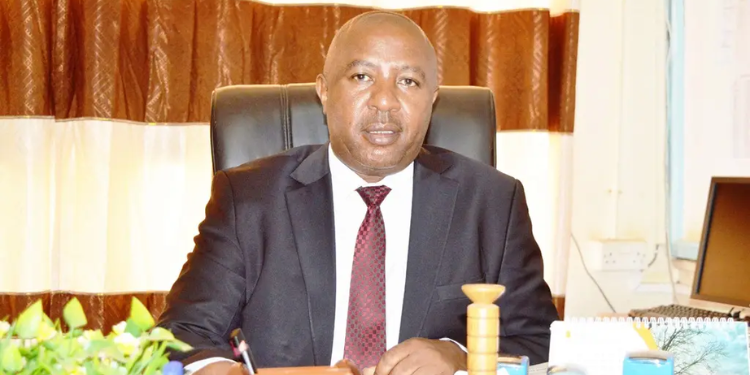
Schools are facing a fresh capitation funding shortfall after only KSh14,050 per student landed in school accounts against the annual allocation of KSh22,244, Kenya Secondary School Heads Association (KESSHA) Chairperson Willie Kuria has said.
Kuria said the amount schools have received so far leaves a gap of KSh8,194 per student, raising concerns about schools’ ability to meet their financial obligations as the third term progresses.
The KESSHA chairperson said there was a need to distinguish between the amount the government announces as having been released and the money that actually reaches school accounts.
Willie Kuria Reveals Ksh8,194 School Capitation Shortfall
He explained that although the Ministry of Education may indicate that a certain amount of capitation has been released, deductions and funds retained at the ministry level mean schools receive less.
“We are supposed to receive a capitation of 22,244 per year per student. So far this year, what we have received in schools, what has landed in school accounts, is Ksh14,050,” he said.
Kuria said the difference between the annual entitlement and the amount that has reached schools represents a significant funding gap that continues to affect school operations.
The Murang’a High School Principal said the head teachers have acknowledged receiving Ksh2,890 per student for the third term, which is too little to cover the academic calendar and prepare for KCSE.
Also Read: Ogamba Explains Steps Principals Must Follow Before Raising School Fees
He also raised concern over money retained by the Ministry of Education for activities and other purposes, saying such deductions should not be treated as money that has already reached schools.
“It is not all that amount that lands in school accounts. This year, although money has been released, 2,000 per student has been retained at the Ministry of Education.”
According to Kuria, the practice has created confusion in discussions about capitation because figures announced as released do not necessarily represent the money available to principals to run schools.
He said funds are retained for purposes including co-curricular activities and other allocations, meaning that the amount reflected in school accounts is lower than the figure publicly described as having been released.
“In our language here, we say that 16,000 has been released. But it is not that the money has actually hit the school accounts, because the ministry retains money.”
CS Ogamba Announces Release of Ksh 18.5 Billion in Capitation
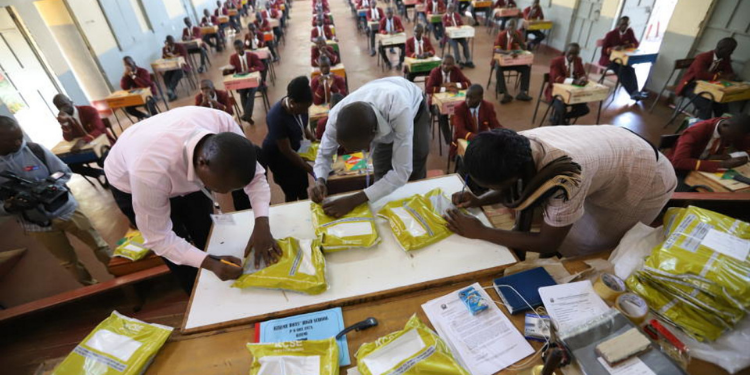
This comes after Education Cabinet Secretary (CS) Julius Ogamba announced on August 24 that Ksh18,508,271,486.60 as capitation has already been disbursed to cater for learners in all public basic education institutions this term.
A breakdown of the aforementioned figure will see Free Primary Education receive Ksh1,401,089,978.50, a crucial cushion for the youngest learners as classrooms fill up once again this week.
Free Day Junior School Education got the lion’s share among the lower tiers, with Ksh6,143,719,839.60 released to support Junior Secondary School learners (JSS) who are learners from Grades 7 to 9.
Free Day Secondary Education institutions received the biggest chunk overall, at Ksh10,963,461,668.50, owing to the higher costs of running Senior Secondary Schools (SSS), which are learners from Grades 10 to 12.
Also Read: Principals Take Stand on Push to Introduce Same Uniforms for All Kenyan Schools
Schools Still Face Capitation Funding Pressure
The KESSHA chairperson further compared the current situation with the previous financial year, when the ministry released Ksh15,383 per student but retained Ksh811, leaving schools with Ksh14,572 per student.
Kuria said the shortfall cannot be considered a closed matter once a new academic year begins, arguing that schools do not receive compensation for funds not provided in the previous year.
Last year, he said, schools faced a deficit of Ksh6,560 per student, translating to more than Ksh22 billion across the affected student population.
“Now that we started a new year, what you hope to get, there is no compensation that you did not get this in the succeeding year.”
At the same time, he called for a review of school capitation, saying school management faces the challenge of buying food and paying electricity and water bills.
“The capitation was last reviewed in 2017, and 10 years later the cost of education materials and food has skyrocketed. Some school workers are going for months without salaries based on the impact of inflation,” he added.
Follow our WhatsApp Channel and X Account for real-time news updates