

Every day, money moves across borders. A Kenyan importer pays a supplier in China. A flower exporter receives euros from Europe. A family in the United States sends dollars to relatives in Kisii, Kisumu, Meru, or Nairobi. A multinational company converts shillings into dollars to pay for software, machinery, or professional services. A student pays university fees abroad. A tourist lands in Kenya and converts dollars, pounds, or euros into shillings.
Behind many of these ordinary transactions sits one of the most powerful financial markets in the world: the foreign exchange market, commonly known as forex.
Forex is not just something traders talk about on social media. It is the plumbing of global trade. It is how countries buy oil, how companies import goods, how exporters receive payment, how banks manage liquidity, and how governments interact with the global economy.
The Bank for International Settlements reported that global foreign exchange trading reached approximately US$9.6 trillion per day in April 2025, up from US$7.5 trillion three years earlier. That makes forex the largest financial market in the world by daily turnover. The US dollar remained dominant, appearing on the bid side in about 89% of all trades.
For Kenya, forex is not abstract. It affects the cost of fuel, school fees abroad, imported cars, medicine, machinery, electronics, wheat, edible oil, diaspora remittances, export earnings, bank profits, and even the price of doing business.
The question many Kenyans are now asking is simple: if banks make serious money from forex, can individuals also make money from it?
The honest answer is yes, it is possible. But it is not easy money. It is not guaranteed money. And it is certainly not money made through guesswork, excitement, or betting your rent on a chart.
Forex income exists. But sustainable forex income requires knowledge, discipline, risk management, emotional control, capital preservation, and consistent practice.
What exactly is forex income?
Forex income is money earned from changes in currency value or from facilitating currency transactions.
At the simplest level, forex is about exchanging one currency for another. If you have Kenya shillings and need US dollars, you buy dollars. If you have dollars and need shillings, you sell dollars.
Currencies constantly move because of supply and demand. The Central Bank of Kenya explains that the exchange rate is market-determined and based on the supply and demand for foreign exchange. CBK publishes rates to help the public gauge the value of the shilling, but commercial banks and forex bureaus set their own rates within competitive market conditions.
Also Read: Car Loan vs Personal Loan in Kenya: Which One Should You Choose?
That movement creates opportunity.
For example, if someone buys US dollars when the dollar is cheaper and sells when it is stronger, they may make a gain. If a bank buys dollars from one customer at one rate and sells dollars to another customer at a slightly higher rate, it earns a spread. If a company wants to protect itself from future currency movements, a bank may provide a forward contract and earn income from structuring that transaction.
That is forex income.
But forex income comes in different forms.
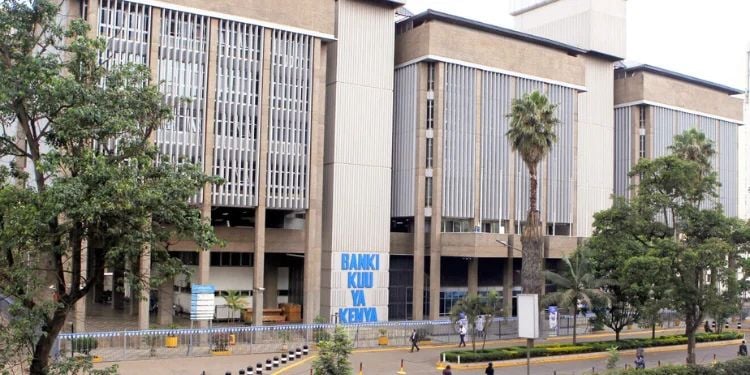
For banks, it may come from customer spreads, corporate transactions, trade finance, treasury operations, hedging products, interbank dealing, and currency risk management.
For individuals, it usually comes from online trading, where traders buy or sell currency pairs in hopes of benefiting from price movements.
The difference is important. Banks are not trading like most retail traders. Banks have customers, balance sheets, treasury teams, research desks, systems, compliance departments, and access to large transaction flows. Individuals are much smaller players and must therefore be much more disciplined.
How banks make billions from forex
Banks make money from forex because they sit at the centre of currency demand.
Think about a large Kenyan bank. Its customers include importers, exporters, NGOs, embassies, airlines, oil marketers, manufacturers, schools, hospitals, churches, hotels, investors, diaspora families, and multinational companies.
All these customers need foreign currency at different times.
An importer may need dollars to pay a supplier.
An exporter may need to convert euros into shillings.
A parent may need pounds to pay school fees in the UK.
A company may need dollars to service a foreign loan.
A tourist hotel may receive foreign currency and convert it locally.
Every time currency changes hands, there is potential income.
One way banks earn is through the spread. This is the difference between the rate at which a bank buys a currency and the rate at which it sells it.
If a bank buys dollars at KSh 129 and sells dollars at KSh 130, the KSh 1 difference is part of the spread. On a small transaction, that may look insignificant. But on millions or billions of shillings in foreign exchange volume, the numbers become significant.
Banks also earn from corporate forex transactions. Large companies do not simply walk into a banking hall and exchange money casually. They may need structured products, forward contracts, swaps, hedging arrangements, and treasury advice. These services create additional income for banks.
This is why foreign exchange income is clearly reported in banks’ financial statements.
For example, KCB Group reported foreign exchange income of KSh 11.4 billion in 2025, which was lower than KSh 17.5 billion in 2024. ABSA Bank Kenya’s FY2025 earnings note reported foreign exchange trading income of about KSh 5.94 billion, slightly lower than the prior year. NCBA’s H1 2025 earnings highlights showed foreign exchange trading income of about KSh 2.4 billion in just the first half of the year, down from KSh 3.7 billion in H1 2024.
These numbers tell us two things.
First, forex is a significant source of income for banks.
Second, forex income fluctuates. Even banks do not make the same amount every year. Currency volatility, margins, customer activity, competition, regulation, and market conditions all affect earnings.
That is an important lesson for individuals: if even banks experience changing forex income, no individual trader should imagine forex as a smooth monthly salary.
Why banks have an advantage
Banks do not make money from forex merely because they can “predict the market.”
They make money because they have structural advantages.
They have customer flow. Every day, clients come to them needing to buy or sell foreign currency. That creates transaction volume.
They have spreads. They can earn a profit from the difference between the buying and selling rates.
They have treasury expertise. Their teams monitor interest rates, inflation, central bank decisions, trade flows, liquidity, and geopolitical developments.
They have technology. Banks can access markets, pricing feeds, execution systems, and risk-management tools.
They have regulation and governance. In Kenya, CBK issued the Kenya Foreign Exchange Code to commercial banks in 2023 to strengthen the integrity and functioning of the wholesale interbank foreign exchange market.
They have risk limits. A bank’s dealer cannot simply wake up and gamble with the institution’s money. There are controls, exposure limits, approvals, reporting requirements, and oversight.
This is the first serious lesson for individual traders: banks make forex money through systems, not emotions.
The individual who wants to make money from forex must therefore stop thinking like a gambler and start thinking like a risk manager.
Can individuals make money from forex?
Yes, individuals can make money from forex. But many lose money because they approach it the wrong way.
The opportunity exists because currency prices move every day. Traders can participate in global currency pairs through regulated online forex platforms. In Kenya, online forex trading is regulated under the Capital Markets framework, and the Capital Markets Authority maintains a list of licensed online forex brokers.
The law also requires safeguards. Kenya’s online forex trading regulations require brokers to give clients risk disclosures, segregate client funds, maintain records, submit reports, and observe standards of fair dealing and market conduct. The regulations also prohibit online forex brokers from offering Kenya-shilling currency pairs and binary options.
This matters because the forex space has attracted both serious learners and reckless promoters.
There is a difference between forex trading and forex hype.
Also Read: How to Grow Your Small Savings into Big Money Using Mobile Banking in Kenya
Forex trading is a skill-based financial activity involving analysis, risk management, position sizing, execution, emotional control, and review.
Forex hype is when someone promises guaranteed profits, shows luxury cars, hides losses, overuses leverage, and encourages people to deposit money before they understand risk.
One is a discipline. The other is a trap.
Why consistency matters more than excitement
The biggest mistake many new traders make is trying to make a lot of money quickly.
They see forex as a shortcut. They want to turn KSh 5,000 into KSh 500,000 in a few days. They enter trades without a plan, increase lot sizes after losses, follow random signals, revenge trade, and confuse luck with skill.
That is not trading. That is financial indiscipline.
Consistent forex trading is different.
A consistent trader focuses first on survival. The first goal is not to become rich. The first goal is not to blow the account.
This requires a few disciplines.
A trader must know how much they are willing to risk before entering a trade. They must know when they are wrong. They must accept losses quickly. They must avoid revenge trading. They must keep records. They must study market structure, economic news, technical analysis, and probability. They must understand that even a good strategy will have losing days.
Consistency in forex is not about winning every trade. It is about managing losses so that no single trade destroys the account.
This is where forex becomes similar to professional sport. A footballer does not become excellent because he played one good match. A musician does not become excellent because she performed one good song. A pilot does not become excellent because he took off once.
Skill comes from repetition, feedback, correction, and discipline.
The same applies to trading.
Forex income is not salary income
This point is critical.
A salary is predictable. You work for a month and expect to be paid.
Forex income is not like that.
Forex income is variable. Some weeks may be profitable. Some weeks may be flat. Some weeks may produce losses. There may be periods when the best decision is not to trade at all.
That is why anyone entering forex must avoid depending on it too early for rent, school fees, food, debt repayment, or emergency needs.
The healthiest way to approach forex is as a skill to be developed over time, not as immediate income replacement.
An individual should first learn, practise, test, record performance, understand risk, and build consistency before thinking of forex as a meaningful income stream.
In fact, one of the signs of maturity in trading is patience. A disciplined trader does not need to trade every day. They wait for quality setups. They protect capital. They know that missed profit is better than forced loss.
What individuals can learn from banks?
Individuals cannot copy banks exactly. But they can learn from how banks approach forex.
Banks do not operate without rules. Individuals should not trade without rules.
Banks manage risk. Individuals must manage risk.
Banks use systems. Individuals need a trading plan.
Banks keep records. Individuals should keep a trading journal.
Banks separate roles, controls, and approvals. Individuals must create personal discipline to avoid impulsive decisions.
Banks understand that market conditions change. Individuals must avoid assuming that a single strategy will work in every environment.
Banks are regulated. Individuals should use regulated channels and avoid unlicensed entities, unrealistic promises, and anyone claiming guaranteed returns.
The lesson is clear: forex rewards structure more than excitement.
The Kenyan opportunity
Kenya is a fertile environment for financial education around forex because Kenyans already understand currency pain.
We know what happens when the shilling weakens. Imported goods become more expensive. Fuel pressure rises. Businesses adjust prices. Parents paying foreign fees feel the pinch. Importers struggle. Consumers eventually carry part of the cost.
We also know that some Kenyans earn in foreign currency. Diaspora families, online workers, consultants, exporters, tourism players, and regional businesses all interact with forex in practical ways.
This makes forex education important, even for people who never trade.
A Kenyan who understands forex can make better decisions about when to convert currency, how to manage dollar obligations, how to price imported goods, how to negotiate with suppliers, how to protect export earnings, and how to interpret economic news.
Forex knowledge is not only for traders. It is for business owners, professionals, parents, investors, and anyone whose life is affected by currency movement.
The danger of shortcuts
The growing interest in forex has created a dangerous side: people promising easy money.
Any Kenyan considering forex should be careful with anyone who says:
“I guarantee profits.”
“Send me money, and I will trade for you.”
“You cannot lose.”
“This signal group is 100% accurate.”
“You do not need to learn.”
“Borrow money and start today.”
“Quit your job after one month.”
These are red flags.
Forex is already risky. Adding ignorance, greed, debt, and unlicensed operators makes it even more dangerous.
The better path is slower but safer: learn first, practise first, understand risk first, and treat capital as something to protect.
So, is forex a real source of income?
Yes, forex can be a real source of income.
But it must be approached correctly.
It is not a miracle.
It is not gambling dressed in financial language.
It is not a guaranteed monthly payment.
It is not a shortcut out of financial pressure.
Forex is a market. And like every market, it rewards knowledge, discipline, patience, and risk control.
Banks make billions from forex because they have customer flow, systems, capital, expertise, pricing power, and risk-management structures. Individuals can make money because the same market creates price movement that can be traded. But individuals must accept that they do not have the same advantages as banks. Their advantage must therefore come from discipline.
The goal should not be to trade like a bank in size. The goal should be to think like a bank in discipline.
Final word
Forex income is real. But forex hype is also real.
The wise Kenyan must learn to separate the two.
A bank makes money from forex by understanding the market, managing risk, serving customers, and operating within systems. An individual who wants to make money from forex must also build a system: a learning system, a trading system, a risk system, and an emotional-control system.
The promise of forex is not that everyone will become rich.
The promise is that with education, practice, discipline, and proper risk management, an individual can learn to participate intelligently in one of the most important financial markets in the world.
And in a country where the exchange rate affects almost everything—from fuel to food, school fees to business costs—that knowledge is valuable whether you ever place a trade or not.
In the end, forex should not be sold to Kenyans as a dream.
It should be taught as a discipline.
Follow our WhatsApp Channel and X Account for real-time news updates.