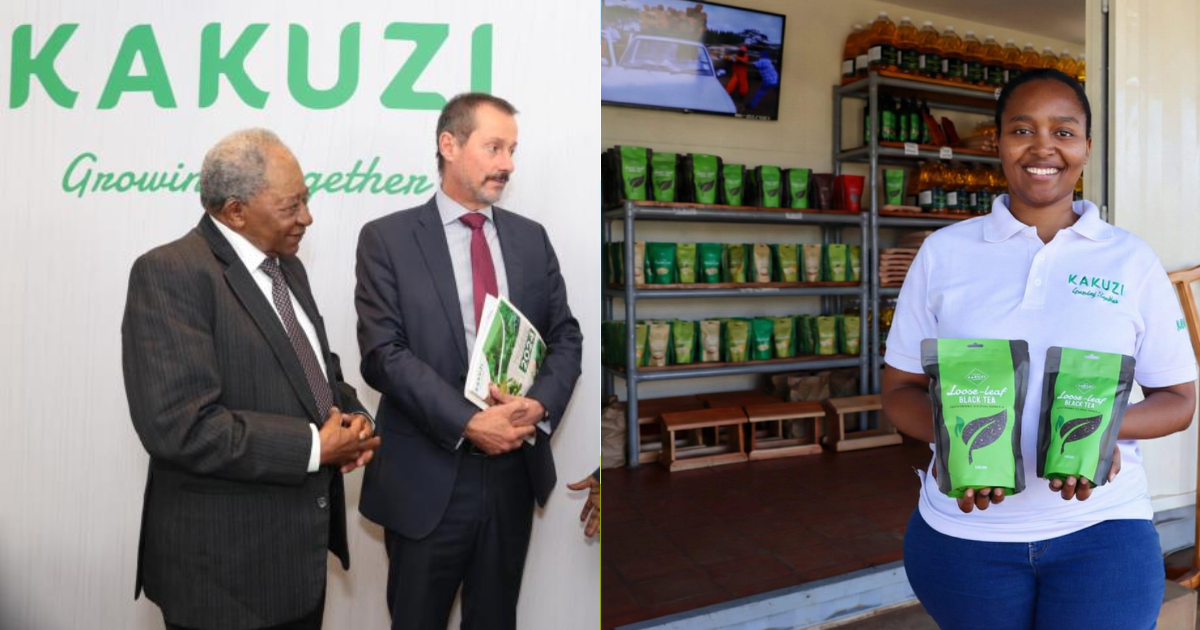
Listed agribusiness firm Kakuzi Plc has expanded its domestic product portfolio with the launch of a quality loose-leaf tea brand targeting the Kenyan market, marking the first time in its history that the company is offering packaged tea for local consumption.
The new product, branded Kakuzi Pure Black Tea, is available in 250-gram and 500-gram consumer packs and forms part of the firm’s ongoing products-and-markets diversification strategy aimed at boosting earnings and reducing reliance on export-only sales.
Kakuzi Plc Managing Director Chris Flowers, while confirming the launch on February 4, 2025, said the diversification drive prioritises the development of high-quality, locally produced consumer products.
“This is the first time in our history that we are delivering a quality tea brand for the local market, sourced from our Kaboswa Tea Estate in Nandi County. Kenyans will enjoy quality export-grade Kakuzi tea leaves in convenient consumer packs.”
According to the company, the tea is grown in the Nandi Hills at nearly 2,000 metres above sea level, where altitude, temperature, and fertile soils contribute to a rich, full-bodied flavour.
Kakuzi introduces a quality loose-leaf tea brand
Each packet contains more than 2,000 hand-picked and carefully selected tea shoots, processed and blended locally before packaging for the domestic market.
Kakuzi said the move to package and sell tea locally is intended to mitigate risks associated with volatile international tea markets, as global tea trade fortunes continue to face pressure.
Also Read: KRA Starts Going After Kenyans Over Unpaid Withholding Tax
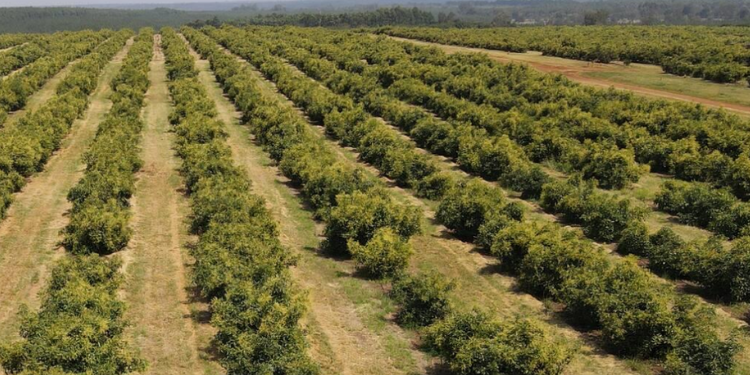
The company noted that domestic sales are beginning to contribute positively to its balance sheet, complementing its flagship avocado and macadamia export businesses.
The tea launch adds to a growing list of Kakuzi-branded consumer products introduced in recent years, including ready-to-eat macadamia, cold-pressed macadamia oil, and blueberry products.
These items are sold through selected retail outlets, the Kakuzi Farmers Market along the Nairobi–Nyeri Highway, and the firm’s online shop.
At its Makuyu estate in Murang’a County, Kakuzi operates an integrated macadamia processing plant with an installed capacity of 2,000 tonnes of saleable kernel, making it one of the largest facilities of its kind in Kenya. The firm also runs a macadamia oil extraction plant with a cold-pressed capacity of 1,000 litres per day.
Decline in profit
The latest product rollout comes after Kakuzi reported revenue of Ksh1.511 billion for the six months ended June 30, 2025, up from Ksh1.175 billion in the same period a year earlier.
Profit for the period stood at Ksh295.5 million, down from Ksh347.5 million in the prior half-year, largely due to a lower valuation of the avocado crop, despite strong performance from the macadamia and blueberry divisions.
Total assets as of June 30, 2025, stood at Ksh6.775 billion, while equity declined to Ksh5.472 billion following dividend payments. The company utilised Ksh156.8 million in financing activities during the period, mainly to settle a final dividend for the 2024 financial year.
At its 97th Annual General Meeting held in May 2025, Kakuzi shareholders approved a final dividend of Ksh8.00 per ordinary share for the year ended December 31, 2024.
Also Read: Kakuzi Announces Dividends and Plan to Introduce Fourth Commercial Crop
During the AGM, the firm reiterated its long-term strategy to diversify both its crop portfolio and markets to enhance shareholder returns.
Flowers told shareholders that Kakuzi is actively exploring the introduction of a fourth commercially produced crop alongside avocado, macadamia and blueberries, while continuing to scale up output across its existing operations.
Over the next ten years, the company plans to increase avocado production and exports from three million to five million four-kilo-equivalent cartons, and to raise macadamia kernel production from 900 tonnes to 1,500 tonnes.
Kakuzi said its diversification strategy is anchored in promoting locally produced, value-added products benchmarked against export-grade standards, as it seeks to build resilience, support domestic consumption and sustain long-term growth.
Follow our WhatsApp Channel and X Account for real-time news updates