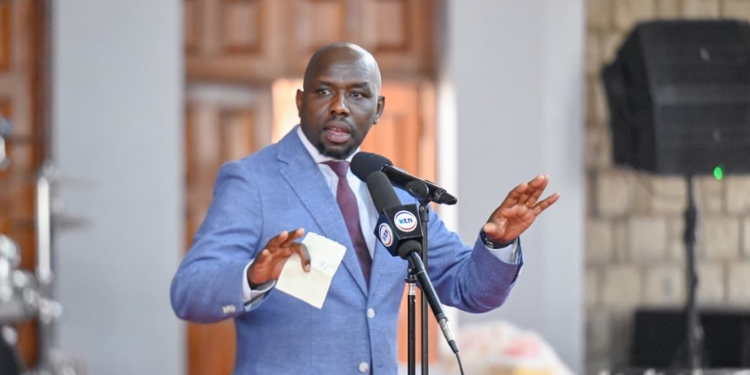
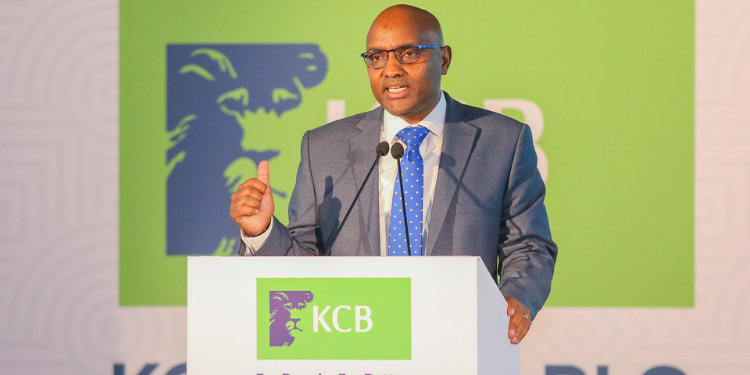
Kenya Bankers Association (KBA) Chairman Paul Russo has called on lenders to rethink how they assess borrowers, saying the continued reliance on collateral is denying millions of small businesses access to formal credit.
Speaking at the East Africa Banking School Conference (EABSC) 2026 on Tuesday, July 14, Russo said collateral should remain part of the lending process but should no longer be the primary factor in determining whether a borrower qualifies for a loan.
“While collateral will always have an important place in lending, it should not become the main decision tool to determine lending,” Russo said.
KBA Chair Paul Russo Calls for End to Overreliance on Collateral in Loan Approvals
Citing data from the Kenya National Bureau of Statistics (KNBS), Russo said Kenya has more than 7.4 million MSMEs, yet fewer than 20 per cent can access formal credit, forcing most businesses to depend on informal sources of financing.
Access to credit, he added, remains one of the biggest challenges facing micro, small and medium-sized enterprises (MSMEs), despite the sector being a major driver of Kenya’s economy.
“One of the key constraints to access to credit in Kenya, and perhaps across the region, remains the continued reliance on collateral as the primary mitigant of credit risk. I think it’s a big challenge. And I don’t think there is a silver bullet on security,” he said.
“We talk about cash flow, we talk about the individual. Many people want us to move away from securities quickly because they say we are struggling to recover those securities. But everybody will put forward an argument to support their position. The reality is more complex and not as straightforward as it seems.”
Also Read: Kenya Overhauls Bank Licence Fees for First Time in 33 Years
Russo has urged lenders to use technology, artificial intelligence, alternative data, and innovation to strengthen credit assessment rather than focusing on ways to avoid high-risk borrowers.
“My challenge to all of us at this conference is not simply to explore better ways of identifying high-risk borrowers and avoiding them. Instead, our mission should be to explore how innovation, technology, artificial intelligence, alternative data, and collaboration can help us better understand risk, reduce it, and ultimately make more individuals, businesses, and communities bankable,” he said.
Banks Urged to Adopt Smarter Credit Assessment Models
He called on banks, regulators and other stakeholders to develop lending models that assess borrowers based on their cash flow, business performance and repayment capacity rather than the value of assets pledged as security.
Russo also backed the expansion of credit de-risking mechanisms, saying they would encourage banks to lend to viable businesses that lack traditional collateral.
He pointed to the Credit Repair Framework, developed jointly by banks and the Central Bank of Kenya, as an example of how collaboration can improve access to finance while remaining within the law.
Also Read: CBK Issues Licenses to 25 New Mobile Loan Apps [FULL LIST]
The KBA chair also cited ongoing efforts to strengthen the Credit Guarantee Fund to support lending to small businesses.
“We’ve got to try and find solutions together. That’s why we’re working on the Credit Guarantee Fund. There’s a little bit of work to be done, but we must work collectively together and do a lot more,” he said.
Follow our WhatsApp Channel and X Account for real-time news updates