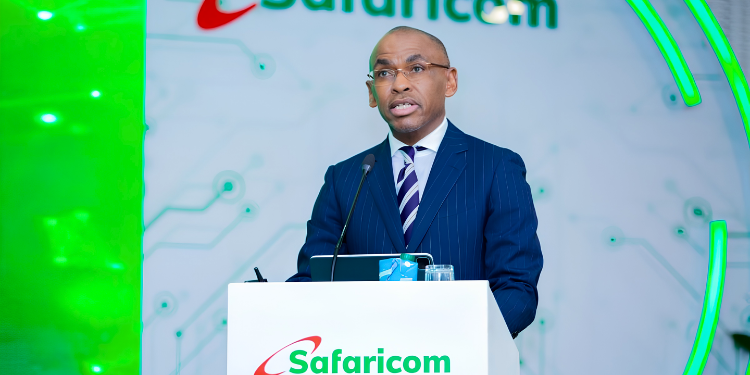
Safaricom shareholders will this month vote on a series of proposed governance changes that could significantly expand Vodafone Kenya Limited’s influence over the appointment of the chief executive officer and members of the board.
The proposed amendments to the telecommunications giant’s Articles of Association are contained in the notice of the company’s Annual General Meeting (AGM) scheduled for July 31, 2026.
At the center of the proposed changes is a provision that would allow Vodafone Kenya Limited (VKL) to nominate Safaricom’s chief executive officer if it holds more than 50 percent of the company’s issued and fully paid share capital.
The board would retain the power to appoint the CEO, but the nomination would come from VKL under the proposed rules.
The changes form part of a broader review of Safaricom’s governance framework aimed at aligning the company’s Articles of Association with its current shareholding structure, legal requirements and evolving business environment.
Vodafone is Safaricom’s strategic investor and has maintained a long-standing relationship with the Kenyan telecommunications company since its establishment more than two decades ago.
Safaricom’s Proposed Changes
Under the proposals, Safaricom is seeking to formally define VKL in its Articles and grant the shareholder enhanced rights tied to its ownership stake in the company.
The amendments state that if Vodafone Kenya Limited undergoes a name change in the future, the definition will continue to apply to the legal entity that succeeds it.
If approved, VKL would be entitled to appoint, remove or replace one director when it holds at least 10 percent of Safaricom’s issued share capital.
Also Read: Mary Wambui’s 5-Star Hotel Placed Under Administration: Here’s Why
The number would increase to three directors if its shareholding reaches 50 percent or more.
The proposed amendments also provide for similar director appointment rights for the Cabinet Secretary to the Treasury, depending on the government’s shareholding in the company.
Board composition rules are also set for revision.
Safaricom proposes maintaining a board of 11 to 15 directors, with Kenyan citizens remaining the majority.
Independent non-executive directors would also continue constituting the majority of the board.
Governance Reforms
The company is additionally seeking to strengthen governance processes through the introduction of a board deadlock resolution mechanism.
The proposed article would establish a formal process for handling situations in which directors fail to reach agreement on matters before the board.
Also Read: TSC Clarifies SRC Ruling on New Promotion Structure Affecting 400,000 Teachers
The requirement for a majority of Kenyan directors is intended to preserve local representation within the company’s highest decision-making organ despite changes affecting shareholder appointment rights.
Another amendment seeks to overhaul directors’ powers under Article 102.
The revised provision would require at least 75 percent approval of the directors present for certain reserved matters and, in some instances, the consent of the Government of Kenya and the chief executive officer.
Furthermore, the proposed article states that certain key decisions would not be deemed passed unless the enhanced approval thresholds are achieved.
The AGM notice also outlines changes designed to modernize decision-making procedures by recognizing written resolutions approved electronically.
If passed, resolutions signed electronically or communicated digitally would have the same legal effect as those signed in person.
Safaricom is also proposing changes to dividend-related provisions that would require dividends to be recommended and administered in line with the company’s approved dividend policy unless shareholders decide otherwise.
Directors would also be granted broader powers to create and invest reserves before recommending dividend payments.
The company is also seeking to replace references to the Permanent Secretary to the Treasury with the Cabinet Secretary to the Treasury, bringing the Articles into line with Kenya’s constitutional structure.
Shareholders will consider the proposed amendments as special resolutions at the AGM, with each resolution requiring at least 75 percent of the votes cast to be approved.
Follow our WhatsApp Channel and X Account for real-time news updates.