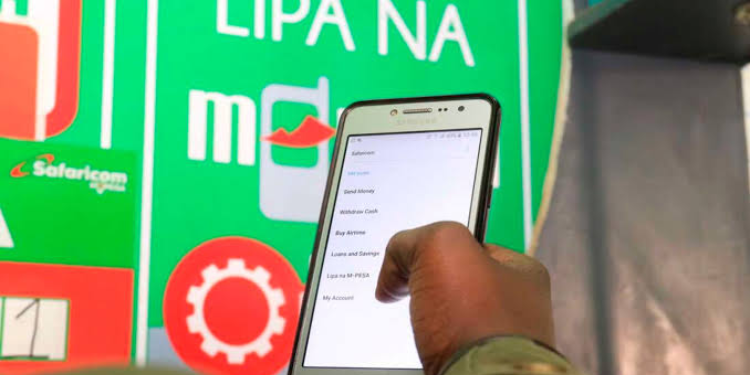
Safaricom PLC has reduced M-PESA business transaction charges, introducing new tariffs for Pochi la Biashara and Lipa na M-PESA Buy Goods as part of efforts to make digital payments more affordable for businesses.
According to Safaricom, the revised charges are designed to align with the Central Bank of Kenya’s pricing principles of customer-centricity, transparency, fairness, competition and affordability.
“To make digital payments more affordable and support the growth of businesses across Kenya, Safaricom is introducing revised tariffs for Pochi la Biashara and Lipa na M-PESA Buy Goods,” read part of the statement.
Under the revised Pochi la Biashara tariff, customers making payments to merchants using Pochi la Biashara will continue to transact for free for amounts of up to KSh200.
Payments ranging from KSh201 to KSh500 will attract a KSh7 charge, while transactions between KSh501 and KSh1,000 will cost KSh13.
Customers paying between KSh1,001 and KSh1,500 to Pochi la Biashara merchants will be charged KSh23, while those sending KSh1,501 to KSh2,500 will pay KSh33.
Transactions worth KSh2,501 to KSh250,000 will attract a flat charge of KSh50.
Pochi La Biashara Charges Valid from August 1 – October 31, 2026
| Transaction Range (KSh) | Customer Charge (KSh) |
|---|---|
| 1 – 200 | 0 |
| 201 – 500 | 7 |
| 501 – 1,000 | 13 |
| 1,001 – 1,500 | 23 |
| 1,501 – 2,500 | 33 |
| 2,501 – 250,000 | 50 |
Safaricom Changes to Buy Goods
According to Safaricom, businesses using Lipa na M-PESA Buy Goods will enjoy lower collection costs from August 7, 2026.
Collections of up to KSh500 will now be free, up from the previous threshold of KSh200.
Meanwhile, collections between KSh201 and KSh500, which previously attracted a 0.55 per cent fee, will no longer incur any charges.
Collections between KSh501 and KSh36,363 will continue to attract a 0.55 per cent fee, while those above KSh36,363 will remain capped at KSh200.
Summary: Effective August 7, 2026
| Band (KSh) | Old Tariff | New Tariff |
|---|---|---|
| 0 – 200 | 0 | 0 |
| 201 – 500 | 0.55% | 0 |
| 501 – 36,363 | 0.55% | 0.55% |
| Above 36,363 | KSh200 | KSh200 |
M-PESA Till Accounts
Safaricom also reduced charges for businesses transferring funds from M-PESA Business Till accounts to M-PESA accounts and PayBill numbers.
The revised tariffs, which take effect on August 7, 2026, will lower transfer charges by up to 50 per cent, while collections of up to KSh500 will remain free.
Under the new Pay to Mobile tariff, transfers between KSh101 and KSh500 will cost KSh4, down from KSh7, while transfers ranging from KSh501 to KSh1,000 will attract a KSh7 charge instead of KSh13.
Businesses transferring between KSh10,001 and KSh15,000 will pay KSh50, compared to the previous KSh100, while the maximum fee for transfers above KSh45,000 has been reduced from KSh108 to KSh54.
For PayBill transfers, businesses will pay KSh3 for transactions between KSh101 and KSh500, down from KSh5, and KSh5 for transfers between KSh501 and KSh1,000, compared to the previous KSh10.
The maximum charge for transfers above KSh45,000 has also been reduced by half, from KSh108 to KSh54.
Also Read: How M-PESA Users Can Reveal Hidden Sender Number Details
Summary:
M-PESA Business Till Transfers – Pay to Mobile (Effective August 7, 2026)
| Transaction Band (KSh) | Old Tariff (KSh) | New Tariff (KSh) |
|---|---|---|
| 0 – 50 | 0 | 0 |
| 51 – 100 | 0 | 0 |
| 101 – 500 | 7 | 4 |
| 501 – 1,000 | 13 | 7 |
| 1,001 – 1,500 | 23 | 12 |
| 1,501 – 2,500 | 33 | 17 |
| 2,501 – 3,500 | 53 | 27 |
| 3,501 – 5,000 | 57 | 29 |
| 5,001 – 7,500 | 78 | 39 |
| 7,501 – 10,000 | 90 | 45 |
| 10,001 – 15,000 | 100 | 50 |
| 15,001 – 20,000 | 105 | 53 |
| 20,001 – 25,000 | 108 | 54 |
| 25,001 – 30,000 | 108 | 54 |
| 30,001 – 35,000 | 108 | 54 |
| 35,001 – 40,000 | 108 | 54 |
| 40,001 – 45,000 | 108 | 54 |
| 45,001 – 250,000 | 108 | 54 |
Also Read: Safaricom Reveals Why Some Customers Are Receiving Surprise M-PESA Refunds
M-PESA Business Till Transfers – Pay to PayBill (Effective August 7, 2026)
| Transaction Band (KSh) | Old Tariff (KSh) | New Tariff (KSh) |
|---|---|---|
| 0 – 50 | 0 | 0 |
| 51 – 100 | 0 | 0 |
| 101 – 500 | 5 | 3 |
| 501 – 1,000 | 10 | 5 |
| 1,001 – 1,500 | 15 | 8 |
| 1,501 – 2,500 | 20 | 10 |
| 2,501 – 3,500 | 25 | 13 |
| 3,501 – 5,000 | 34 | 17 |
| 5,001 – 7,500 | 42 | 21 |
| 7,501 – 10,000 | 48 | 24 |
| 10,001 – 15,000 | 57 | 29 |
| 15,001 – 20,000 | 62 | 31 |
| 20,001 – 25,000 | 67 | 34 |
| 25,001 – 30,000 | 72 | 36 |
| 30,001 – 35,000 | 83 | 42 |
| 35,001 – 40,000 | 99 | 50 |
| 40,001 – 45,000 | 103 | 52 |
| 45,001 – 250,000 | 108 | 54 |
Safaricom said the pricing review is intended to lower the cost of accepting and managing digital payments, allowing small businesses to retain more of their earnings while encouraging greater adoption of cashless transactions.
PayBill, Buy Goods or Pochi la Biashara? Here’s the Difference
Corporates and institutions may find M-PESA PayBill more suitable for collecting payments, as it provides structured and trackable transactions while integrating seamlessly with formal banking systems.
Small and medium-sized enterprises (SMEs), retail shops and restaurants are better suited to Lipa na M-PESA Buy Goods Till Numbers, which offer quicker access to funds, a convenient payment experience for customers and cashback rewards.
Informal traders, freelancers and small-scale businesses may prefer Pochi la Biashara, which provides a simple way to receive customer payments while helping keep personal and business funds separate.
Follow our WhatsApp Channel and X Account for real-time news updates.