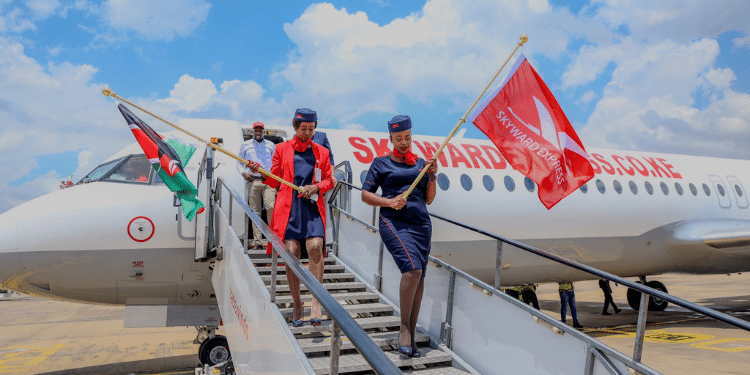
Kenyan-owned Skyward Airlines has announced a fare hike for all passengers, citing increasing global fuel prices as the main reason for the adjustment.
In an official passenger advisory dated Thursday, March 26, 2026, the airline informed travelers of the upcoming change, stating that the decision was made after sustained increases in international fuel prices began to put pressure on operating costs.
The airline said the new charges will take effect from April 1, 2026, and will apply to all Skyward Airlines ticket prices through a fuel surcharge.
Skyward Express is privately owned and was founded by pilots Mohamed Abdi and Issack Somow, who remain its principal owners alongside other investors.
Skyward Airlines Announces Fare Increase
Skyward Airlines stated that imported aviation fuel now makes up a significant portion of the cost of each flight.
According to the advisory, the airline noted that the aviation industry worldwide continues to face challenges caused by higher fuel prices driven by long-term supply pressures in global markets.
“The aviation industry continues to navigate the impact of rising global fuel costs, driven by sustained supply pressures in international markets. As internationally imported fuel represents a substantial portion of our operating costs for each flight, these conditions have required us to take deliberate steps to ensure we can maintain a sustainable and reliable service,” read part of the statement by Skyward Airlines.
Skyward Airlines management said these conditions have necessitated a fuel surcharge to ensure continued operations.
The airline said the surcharge will be applied across all ticket prices, meaning passengers booking flights from April 1 onward should expect to pay more than current fares.
Despite the fare increase, the airline stated it remains dedicated to providing competitive and transparent pricing.
Skyward Airlines added that it will continue monitoring fuel prices and market conditions closely and make additional adjustments as needed.
Also Read: Kenya Met Warns of More Floods and Drought Amid Unpredictable Weather
The airline ended by assuring passengers that any future changes would be communicated promptly.
Skyward Airlines Prices
Skyward Airlines currently operates both passenger and limited cargo flights from its main hub at Wilson Airport in Nairobi, as well as additional cargo services at Jomo Kenyatta International Airport (JKIA).
The airline operates scheduled domestic flights along major regional and coastal routes, as well as one international destination: a daily flight from Wilson Airport in Nairobi to Julius Nyerere International Airport in Dar es Salaam, Tanzania.
Most passenger services depart from Wilson Airport, while some flights may also operate through JKIA, depending on schedule and demand.
According to the airline’s fare listings, Skyward’s current one‑way ticket prices range from Ksh6,500 to Ksh9,000 for routes such as Nairobi–Mombasa and Nairobi–Ukunda, subject to availability and booking terms.
Flights to Malindi, Eldoret, Kitale, and Migori typically range between Ksh7,500 and Ksh11,000; Lamu flights range between Ksh10,000 and Ksh13,000; and routes to Lodwar are listed between Ksh11,000 and Ksh15,000.
International flights to Dar es Salaam are currently between KSh18,000 and KSh25,000 for a one-way ticket.
Also Read: Judges Beat SRC in Fight for Hefty Car Allowances
These prices are displayed on the airline’s booking platform before the introduction of the announced fuel surcharge.
Skyward’s Operations
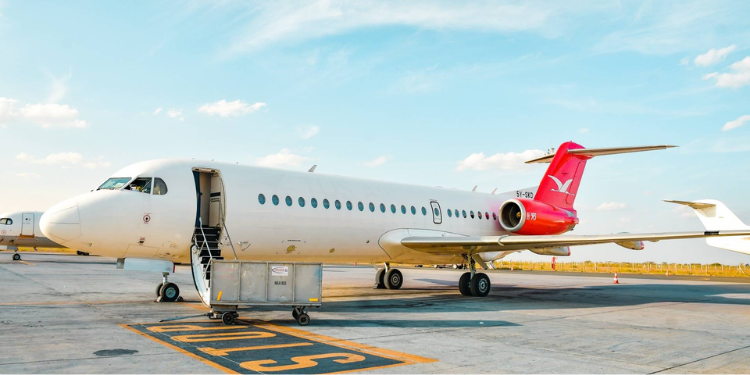
Skyward Airlines operates a mixed fleet that includes Fokker 50, Fokker 70, Fokker 100, and Dash 8 aircraft, with seating capacities ranging from about 50 to over 100 passengers, depending on the aircraft type.
The fleet is used primarily on short‑haul domestic and regional routes.
Industry data show that aviation fuel accounts for a significant share of airlines’ operating expenses in Kenya, especially for carriers serving remote destinations such as Lodwar, Migori, and Lamu, where alternatives to air travel are limited.
Skyward Airlines has previously positioned itself as a key connector for underserved regions, with multiple daily frequencies on high‑demand routes such as Nairobi–Mombasa.