The Kenya Meteorological Department (Kenya Met) has announced that Kenya is entering a more challenging climate period characterized by rising temperatures, unpredictable rainfall, and more frequent extreme weather events.
In the Climate in Kenya 2025 Report, Kenya Met stated that climate change is no longer a future risk but a growing daily reality affecting food security, health, water, infrastructure, and livelihoods across the country.
According to the report, data from weather stations and satellite monitoring indicate that Kenya’s average temperature has increased by approximately 0.88 degrees Celsius since 1960, with the rate of warming speeding up after 2005.
Kenya’s Warming Climate
The year 2025 was warmer than the long-term average across most parts of the country and ranked as the seventh warmest year since 1991, while 2024 remains the hottest year on record.
Kenya Met also warned that rising temperatures are increasing the frequency of heat waves, boosting water demand, harming crops, and aggravating drought conditions.
Rainfall patterns in 2025 were highly uneven, with some regions recording floods while others suffered prolonged dry spells.
The long rains began earlier than expected in several areas but ended suddenly, disrupting planting schedules and lowering crop yields in marginal farming regions.
Also Read: World Bank Explains Why International Investors Are Turning to Kenya
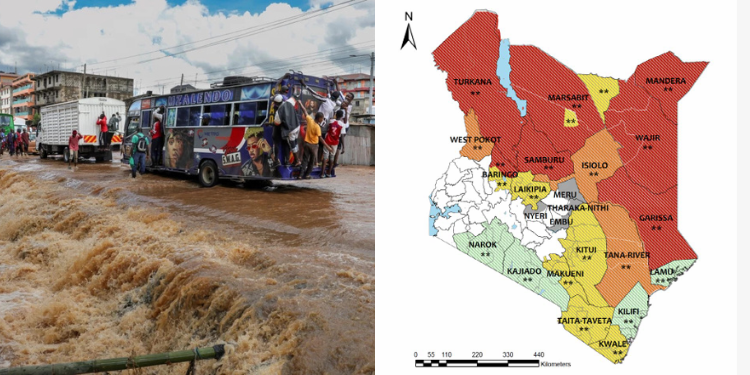
The short rains season performed poorly across much of eastern, coastal, and northeastern Kenya, causing counties such as Mandera, Wajir, and Garissa to face worsening drought conditions.
Climate Shocks Hit Food, Health, and Livelihoods
Extreme weather events intensified throughout the year, including heatwaves in January and February, floods from March to May, cold extremes in highland areas between June and August, and strong winds with high ocean waves along the coast.
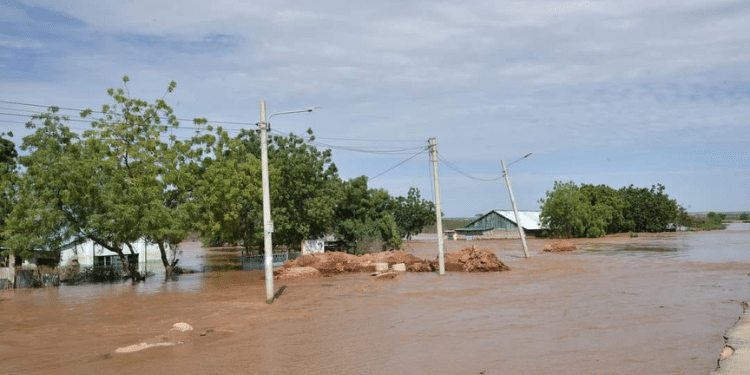
Flooding displaced thousands of people, damaged homes, roads, and farms, and disrupted transportation and essential services.
The report directly links these climate shocks to increasing food insecurity.
By mid-2025, about 1.8 million people were experiencing crisis- or emergency-level hunger, mainly in arid and semi-arid counties.
Crop failures during the short rains season affected coastal and northeastern counties the most, while rising food prices added more pressure on households already dealing with lower incomes.
Although maize production improved in high-rainfall areas, national household food stocks fell below normal levels in drought-affected regions.
Livestock-dependent communities were also severely affected after pasture conditions deteriorated following the failed short rains, forcing animals to trek longer distances for water and forage.
This weakened livestock, increased disease outbreaks, and reduced milk production, directly impacting pastoral household incomes and nutrition.
Also Read: Kenya Selected to Host FIFA Series 2026 in Historic First
Health impacts linked to climate extremes were also recorded after flooding and water shortages triggered cholera outbreaks, with cases reported in counties including Nairobi, Kisumu, Migori, and Kwale.
Drier and hotter conditions in northern Kenya contributed to outbreaks of visceral leishmaniasis, particularly in Marsabit and Wajir.
Health officials warn that rising temperatures and erratic rainfall are expanding the risk of malaria and other vector-borne diseases into new areas.
Worse Conditions Expected Without Preparedness
The report by Kenya Met identifies the strong negative Indian Ocean Dipole event of late 2025 as a major driver of the failed short rains, describing it as the strongest since observations began.
Combined with weak La Niña conditions, this ocean-atmosphere pattern suppressed rainfall over much of the country, deepening drought impacts.
The report cautions that similar climate drivers could influence future seasons, making rainfall increasingly difficult to predict.
Looking ahead to 2026, the Kenya Meteorological Department notes rising uncertainty, with a growing probability of El Niño conditions later in the year.
Kenya Met warns that without strong adaptation measures, climate shocks will continue to hit harder and more often, placing increasing strain on the economy and on ordinary Kenyans whose lives depend directly on weather patterns.