
The United States House of Representatives has approved legislation to extend the African Growth and Opportunity Act (AGOA) through 2028, with the bill now set to proceed to the Senate. The move comes at a critical moment for African economies, including Kenya, which rely heavily on duty-free access to the U.S. market.
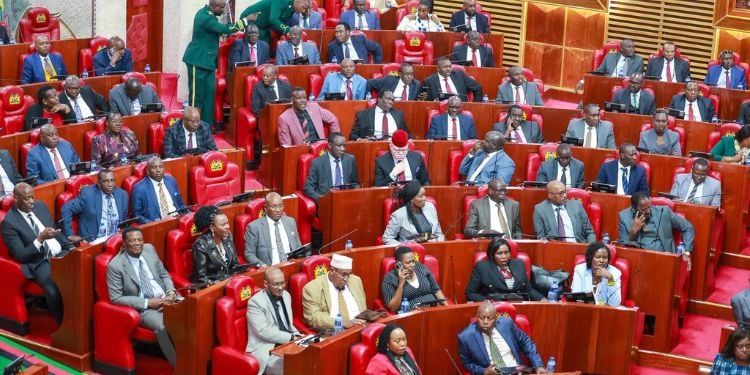
According to the House Press Gallery, the House passed the AGOA Extension Act on Monday, January 12, with a vote of 340 to 54. The bill, formally known as H.R. 6500, would renew preferential trade benefits for eligible sub-Saharan African countries that were due to expire, offering temporary relief to exporters and manufacturers across the region.
“The House is voting now on H.R. 6500 – AGOA Extension Act, as amended (Sponsored by @RepJasonSmith/ Ways and Means Committee),” the House Press Gallery said.
“The House passed H.R. 6500 by a vote of 340-54.”
AGOA, first enacted in 2000, allows eligible African countries to export thousands of products to the United States duty-free. Currently, 32 countries qualify for the programme. The legislation now moves to the U.S. Senate for consideration.
Details of the proposed extension
According to congressional records, the bill extends duty-free treatment for most exports from eligible countries through December 31, 2028. It also extends customs user fees and merchandise processing fees through 2031.
In addition, the bill preserves key provisions such as duty-free treatment for certain apparel products and the “third-country fabric” rule, which allows garments assembled in AGOA countries using fabric from non-AGOA nations to qualify for duty-free access.
The legislation also provides for the refund of duties paid on qualifying goods that entered the United States between September 30, 2025, and the date of enactment, with refunds to be processed by U.S. Customs and Border Protection within 90 days of a valid request.
AGOA has been a cornerstone of Kenya’s export-led manufacturing strategy for more than two decades, with the apparel and textile industry emerging as the largest beneficiary.
Also Read: Win for Kenya as Ruto Announces Extension of AGOA Deal
In 2024, the country led sub-Saharan Africa in apparel exports to the United States, earning approximately $600 million and supporting about 70,000 direct jobs. President William Ruto has previously said the government aims to increase apparel exports to more than $2 billion by 2030.
The U.S. is also Kenya’s largest source of foreign direct investment, with more than 150 American companies operating in the country across sectors including information technology, financial services, food and beverages, and manufacturing.
U.S.-backed infrastructure projects such as the Lake Turkana Wind Power Project, the Kipeto Wind Farm, and the Olkaria III Geothermal Power Plant have played a major role in Kenya’s energy sector.
Kenya reacts as U.S. House approves AGOA extension
Reacting to the House vote, Principal Secretary for Foreign Affairs Korir Sing’Oei on Tuesday, January 13, said the passage of the AGOA reauthorisation bill was a welcome development for U.S.-Africa trade.
He noted that President Ruto had been at the forefront of efforts to push for the extension and expressed confidence that the Senate would also approve the legislation.
“The adoption of AGOA Reauthorization Bill by Congress is a welcome move for US-Africa trade. President Ruto has been at the forefront in calling on the US government to extend the framework. We trust Senate equally passes the Bill.”
In October 2024, President Ruto held consultations with key players in the apparel and textile sector to address fears of job losses linked to uncertainty over the trade programme.
He later briefed industry stakeholders on discussions with U.S. Secretary of State Marco Rubio, saying Kenya was working with Washington to both extend AGOA and explore a more permanent trade framework.
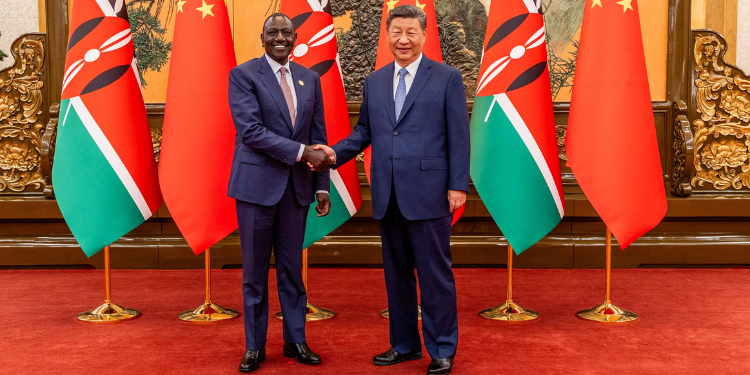
The U.S. House of Representatives’ vote comes amid broader trade realignments by Kenya. President Ruto delayed signing a proposed trade agreement with China earlier this month under pressure from the United States, as Kenya balances its trade relationships with its two largest economic partners.
Also Read: Ruto Bows to US Pressure, Suspends China Trade Deal
Kenya and China had negotiated an “Early Harvest” trade agreement to eliminate Chinese tariffs on key Kenyan exports, including tea, coffee, avocados, and fish. The deal was advanced during President Ruto’s visit to Beijing in April 2025 and was partly intended to help narrow Kenya’s Ksh475.6 billion trade deficit with China.
The agreement also emerged as a contingency option amid uncertainty over AGOA, which would have exposed Kenyan apparel exports to U.S. tariffs of up to 28% on goods worth about $600 million annually.
Talks in October 2025 focused on sanitary standards for agricultural exports, and more than 20 related agreements worth billions of dollars were signed, covering manufacturing, agriculture, and tourism.
However, the China trade deal has not been formalised and remains pending approval by Kenya’s Cabinet, Parliament, and the President.
Follow our WhatsApp Channel and X Account for real-time news updates