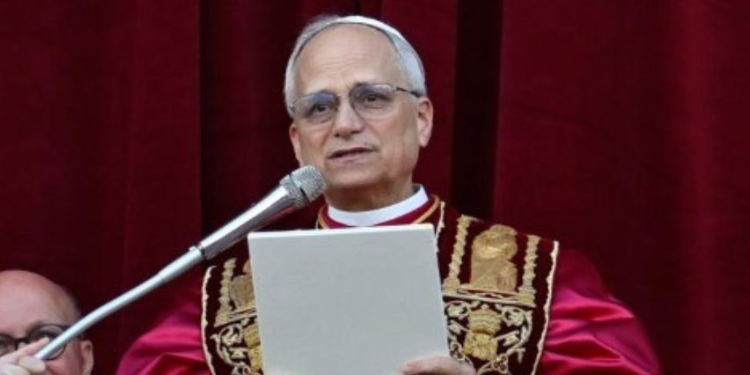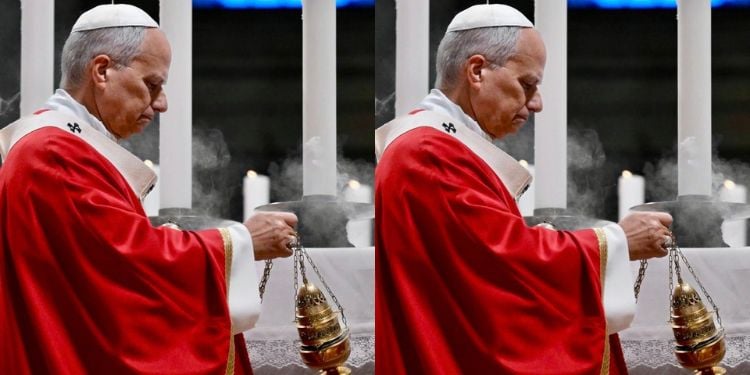

The Vatican has confirmed that Pope Leo XIV has lung adenocarcinoma after surgeons removed the lower lobe of his right lung during an operation at Gemelli Hospital.
According to a statement released from the Holy See Press Office on October 13, surgeons performed the planned operation on Tuesday afternoon, which lasted about 90 minutes, and the Pope spent about three hours in the operating room.
An examination of tissue removed during the surgery confirmed the diagnosis suspected from earlier tests.
“An intraoperative histological examination confirmed the diagnosis of lung adenocarcinoma, as suspected from the preoperative examinations,” the doctors said.
How Surgery Was Performed
The surgical team removed the affected lower lobe of the Pope’s right lung using a video-assisted technique in a procedure described by doctors as a radical resection. The operation was successful, with no complications reported.
Pope Leo XIV awoke normally after the surgery and returned to his room on the hospital’s 10th floor following a brief period of observation.
Professor Stefano Margaritora led the surgical team, assisted by Professor Elisa Meacci, Dr Maria Teresa Congedo and Dr Leonardo Petracca Ciavarella. The anaesthesia team comprised Professor Massimo Antonelli, Dr Giovanni Punzo and Dr Giuseppe Bello.
Pope Leo XIV’s Recovery and Hospital Stay
According to the Vatican, doctors will conduct further examinations of the removed tissue in the coming days as they continue to assess the Pope’s condition.
Holy See Press Office Director Matteo Bruni said the Pope asked for dinner after the operation and spent the evening with his secretaries and other Vatican staff.
“In the coming days, post-operation exams will be conducted on the removed tissue. The preoperative tests had already shown the doctors where and how to operate,” read part of the statement.
The Vatican did not disclose the stage of the cancer or whether it had spread.
On October 13, the Vatican announced that Pope Leo XIV had been admitted to Rome’s Agostino Gemelli University Hospital for surgery scheduled for Tuesday afternoon to remove a “small, localized nodule” from his lung.
Pope Leo XIV asked the faithful to pray for him as he prepared for surgery.
He said the decision followed recent medical examinations that revealed the need for an operation, adding that he had agreed to proceed on the advice of his doctors.
“Dear friends, during some recent medical examinations, doctors found a localized nodule in my lung. It was detected at a very early stage and is well localized,” Pope Leo XIV said.
Pope Leo XIV was elected on May 8, 2025, following the death of Pope Francis on April 21, 2025.
Also Read: Pope Leo XIV Makes Public Announcement About His Health, Asks for Prayers
How Succession Works
The death or resignation of a pope triggers a formal process to elect his successor. The transition involves Vatican officials, eligible cardinals, and a series of traditional procedures that culminate in the announcement of a new pope.
Confirming the Pope’s Death
The Cardinal Camerlengo oversees the official confirmation of the pope’s death and key administrative arrangements. The period that follows is known as Sede Vacante, meaning “the vacant See.”
Securing Papal Symbols and Residences
After the pope’s death:
- The Fisherman’s Ring, a symbol of papal authority, is rendered unusable.
- The pope’s private apartments are sealed.
- The Camerlengo oversees essential administrative arrangements during the transition.
Convening the Papal Conclave
The College of Cardinals gathers to elect the next pope. Cardinals who are under 80 at the relevant date are generally eligible to vote.
The election takes place in the Sistine Chapel at the Vatican. Cardinal electors take an oath of secrecy and are cut off from outside communication during the conclave. They stay at the Domus Sanctae Marthae, a Vatican residence.
Also Read: Powers & Privileges Enjoyed by Catholic Popes
How Voting Works
Cardinals write their preferred candidate’s name on ballots marked with the Latin phrase Eligo in Summum Pontificem, meaning “I elect as Supreme Pontiff.”
- Voting can take place up to four times daily.
- Designated cardinals count and verify the ballots.
- A candidate must secure a two-thirds majority to be elected.
- Voting continues if no candidate reaches the required threshold.
Black and White Smoke
After the ballots are counted, they are burned to signal the outcome.
- Black smoke: No pope has been elected.
- White smoke: The cardinals have elected a new pope.
The smoke rising from the Sistine Chapel chimney alerts the public to the result.
Accepting the Election
Once a candidate receives the required votes, he is asked whether he accepts the election. Upon acceptance, he becomes pope and chooses his papal name.
The senior cardinal deacon then announces the election from St Peter’s Basilica using the Latin phrase Habemus Papam, meaning “We have a pope.” The new pontiff subsequently appears before the faithful and delivers his first public blessing.
Follow our WhatsApp Channel and X Account for real-time news updates.