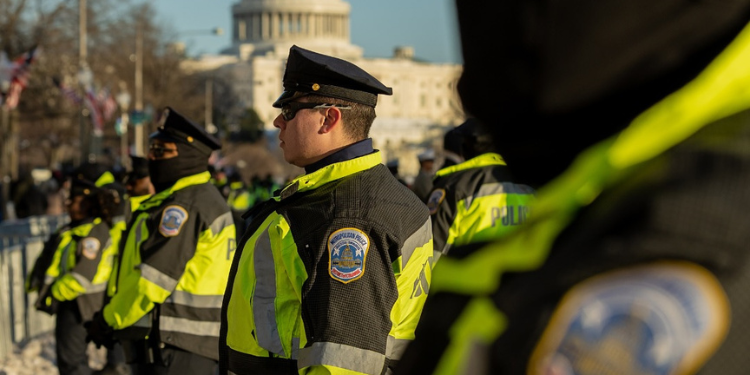
D.C. Police are under intense scrutiny after 13 officers were placed on leave and face possible firing over alleged manipulation of crime statistics.
Washington D.C. Interim Police Chief Jeffery Carroll announced the move on Tuesday, May 5, saying the officers were sidelined on Monday following an investigation triggered by a referral from the U.S. Attorney’s Office.
While Carroll stayed tight-lipped on the exact details, he confirmed the case centers on misconduct tied to how crimes were recorded and reported.
The officers have not yet been fired, as department rules allow them to challenge any punishment before an adverse action panel of senior commanders.
Still, the actions mark one of the most significant internal crackdowns in recent memory for a department long accused of cooking the books.
The scandal stretches back through multiple investigations, including a December report from the Republican-led House Oversight Committee, which painted a picture of a toxic environment under former Chief Pamela Smith.
D.C. police commanders worked under threats and pressure?
According to the findings, Smith pressured D.C. police commanders, threatened them with punishment, and retaliated when they raised concerns about bad numbers showing increases in violence.
The goal, investigators said, was to create a rosier picture of public safety than actually existed.
The U.S. Attorney’s Office’s own separate work reached similar conclusions. Prosecutors uncovered many cases of misclassified reports, thereby lowering the overall number of serious crimes. There were no criminal charges, but officials made it clear the department would have to clean house itself.
This all played out against a heated national backdrop. Last summer, President Donald Trump invoked emergency powers to federalize parts of the D.C. police operation and flood the city with additional federal agents.
Trump repeatedly pointed to sharp drops in homicides, shootings, and carjackings as proof that the effort worked.
City leaders, including Mayor Muriel Bowser, pushed back, arguing the improvements were already underway before the surge and that Republicans were simply looking for ways to claim credit.
Skeptics on the GOP side, however, suspected the numbers themselves were part of the problem. They argued that any success from the federal operation was being undermined or hidden by skewed local data, or rather, D.C. police data.
Carroll, who stepped in as interim chief in December, tried to draw a line under the mess. He said the department has made real strides in reducing violence over the past three years and insisted he now has confidence in the figures used for daily deployments.
New training on proper reporting is already rolling out. The internal findings themselves, however, will not be made public.
Bowser has called for the city’s inspector general to conduct an independent review, which launched in January.
House Oversight Chairman James Comer welcomed the administrative leave as a positive step but demanded full access to the D.C. police department’s documents to ensure accountability sticks.
For D.C. residents, the developments cut to the heart of daily life in a city that has battled stubborn pockets of crime even as overall crime rates have improved.
Many have grown weary of dueling political narratives about whether their neighborhoods are truly getting safer.
When D.C. police brass allegedly massage statistics to fit a preferred story, it erodes trust at a time when cooperation between communities and law enforcement matters most.
Also Read: Trump Hit With Fact Check After Bragging About 100% GOP Approval Rating
The 13 D.C. police officers are now facing career-defining hearings as their cases could take weeks or months to resolve.
The development shows how pressure from above can distort the basic facts that guide policing decisions.
For a department still operating under a federal shadow and intense political scrutiny, restoring credibility in its numbers may prove as important as fighting crime itself.