The Ministry of Investments, Trade, and Industry has warned that the ongoing conflict in the Middle East is putting Kenya’s export sector at risk of losing approximately KSh 164.6 billion.
According to the ministry, the crisis is exerting pressure on the global trade system that has direct implications for the Kenya export sector.
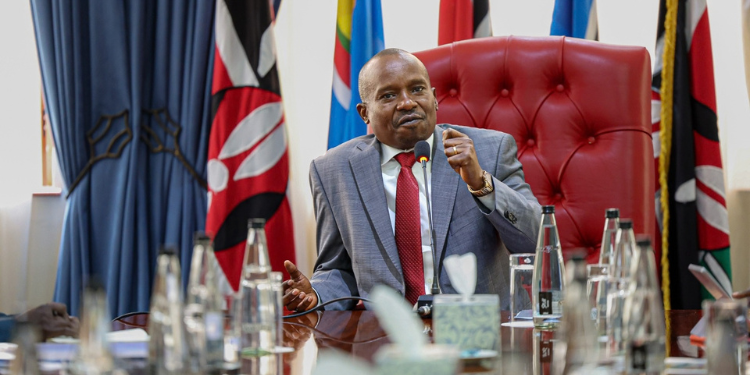
Kenya’s export sector serves as a pillar of the country’s foreign exchange earnings and economic stability, according to a press release dated April 21 by the Cabinet Secretary for the Ministry of Investments, Trade and Industry, Lee Kinyanjui.
In addition, the ministry noted that exports in Kenya had reached a record KSh 1.1 trillion in 2024, driven by performance in the tea, horticulture, and manufacturing sectors.
However, the country is currently at risk of losing KSh 164.6 billion in annual exports to the Middle East and other growing markets due to disruptions the the Strait of Hormuz trade route.
Kenya’s exports reached a record KSh 1.1 trillion in 2024, supported by strong performance in horticulture, tea, apparel, and emerging manufacturing sectors. However, the current geopolitical tensions now place at risk approximately KSh 164.6 billion worth of annual exports to the Middle East, one of Kenya’s most strategic and fastest-growing markets,” part of the statement read.
The CS Lee Kinyanjui stated that, beyond serving as a trade route, the Middle East is a global logistics and transshipment hub.
Disruption in the Middle East region is affecting exports beyond the Gulf Markets and limiting access of Kenya’s exports to Europe, Asia, and North America, according to the CS.
Also Read: Kenya Ranked Among Pakistan’s Top Five Export Markets
Middle East Disruption on Kenya’s Exports Sector
According to Lee Kinyanjui, the crisis in the Middle East has led to the suspension and restriction of key maritime and air cargo routes through the Red Sea and Gulf corridors.
The restrictions have led to the transit time increasing by ten to twenty days, thus affecting the delivery timelines and raising freight costs.
In addition, air cargo delays of up to 48 hours are impacting the export of perishable goods and fresh produce.
High-value and time-sensitive exports, including horticulture, meat, dairy, and specialty coffee, are the most affected by the disruption of the Strait of Hormuz.
Rising Costs on Exports
With fuel accounting for 50% of the logistics cost, the production and logistics costs across key sectors, including Kenya’s exports, have increased.
Floriculture is currently incurring losses due to cargo delivery delays, resulting in spoilage.
Further, the meat export has dropped to less than 5% of the normal export volume before the crisis, while other sectors, including the dairy, are experiencing instability in export volumes.
A decline in the tea export has been experienced, with Kenya facing market access risk from the Middle East markets, which account for 35%.
Additionally, over 400,000 Kenyans working in the Gulf are expected to see their remittances decline, further straining Kenya’s foreign exchange position.
Also Read: Tea Farmers Face Earnings Squeeze as Fuel Costs and Export Disruptions Rise
Government Interventions
To stabilize the ongoing economic disruption, the government has implemented a temporary reduction of Value Added Tax (VAT) on petroleum production to ease the cost pressure from the hiking global oil prices.
In addition, a multi-agency framework has been activated to monitor fuel pricing, freight cost, and the stability of the supply chain.
To sustain Kenya’s export from the government in coordination with the Kenya Airways, international carriers, and logistics partners, to secure alternative cargo routes.
Moreover, efficiency is being enhanced at the Mombasa and Lamu ports to reduce delays, as the government is engaging with shipping lines to mitigate rising freight and insurance costs.
The East African Community (EAC), COMESA, the Tripartite Free Trade Area (TFTA), and the African Continental Free Trade Area (AfCFTA), together with the Kenyan government, are working towards market expansion at regional and continental levels.
Additionally, the government has reaffirmed its commitment to protecting Kenyan farmers, manufacturers, and exporters, ensuring the continuity of trade and the sustained global growth of Kenya’s exports.