


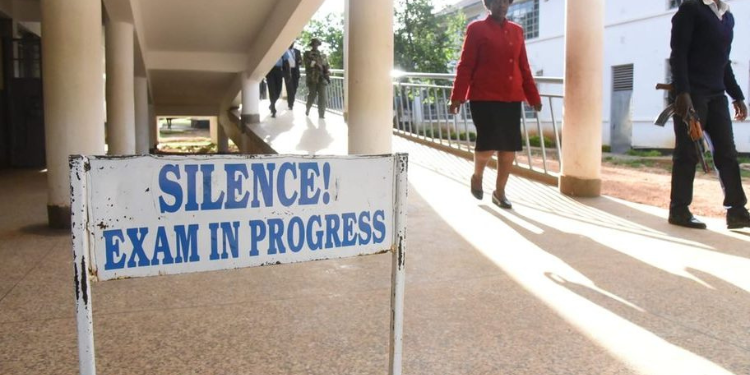
The Kenya National Examinations Council (KNEC) has issued a clarification regarding the payment of coordination fees to examiners involved in the 2025 Kenya Certificate of Secondary Education (KCSE) marking exercise.
This follows widespread reports on social media that some examiners left marking centers without receiving their dues.
KNEC Confirms Payment of KCSE Examiners
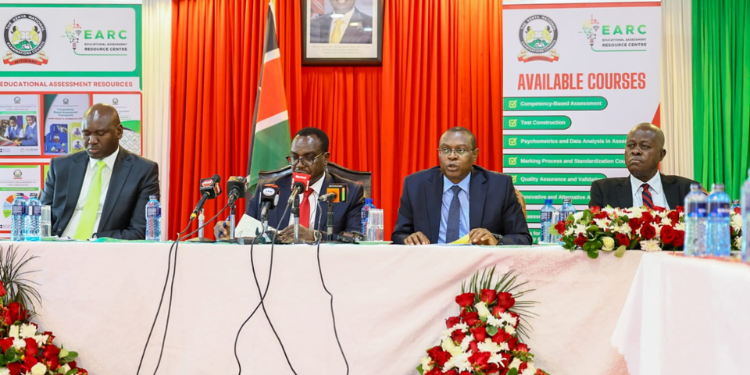
In a statement released on Monday, December 15, 2025, KNEC confirmed that all examiners who have completed the marking process and exited the centers have been fully paid their coordination fees.
KNEC stressed that no examiner who has finalized their duties has been left unpaid.
The statement further outlined the specific papers whose examiners have already received payments.
“Papers whose examiners have been paid are; Physics Paper 2, Biology Paper 2, Agriculture Paper 1, Chemistry Paper 3, Biology Paper 1, Agriculture Paper 2, Computer Studies Paper 2, Biology Paper 3,” the statement read.
According to KNEC, these payments were processed promptly upon completion of the marking exercise for the respective subjects.
KNEC assured that examiners handling all remaining papers will also receive their coordination fees before leaving the marking centers.
The Council reiterated its commitment to ensuring timely and accurate compensation for all personnel engaged in the national examination process.
KNEC also reaffirmed its dedication to maintaining integrity and efficiency in the examination system.
“We are committed to quality educational assessment and credible certification,” the statement read.
The clarification comes amid heightened public interest in the KCSE marking process, which involves thousands of teachers across multiple centres nationwide.
Coordination fees are a critical component of examiner remuneration, as they cover logistical and administrative support during the marking period.
For further updates, KNEC has encouraged stakeholders to rely on official communication channels, including its website and verified social media platforms.
History of Examiners’ Payments in Kenya
The payment of examiners in Kenya has been a recurring issue for decades, often attracting public attention during the KCSE and KCPE marking periods.
The Kenya National Examinations Council (KNEC), established in 1980, is responsible for managing examiner recruitment, coordination, and remuneration.
In the early years, payments were processed manually through government channels, leading to significant delays.
Examiners often waited months after completing marking to receive their dues.
Also Read: EPRA Announces Fuel Prices for December and January Cycle
Coordination fees and marking allowances were modest, and logistical challenges were common.
By the early 2000s, KNEC introduced structured contracts for examiners, specifying rates for marking and coordination.
Payments were still largely cash-based or via cheques, which prolonged timelines, and complaints about delayed payments persisted, especially during periods of economic struggles.
Around 2010, KNEC began adopting electronic payment systems, moving towards bank transfers and mobile money platforms.
This shift aimed to reduce delays and improve transparency, but examiners continued to report late disbursements, particularly for coordination fees.
Following teacher strikes and union interventions, KNEC revised examiner allowances upward.
Also Read: KNEC Sends Stern Warning After Schools Send Own KJSEA Results Analysis
In recent years, KNEC has fully embraced mobile money platforms such as M-Pesa for faster transactions.
Payments are now processed progressively as marking concludes, thanks to public scrutiny and social media, which have pressured KNEC to issue timely clarifications.
Follow our WhatsApp Channel and X Account for real-time news updates.


Kindly put more emphasis on how assessment are carried.Let not be assumed that teachers know.Due to big numbers of learners,find a teacher sits and fill the booklet,ME,AE,EE….. without even engaging learners full.
Through the Ministry I would request for close monitoring,since the deputies who are squarely given the responsibility of seeing the implementation of curriculum some are not aware of what they’re to observe and even where to guide a teach for the objective to be achieved.I have witnessed gaps but due to channels of protocol,many of the teachers opt to obey keeping quiet.