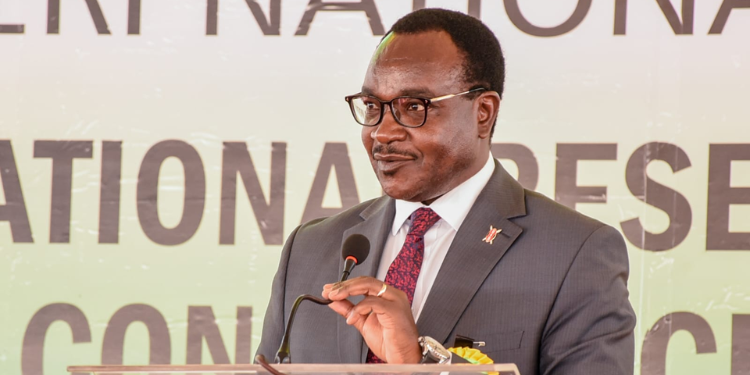
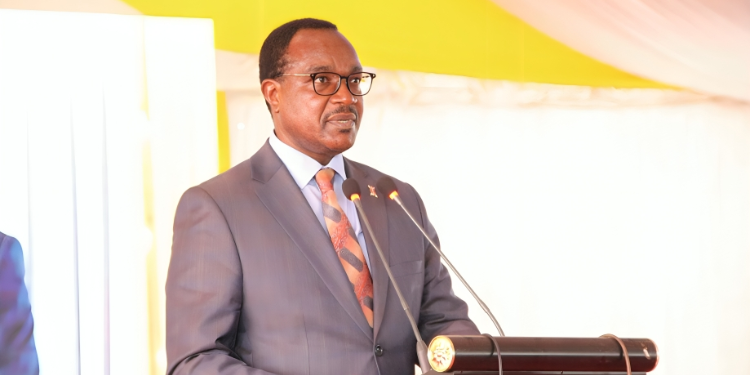
Education Cabinet Secretary (CS) Julius Ogamba has explained that the government chose to place junior secondary classes within existing primary schools to ensure a seamless transition for grade six learners and to enhance access, especially for vulnerable and marginalized children.
Speaking during Senate proceedings on March 11, CS Ogamba said the approach reduces travel distances for students and addresses factors affecting student well-being and attendance.
“Mr. Speaker, hosting junior schools in primary schools was designed to facilitate a smooth and universal transition for all grade six learners to junior secondary education,” Ogamba said.
“This approach ensures that learners do not have to travel long distances, addressing distance as a critical factor that affects student well-being and attendance, particularly for vulnerable and marginalized children.”
Ogamba Explains Why Junior Schools Were Not Separated from Primary Schools
According to Ogamba, the ministry developed guidelines for junior secondary education in January 2023, outlining administrative structures, governance, infrastructure, and curriculum implementation.
In line with the guidelines, primary and junior schools share a head of institution and a board of management, who oversees governance and overall management.
On why Junior Secondary Schools (JSS) are not autonomous despite having separate accounts under their Boards of Management, CS Ogamba explained that maintaining distinct accounts for primary and junior schools does not confer autonomy, but is essential for financial planning, accountability, and auditing purposes.
He added that funding differs significantly, with primary schools receiving Ksh 1,420 per learner per year, while junior schools receive Ksh 15,042 per learner per year.
He further stressed that heads of institutions are regularly trained through the Teacher Service Commission to manage both primary and junior schools effectively, including teacher management and curriculum implementation.
Also Read: Ogamba Announces When Govt Will Gazette New Fees for Senior Schools
His remarks come amid a proposal to restructure junior secondary education under the Competency-Based Curriculum (CBC), a move that has sparked debate.
The proposal, now before Parliament, suggests dividing junior school into two segments, with grades 7 and 8 remaining in primary schools, while Grade 9 would move to senior secondary schools.
If adopted, the changes would modify the current 2-6-3-3 CBC structure to a 2-6-4-3 system, consisting of two years of pre-primary, six years of primary, four years of senior secondary, and three years of university education.
Proponents of the proposal argue that the restructure aims to resolve challenges that have arisen since junior secondary schools were integrated into primary institutions.
Also Read: CS Ogamba Details Govt’s Plan to Tackle Ghost Schools
Education CS Speaks on Accuracy of 2025 KJSA Results
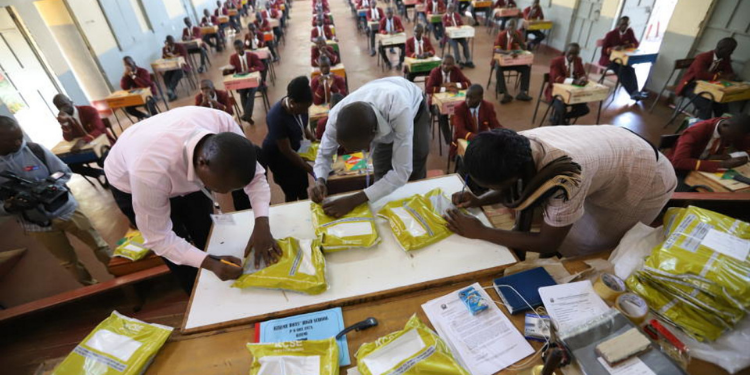
Additionally, the CS was charged to answer if the 2025 Kenya Junior Secondary School Education Assessment (KJSA) results were accurate.
On this, Ogamba stated that the ministry is not aware of any cases of misreporting or manipulation of the 2025 KJSEA results.
According to the Kenya National Examinations Council (KNEC), the results were accurate and have facilitated the placement of learners into grade 10, achieving a 99% transition rate.
The KJSEA, taken by grade 9 learners at the end of junior secondary school, is a summative assessment designed to identify each learner’s strengths, aptitudes, and interests.
Ogamba noted that the assessment does not provide aggregate scores, as competency-based education focuses on nurturing individual potential rather than ranking learners.
He concluded that each subject is assessed independently, with achievements reported in terms of performance levels.