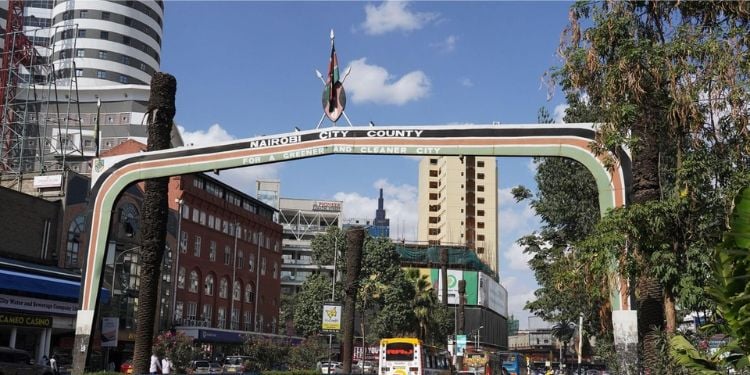
Kenyatta Avenue is one of Nairobi’s most important historic roads, running through the heart of the Central Business District (CBD). The avenue was originally known as Sixth Avenue before being renamed Delamere Avenue in 1931.
In 1964, the road was renamed Kenyatta Avenue in honour of Kenya’s first President, Jomo Kenyatta, following independence.
The avenue runs from Uhuru Highway to the Moi Avenue junction and serves as a major east-west route through Nairobi’s CBD. It connects key commercial, banking and civic areas while dividing the central business district into two.
Kenyatta Avenue also features a concentration of Nairobi’s early 20th-century buildings, including the Nairobi Gallery, General Post Office, Kipande House and former Torr’s Hotel building.
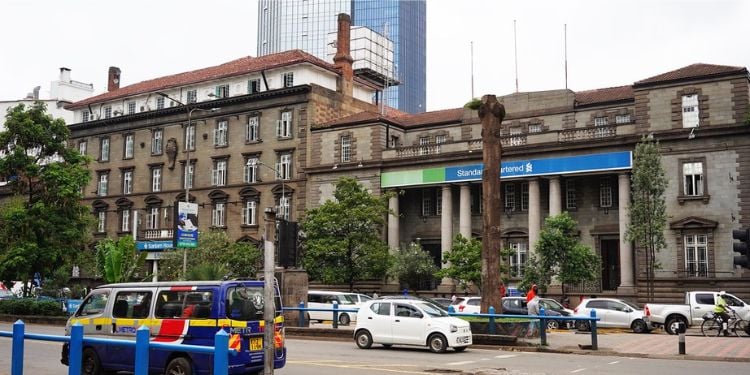
Other historic structures along the avenue include the Bank of India and Standard Chartered Bank buildings, reflecting Nairobi’s architectural and commercial development.
The avenue’s changing names also reflect Kenya’s political history, transitioning from a colonial-era name associated with settler power to one honouring the country’s first president.
Landmarks on Kenyatta Avenue
Nairobi Gallery stands at the Kenyatta Avenue–Uhuru Highway roundabout. Built in 1913 as the Provincial Commissioner’s office and courthouse, it was nicknamed “Hatches, Matches and Dispatches” because it handled birth, marriage and death records.
It now operates as a National Museums of Kenya gallery and houses part of the Murumbi African heritage collection. The building also marks Nairobi’s historic Point Zero.
Nyayo House is a major government office tower located beside Nairobi Gallery. Its name honours former President Daniel arap Moi’s Nyayo philosophy of peace, love and unity.
The building forms part of the modern government precinct near the avenue.
General Post Office (GPO) was opened in 1907 and became a major communication centre in colonial Nairobi. It remains an active postal facility and also houses a Huduma Centre.
Kipande House. It was completed in 1913 and designed by Sardar Gurdit Singh Nayer.
Initially known as Nayer Building, it served as a railway warehouse before becoming associated with the colonial kipande registration system for Africans.
KCB acquired the building on the condition that it preserve its historic character. It is gazetted as a national monument.
Torr’s Hotel Building (CFC Stanbic Bank) was established in 1926 by Colonel Ewart Grogan. The red-brick building initially operated as a hotel before being converted into bank premises. CFC Stanbic Bank currently occupies it.
Also Read: Story of Luthuli Avenue, Nairobi’s Famous Phones and Electronics Street and How It Got Its Name
Bank of India Building previously housed Kenya’s Legislative Council (Legco) between 1954 and 1957. Its history connects the avenue’s commercial development with Kenya’s late-colonial political activities.
Westminster House was erected in 1928 during the period when the avenue was known as Delamere Avenue. It is among the surviving commercial buildings from that era and reflects the growth of Nairobi’s early business district.
Pan African House is another historic commercial building along the older stretch of Kenyatta Avenue. Its name reflects the later association of central Nairobi’s commercial spaces with African identity and Pan-African connections.
Standard Chartered Bank Building. The building of the Standard Chartered Bank, originally the Standard Bank of South Africa Limited (right), was designed in a Neo-Classical style, featuring a raised entranceway with towering Roman columns and a fanned stairway.
It opened in 1911.
Kenyatta Avenue Nearby heritage stops
Kenya National Archives
Located along Moi Avenue, near the Hilton and Ambassadeur Hotel corner, the Kenya National Archives was established in 1965. It occupies a landmark building completed in 1931 for the National Bank of India. The building later housed Kenya Commercial Bank before being converted into the national archives. It preserves public records and houses historical documents and Pan-African art collections.
Also Read: Kenya National Archives: How Joseph Murumbi Transformed a Former Bank Into Nairobi Landmark
Jeevanjee Gardens
Jeevanjee Gardens is a historic public park in central Nairobi, near Muindi Mbingu Street and Kenyatta Avenue. The gardens are associated with A.M. Jeevanjee, an Asian-Kenyan businessman and philanthropist who donated the land for public use. The park remains one of the historic green spaces within Nairobi’s Central Business District.
Ainsworth House
Ainsworth House is one of the historic buildings along Nairobi’s Kenyatta Avenue heritage route. It represents the older commercial architecture that shaped the development of the city centre and provides a glimpse into Nairobi’s early urban landscape.
Galton-Fenzi Memorial
Galton-Fenzi Memorial commemorates Lionel Galton-Fenzi, an early motoring pioneer in East Africa. The memorial preserves part of Nairobi’s transport history and is among the historical features associated with the Kenyatta Avenue heritage route.
Follow our WhatsApp Channel and X Account for real-time news updates, and subscribe to our YouTube Channel for in-depth interviews.