Taiwan on Saturday, May 16, strongly rejected recent pressure from Washington, saying it is a sovereign, independent, democratic country not subject to China.
The statement came just one day after US President Donald Trump, fresh from talks in Beijing, warned Taipei against any formal declaration of independence and questioned the idea of American forces defending the island in a conflict.
Taiwan’s foreign ministry left little room for interpretation after it described the island as a sovereign and independent democratic nation, stressing that it does not fall under the control of the People’s Republic of China.
Officials also expressed appreciation for Trump’s past support for peace across the Taiwan Strait while making clear that Taipei has no intention of backing down on its status.
Timing of the Response
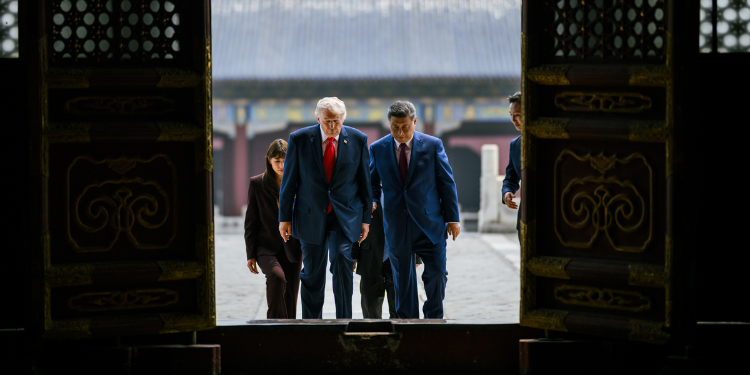
Taiwan’s strong response came just one day after US President Donald Trump concluded his visit to Beijing.
During the summit, Chinese President Xi Jinping pressed Trump on the Taiwan issue and warned that any missteps on the matter could push the United States and China into conflict.
Trump later told Fox News that he opposed Taipei moving toward formal independence.
“I’m not looking to have somebody go independent,” Trump said. He added that he did not want the United States to travel 9,500 miles to fight a war and urged both sides to “cool down.”
Trump’s comments marked a notable shift in tone. While the United States has long maintained strategic ambiguity on Taiwan, it has avoided explicitly opposing independence in such direct terms.
The US officially recognizes Beijing as the government of China under the One China policy, but continues to provide Taipei with defensive weapons under the Taiwan Relations Act.
Also Read: Trump Warns Taiwan: Don’t Even Think About Independence If You’re Counting on America
Taiwan’s deputy foreign minister, Chen Ming-chi, reinforced the government’s position in comments to reporters in Taipei.
He described US arms sales as a cornerstone of regional peace and stability, noting that they serve as a joint deterrent against threats in the region.
Chen cited the Taiwan Relations Act as the legal basis for these sales, which he said have been consistent across administrations.
In December, the Trump administration approved a major $11 billion arms package for Taiwan. Reuters has reported that a second package, valued at around $14 billion, is still awaiting final approval.
Chen declined to discuss details of the pending deal but said Taipei would continue close communication with US officials.
Taiwan’s President Lai Ching-te has maintained that the island is already independent in practice and sees no need for a formal declaration that could further escalate tensions.
Also Read: Putin Rushes to Beijing Days After Trump Leaves – Xi Playing Both Sides?
China, meanwhile, views any move toward formal independence as a red line and has never renounced the use of force to bring Taiwan under its control.
Taipei has repeatedly said it wants to maintain the status quo and build up its defenses. Officials say “peace through strength” is still the best way to deter potential aggression and maintain stability in the region.
The foreign ministry emphasized that American arms sales were an integral part of this strategy, and a clear security commitment, not a favor.
Trump’s comments have raised concerns in some quarters about the reliability of US support. His reluctance to get involved in faraway conflicts and his desire to maintain the status quo fit with his longstanding “America First” approach.
At the same time, his administration has continued the flow of weapons to Taiwan, suggesting the practical policy may not shift as dramatically as the rhetoric.
Beijing Opposes Arms Sales to Taipei
Beijing welcomed Trump’s comments opposing independence but remains wary of any deepening US-Taiwan military ties. The Chinese leadership sees arms sales and high-level contacts as interference in its internal affairs.
Taiwan’s firm restatement of its sovereignty reassures its own population and international partners that the island will not be pressured into concessions.
It also signals to Beijing that Taipei will not bend easily, despite the intense diplomacy between Washington and Beijing.
As it stands, Taiwan is one of the most dangerous flashpoints in US-China relations.
Any escalation, whether through political declarations or military maneuvers, carries the risk of drawing the world’s two largest economies into confrontation.