
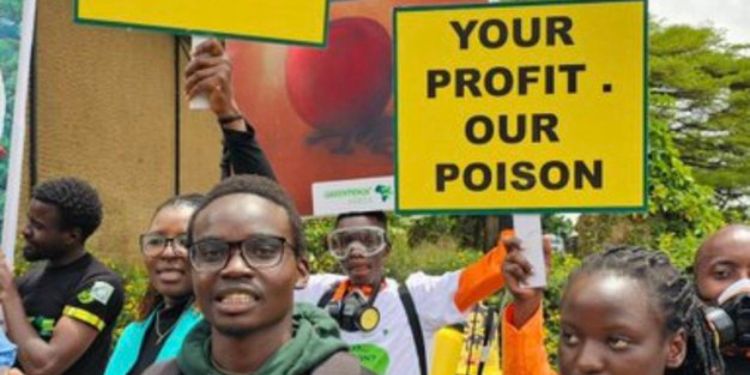
The Consumers Federation of Kenya (COFEK) has intensified calls for a full ban on select Kenyan-registered products, citing safety concerns on behalf of consumers.
In a statement on April 19, COFEK said that nearly 48 percent of pesticides registered in Kenya are classified as dangerously toxic under global safety standards.
“48% of Kenya’s registered pesticides are dangerously toxic by global standards,” the statement partly read.
The consumer federation raised concern over reports of chemical residues detected in soils, market vegetables, and water sources in areas including Kisumu and Naivasha.
COFEK also highlighted associated health risks such as cancer, birth defects, and nausea, alongside environmental impacts including declining bee populations and soil degradation.
COFEK Calls for Full Ban on Select Kenyan Pesticides
COFEK has called for full bans on certain pesticide products and stricter enforcement of regulations by the Pest Control Products Board (PCPB) to improve chemical safety in agriculture.
The organization is also calling for a shift toward biological pest control methods as a safer and more sustainable alternative to conventional pesticide use.
“Full bans, tougher PCPB enforcement, and a shift to biological pest alternatives,” they demanded.
Stricter Pesticide Controls Backed
COFEK said the presence of pesticide residues in food products amounts to a violation of consumer rights, arguing that safe food is a basic legal requirement.
The organization cited the Consumer Protection Act, stating that all products placed on the market must meet safety standards, including food free from harmful chemical contamination.
Additionally, it noted long-standing concerns over weak enforcement by regulatory bodies, including the Kenya Bureau of Standards (KEBS) and the Pest Control Products Board (PCPB).
Also Read: COFEK Pushes CAK to Probe Safaricom Over My OneApp Forced Migration
“COFEK has long flagged weak KEBS and PCPB enforcement. This report is the proof,” the statement read.
It further stated that the current findings reinforce previous warnings about gaps in monitoring and compliance within the pesticide supply chain.
The group called for accountability across the value chain, including importers, distributors, and regulators, not only farmers who use the products.
It also linked safer food systems to agroecology, stating that such approaches support access to safer, more affordable food, in line with its consumer protection mandate.
Also Read: COFEK Opposes New Fuel Tax, Demands Immediate Suspension
Earlier Case Filed Over Alleged Toxic Fuel Contamination in Kenya
The consumer lobby, on April 17, confirmed it had filed a High Court petition over what it described as potential contamination in fuel supplied in Kenya, naming the Energy Cabinet Secretary, EPRA, SICPA SA, SGS (Kenya) Ltd, and the Attorney General in the case.
This petition followed claims based on independent laboratory tests indicating the presence of elevated levels of halogen-based elements in fuel products.
COFEK also alleged the detection of ethylene dibromide, a substance classified internationally as hazardous, raising concerns about potential exposure risks from fuel use.
The lobby claimed that regulatory bodies, including the Energy and Petroleum Regulatory Authority (EPRA), failed to act on earlier concerns raised regarding fuel quality standards and oversight.