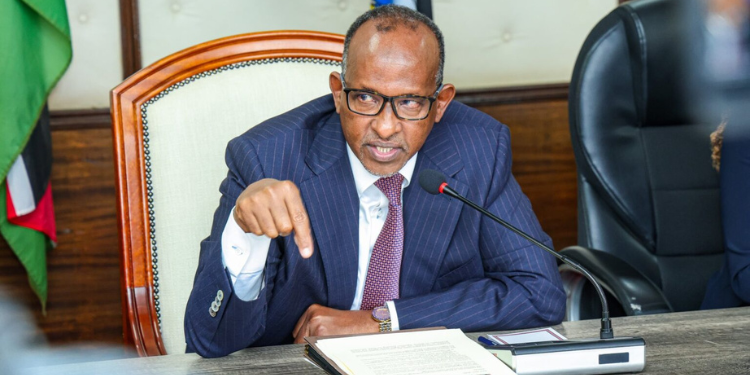

The Ministry of Health has dismissed reports of a shady blood export business from Kenya, saying the claims that the country is exporting human blood and blood products are misleading and based on a misinterpretation of international trade data.
In a statement dated May 6, 2026, the ministry said the claims are based on a misunderstanding of international trade data and warned the public against spreading misleading health information.
The ministry said the reports have caused unnecessary public concern and confusion.
The clarification follows a report published on the World Integrated Trade Solutions platform, which indicated that Kenya exported “human and animal blood” and related products in 2024.
The report triggered debate on social media, with some users alleging that the country was exporting donated human blood.
The ministry said the classification used in the report is broad and does not refer to transfused blood collected from donors.
“The statistics in the report include a wide range of imported products by multinational companies operating regional supply and logistics hubs based in Kenya that subsequently redistribute some of these products within the East African region,” read part of the statement by the ministry.
The Ministry insisted that donated blood in Kenya is strictly regulated and reserved for medical use.
Ministry of Health Responds to Blood Export Claims
According to the ministry, the category labeled “human and animal blood” is a global customs classification used in trade and covers a wide range of products.
Also Read: How New Tax Proposals in Finance Bill 2026 Will Affect Mitumba and Smartphones
These include vaccines, toxins, antisera, microbial cultures, and other laboratory and pharmaceutical materials derived from blood.
“The classification does not include donated blood collected for transfusion services,” the ministry said, adding that the data had been misinterpreted.
Officials also explained that the figures in the report include imports handled by multinational companies operating regional supply and logistics hubs in Kenya.
Some of these products are later redistributed to other countries within the East African region, creating the impression that Kenya is exporting blood-related substances, according to MOH.
The ministry further stated that Kenya does not export donated human blood or its components for the manufacturing of blood-derived products abroad.
Safeguards and Supply Realities
In its clarification, the ministry said the country does not currently manufacture certain specialized blood products, such as antisera used in blood grouping and laboratory diagnostics, as well as plasma-derived medicines.
Also Read: Huge Pay Day for Shareholders as Safaricom Raises Dividend to Ksh 80 Billion
It also noted that Kenya does not perform plasma fractionation, a process used to produce essential medical products such as clotting factors, albumin, and immunoglobulins.
As a result, all such blood-related medical products used locally are imported from internationally accredited manufacturers.
The ministry urged the public to treat reports of trade data with caution and to rely on official communications for accurate health information.
It also warned that individuals spreading false or misleading health claims could face legal consequences.
“The Ministry of Health will work with relevant investigative agencies to take action against persons publishing misleading health information,” the statement read in part.
At the same time, the ministry reaffirmed its commitment to strengthening Kenya’s health system, including the national blood program.
The assurance comes amid continued demand for blood in hospitals across the country, where shortages have in the past affected emergency care.
Kenya’s Health Ministry maintains that donated blood is strictly managed within the country to support patients in need and is not traded for commercial purposes.
The ministry concluded by calling on citizens to continue donating blood and to ignore misinformation that could undermine trust in the health system.